




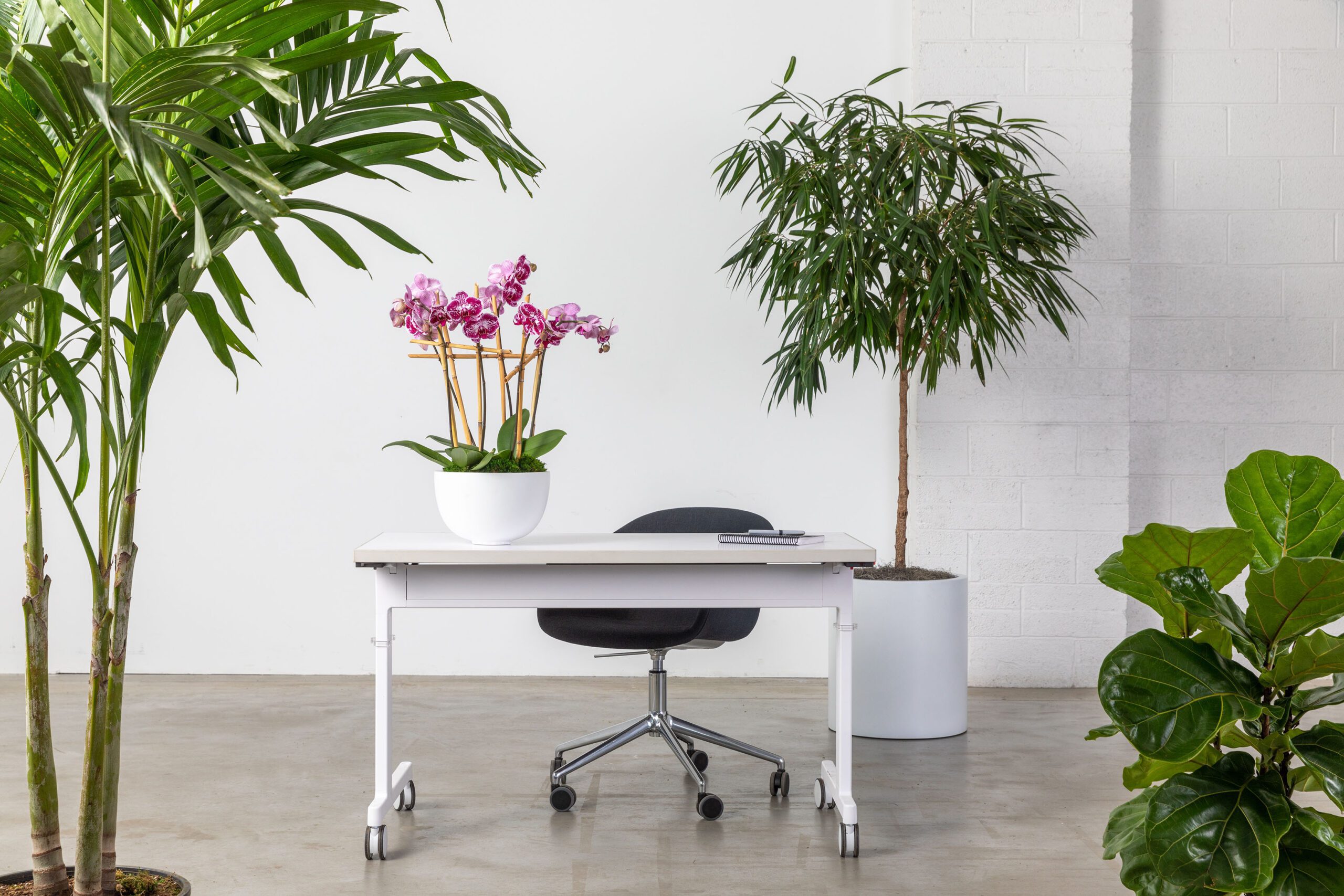
The office no longer has a captive audience. With most knowledge workers now splitting their week between home and a shared workplace, coming in is a choice, and that choice is shaped by whether the space is worth the commute. A biophilic office, one designed around the human connection to nature, has become one of the most practical tools a facility leader has for making that answer yes.
This is not a wellness trend or a lobby amenity. It is a design response to a structural shift in how people work. Below is how biophilic design supports hybrid models and flexible workplace layouts, what the research actually shows, and how to build it so it performs across every location you manage.
What is a Biophilic Office?
A biophilic office is a workplace designed to reconnect people with nature through living plants, natural materials, daylight, and nature-inspired spatial layouts. The term comes from biophilia, the idea that humans are biologically drawn to living systems, and it moves plants out of the category of decoration and into the category of infrastructure. In a commercial setting, a biophilic office typically combines interior plantings, green walls or moss walls, and thoughtful placement that supports how a space is actually used.
The distinction that matters for facility leaders is intent. Biophilic design is planned, specified, and maintained, not bought by the tray and set on a windowsill. That is also what separates it from the failed office plants most people have seen: neglected greenery signals the opposite of care. You can read more about the broader discipline in our guide to biophilia in architecture.
Hybrid Work Changed What the Office is For
The hybrid model has stabilized rather than reversed. Gallup’s ongoing workforce tracking shows that a majority of remote-capable US employees now work in a hybrid arrangement, spending roughly two to three days a week in the office rather than five. The building is no longer where work happens by default. It is where certain kinds of work, collaboration, culture, mentorship, and focused stretches that home cannot provide, happen by design.
That reframes the facility manager’s job. When attendance was mandatory, the office only had to function. Now it has to compete. The space is measured against the comfort, control, and quiet of a home setup, and against the real cost of a commute. Design is the deciding factor, and biophilic design speaks directly to what people say they want when they choose to come in.
Planterra explored this shift in depth alongside colleagues across the interior landscape industry in “The Nature of the Post-Pandemic Workplace”. One finding stands out for anyone weighing an investment: a third of office workers said the design of an office would affect their decision to accept a job offer, and the items they most wanted were natural light, live indoor plants, and quiet space to work. The office that provides those becomes an asset in recruiting and retention, not just a line on the facilities budget.
How Plants Support Hybrid and Flexible Workplace Design
The support is concrete, not abstract, and it shows up in four ways: attendance, layout, focus, and output.
They Give People a Reason to be There
The most direct benefit is also the simplest. A green, well-considered environment reads as cared for, and people are drawn to it. When the alternative is a home office they already control, a workplace that feels alive tips the calculation. This is the difference between a floor that sits half empty on a Tuesday and one that fills because people want to use it.
They Make Flexible Layouts Work
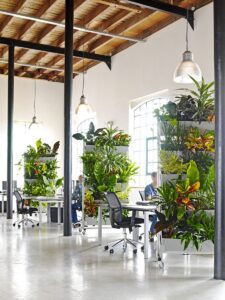
Hybrid work rarely means the same people at the same desks. It means activity-based and shared space: hot desks, collaboration zones, quiet rooms, and lounge areas that flex through the week. Plants are one of the few design elements that can zone a space without building walls. A run of tall indoor plants or planters on casters can separate a collaboration area from focus seating, define a path, or soften an open floor plate, then move when the layout changes. In a workplace built for flexibility, greenery is a structure you can rearrange.
They Protect Focus in Collaborative Spaces
Open, shared floors are loud, and noise is the top complaint in flexible offices. Interior plantings absorb and deflect sound, which is why planted zones help preserve the heads-down work that hybrid employees often come in specifically to avoid doing at home. The acoustic benefit is quiet, in both senses, but it is real.
The Productivity Case Holds Up
The evidence here is stronger than most workplace claims, and it has only firmed up as the research has matured. A 2024 systematic review in Intelligent Buildings International pooled 74 peer-reviewed studies and found consistent psychological, physiological, and cognitive benefits from biophilic workplace design, with cognitive performance, the category that covers productivity, focus, and creativity, the single most studied and most strongly supported outcome. The concrete field data backs that up.
In real commercial offices, one field study found that enriching a bare, lean workspace with plants raised productivity by 15 percent, through gains in engagement, concentration, and perceived air quality. Those were results in working offices rather than lab estimates, and the larger review confirms the pattern holds across dozens of studies since, which is what makes the case credible to a skeptical audience. Applied to a hybrid workforce that is only present part of the week, it gets sharper still: the days people are in the building are the days you most want them focused and engaged.
Designing a Biophilic Office for Flexibility
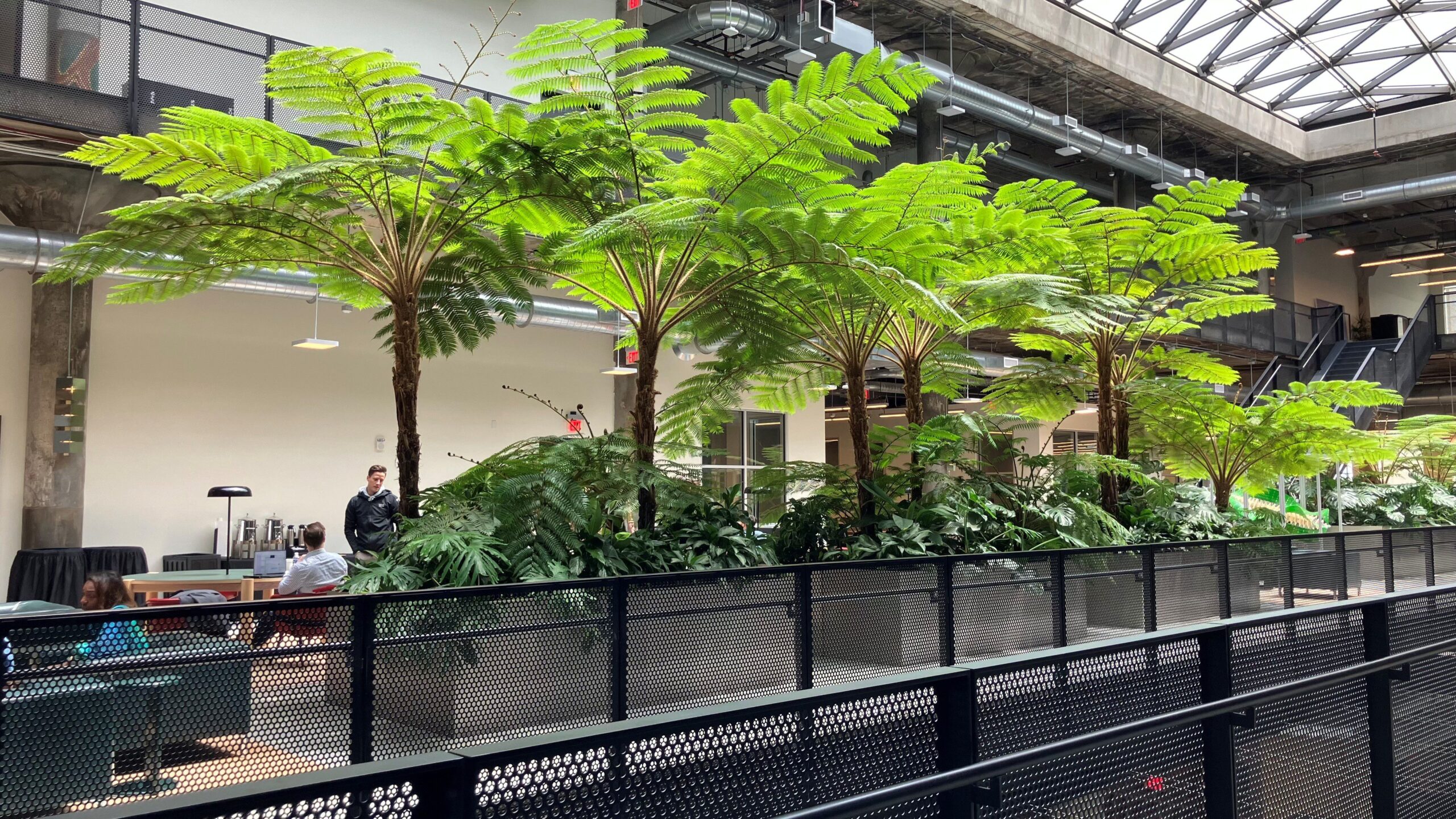
Building this well is less about volume of plants and more about fit. A few principles carry most of the weight.
Design for the light you have. Most interiors cannot support large trees without help, so plant selection and, where needed, supplemental lighting matter more than ambition. Choose species that thrive in the conditions of each zone rather than forcing a look the space cannot sustain.
Match maintenance to the model. Flexible spaces change, and hybrid schedules mean fewer eyes on the plants day to day. Low-demand elements like preserved moss walls deliver biophilic impact with almost no upkeep, which makes them well suited to areas that are hard to service or lightly staffed. Live plantings deliver more, but only when they are maintained on a real schedule.
Treat greenery as part of the layout, not an afterthought. The best results come from specifying plants alongside the floor plan, the same way you would specify furniture systems or acoustic treatment. For a fuller picture of how this discipline works, see our overview of interior landscape design.
Consistency Makes it Work at Scale
For a single office, a biophilic program is a design project. For a multi-location organization, it is an operations problem, and this is where most programs quietly fail. Plants that are lush at launch and struggling six months later do more brand damage than no plants at all, and that risk multiplies with every site.
Consistency across locations is the harder and more valuable outcome. It requires design standards, reliable interior plant maintenance, and a single point of accountability rather than a patchwork of local vendors doing their own thing.
Planterra’s national program exists for exactly this: to deliver the same standard of biophilic design and care in every market, so a hybrid office in one city looks and performs like a hybrid office in another. In a distributed workforce, that consistency is the difference between a program that supports the brand and one that undermines it.
Bring Your Hybrid Workplace to Life
A hybrid office earns its attendance through experience, and biophilic design is one of the most reliable ways to deliver it. Whether you manage one headquarters or a footprint of sites across the country, Planterra designs, installs, and maintains office plant programs built to perform consistently everywhere you operate. Plan your space with us and give people a workplace worth coming back to.