






Moss walls are a proven biophilic design strategy for workplaces seeking to improve employee wellness, soften interior architecture, and elevate brand experience. In corporate offices and hospitality environments, moss walls introduce organic texture and visual calm without the operational complexity of living plant systems.
At Planterra, moss walls are designed as intentional interior landscape elements, not décor. Whether preserved, artificial, or a blend of both, moss engages the brain through biophilia by reintroducing natural patterns that humans instinctively respond to.
Why Moss Resonates With Humans: A Biophilic Perspective
 Moss is among the oldest plant forms on Earth, commonly found carpeting forest floors, rocks, and shaded landscapes. Humans are drawn to moss because it signals moisture, shelter, and environmental stability; conditions deeply tied to comfort and wellbeing.
This response is explained by biophilia, the innate human need to connect with nature. Importantly, biophilic responses are triggered by natural forms, textures, and complexity, whether the material is living, preserved, or thoughtfully replicated. At Planterra, we view moss, natural or faux, as a material that reliably supports biophilic engagement in interior environments.
While moss is often associated with Northern forests in North America, it appears globally across climates and cultures, making its appreciation nearly universal.
Where Moss Grows Naturally, and How It Is Sustainably Sourced
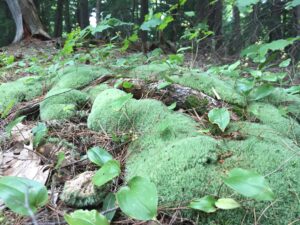 In nature, moss thrives in cool, shaded, moisture-stable environments such as temperate forests and rocky outcroppings. For interior moss walls, however, materials are not harvested indiscriminately.
Planterra sources moss exclusively from sustainable cultivators in Canada, Norway, and Pennsylvania, USA, ensuring environmental responsibility, consistency, and long-term availability. Domestic sourcing, particularly from Pennsylvania, also reduces transportation impact and supports sustainability goals.
How Moss Walls Are Designed and Built
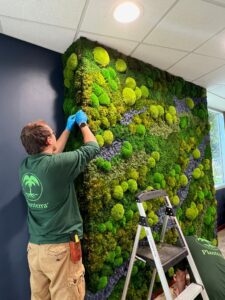 High-quality moss walls require both artistic and technical expertise. Skilled florists and artists compose moss surfaces to create depth, movement, and a natural visual rhythm, avoiding flat or artificial-looking results. Design decisions often include light versus dark color palettes, contrast against surrounding finishes, and subtle patterning to reinforce brand identity or spatial intent.
Planterra oversees the design, fabrication, and installation of moss walls for corporate and hospitality clients nationwide, ensuring each installation performs visually and operationally within a commercial setting.
Moss Wall Panels and Installation Process
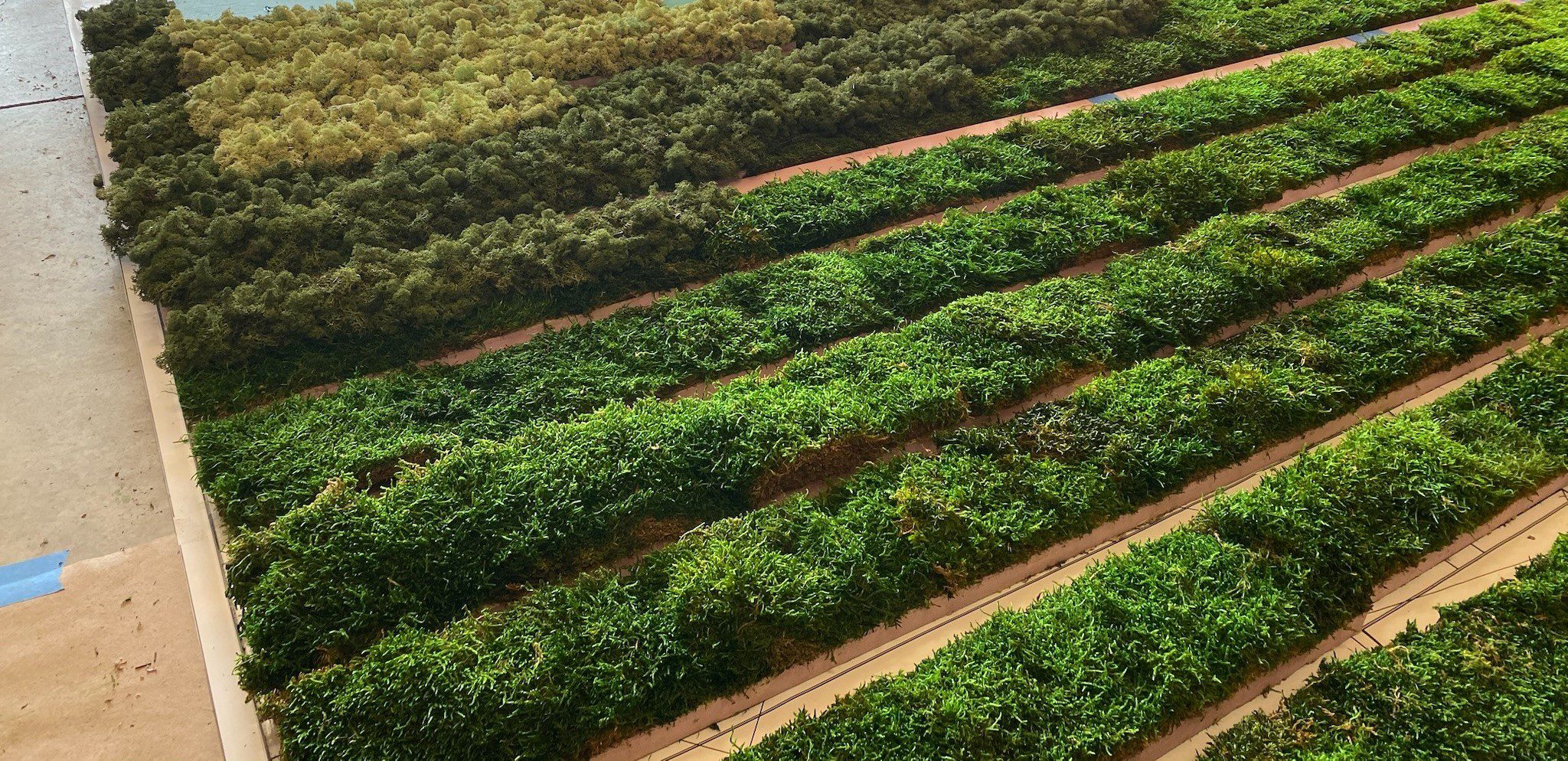
All moss walls are fabricated in panels or numbered sections off-site under controlled conditions. Panels are mapped and labeled for efficient installation, allowing for precise alignment, scalability, and future restoration when needed.
Types of Moss Used in Commercial Moss Walls
Each moss type serves a different purpose in commercial interiors, with performance determined by environment, longevity expectations, and visual goals.
Live Moss
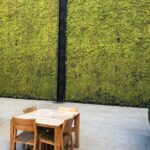 Live moss is used only for temporary exhibit installations. Long-term indoor environments rarely provide the humidity, irrigation, and airflow conditions required to sustain live moss.
Preserved Moss
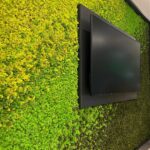 Preserved moss is stabilized, most commonly using food-grade glycerin, to retain softness and appearance without light or irrigation. It is available in a wide range of colors and textures.
Planterra commonly works with reindeer moss, bun (pillow) moss, and sheet moss, blending types to achieve depth and visual interest. Preserved moss is considered the most sustainable option, as it is derived from natural materials and can be responsibly sourced domestically.
Artificial Moss
 Artificial moss is used selectively based on site conditions. While it does not dry out like preserved moss, it can still fade under UV exposure. Preserved moss may dry if exposed to HVAC airflow, while artificial moss remains dimensionally stable.
Indoor vs. Outdoor Moss Applications
For outdoor moss installations, Planterra recommends live moss, provided the area is shaded and irrigated appropriately.
For indoor moss walls, preserved or artificial moss is recommended. Live moss is not practical indoors beyond short-term displays due to inconsistent humidity, airflow, and lighting conditions common in commercial buildings.
Longevity and Maintenance of Moss Walls
Moss walls are long-lasting but not permanent. For preserved and artificial moss, clients should expect a 3–5 year lifespan, assuming the wall is not exposed to direct UV light or strong HVAC airflow.
After this period, moss walls typically require retouching or restoration by an experienced interior plantscape contractor. Occasional light misting, particularly for preserved reindeer moss, can help extend softness and longevity when environmental conditions allow.
Odor Considerations
Preserved moss may have a natural woodland scent immediately after installation. This scent dissipates over time. If odor sensitivity is a concern, an all-artificial moss wall is recommended.
Moss Walls and Workplace Wellness
Moss walls add visual softness, acoustic relief, and a hospitality-driven atmosphere to workplaces dominated by hard surfaces. They are especially effective in corporate environments where comfort, focus, and employee experience are priorities. Moss walls complement living plants as part of a broader biophilic design strategy.
Work With Planterra
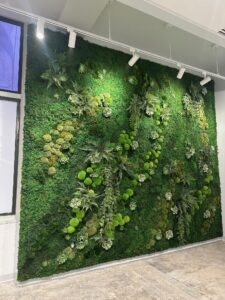
Planterra’s in-house designers collaborate with clients on custom moss walls and large-scale branding rollouts across multiple locations in the USA. Offerings range from fully customized installations to modular moss wall collections, ready-made moss art pieces, and curated gifts designed for offices and client-facing spaces. Customization options include scale, color contrast, framing, and branded applications, allowing moss walls to function as both biophilic elements and intentional design statements.
Whether your goal is wellness, brand expression, or experiential design, our team can help translate your vision into a durable, biophilic installation.
To explore how a moss wall could support a specific space or workplace strategy, contact Planterra to start a design conversation.