




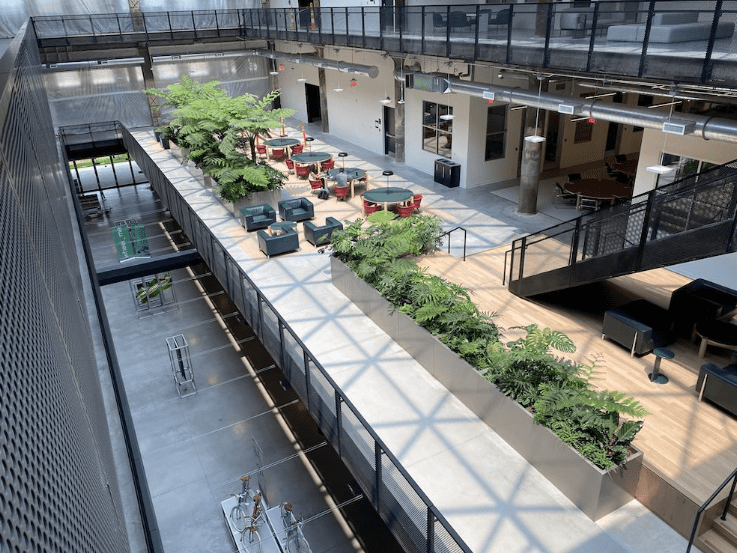
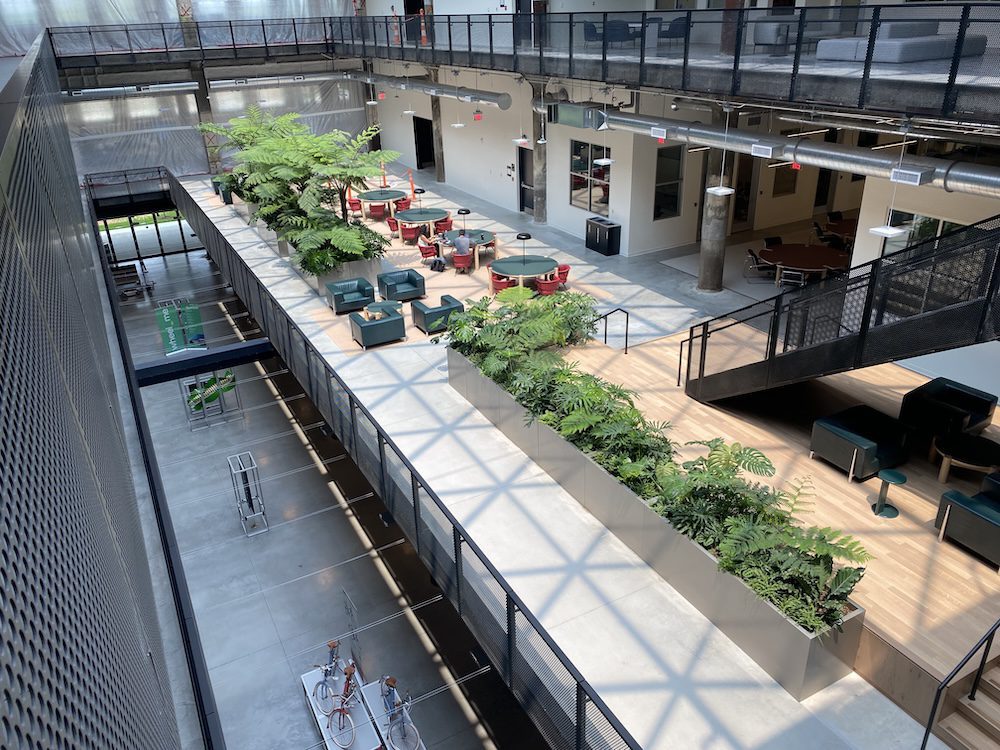
Interior landscaping is the practice of designing, installing, and maintaining greenery and biophilic elements inside buildings. Professionals in the trade commonly refer to this service as interior plantscaping or interiorscaping. The terms interior landscaping and indoor landscaping are used interchangeably, though interior landscaping is the more widely accepted term within the professional trade.
Some publications use the term “interior landscape” as a phrase to describe all the elements installed in an interior, such as furnishings and art. In this context, they are not using the term as a technical category but rather a convenient word combination to suit a headline. In the design community, interior landscaping pertains specifically to plants, live or artificial.
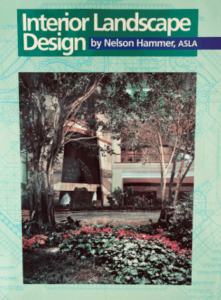
The book Interior Landscape Design by Nelson Hammer, ASLA, published in 1991, remains an authoritative reference on the subject matter, specifically regarding the fundamentals of designing plants within interiors.
How Architecture Shaped the Interior Landscaping Profession
The profession emerged from a shift in architectural materials, specifically the move from ornamental masonry to floor-to-ceiling glass curtain walls. In the mid-20th century, boxy glass buildings called for plants to soften their hard lines. The abundance of natural light helped solidify commercial buildings as the unofficial homes for the office Ficus. In the present day, improved window glazing and artificial lighting provide higher quality light to human occupants, and to the plants they share their space with. As a result, interior landscaping continues to be a relevant and important element in architecture and interior design.
What Is Interior Landscape Design?
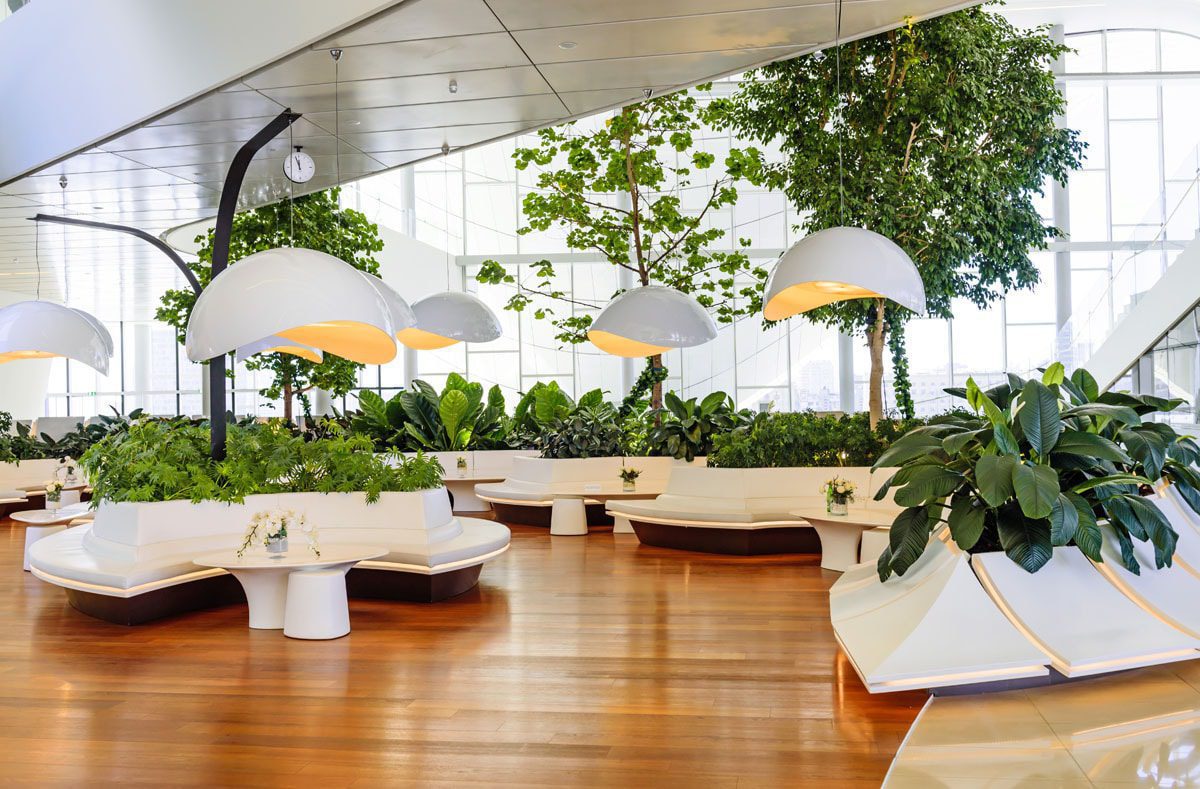
Interior landscape design is the professional discipline of planning and specifying plants, planters, green walls, and related biophilic elements within a built environment. Where interior landscaping refers to the broader industry, interior landscape design refers specifically to the design process; the translation of a space’s architecture, light conditions, and intended use into a cohesive plant environment.
A qualified interior landscape designer evaluates a space before recommending a single plant. Light levels, HVAC placement, foot traffic patterns, ceiling heights, and the client’s maintenance budget all inform what gets specified and where. The result is a design that looks intentional, performs well over time, and integrates with the architectural vision of the space rather than working against it.
Landscape and interior design intersect most visibly in large-scale commercial projects, where plants are incorporated into architectural drawings from the earliest planning stages. In these environments, the interior landscape designer works alongside architects, general contractors, and interior designers to ensure that plant selections, container specifications, and irrigation or drainage requirements are built into the project scope before construction begins.
What Is Landscape in Interior Design?
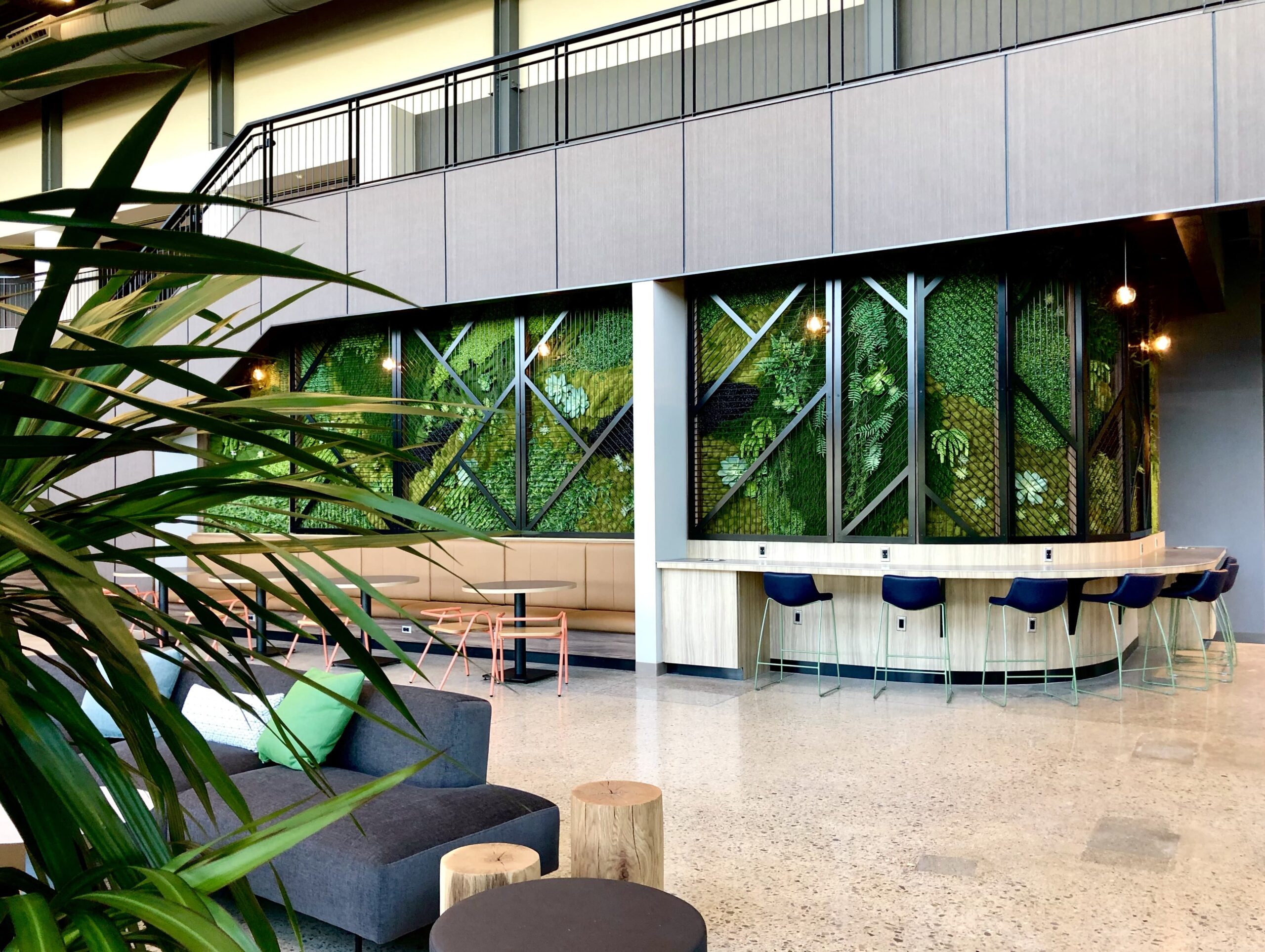
In interior design, landscape refers to the deliberate incorporation of plants, natural materials, and living systems into an interior environment. Unlike decorative accessories, landscape elements in interior design are living components that change over time, respond to their environment, and require ongoing care. When executed well, interior landscape design blurs the boundary between indoors and outdoors, creating spaces that feel connected to nature regardless of their location.
This approach is closely tied to biophilic design, a broader philosophy that prioritizes the human need for connection with the natural world. Research consistently links biophilic design elements, including interior plants, to measurable improvements in employee well-being, cognitive performance, and stress reduction in workplace environments.
Office Interior Landscape Design
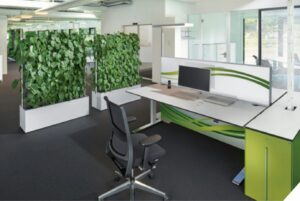
Office environments represent the largest and most consistent segment of the interior landscaping industry. From single-floor professional suites to multi-story corporate headquarters, office interior landscape design addresses how plants can improve the function and experience of a workspace, not just its appearance.
In office settings, interior landscape design serves several practical goals alongside the aesthetic ones. Plants reduce ambient noise in open-plan offices by absorbing and deflecting sound. They improve air quality by filtering common indoor pollutants. They create visual separation between work zones without the permanence of walls. And they signal to employees and visitors alike that the organization invests in the quality of its environment.
Effective office interior landscape design also accounts for the realities of a commercial building: fluctuating light conditions, HVAC systems that dry out the air, cleaning crews that may disturb plantings, and the need for low-maintenance species that can withstand periods of neglect. A well-designed office plant program pairs the right species with the right locations and backs them with a professional maintenance schedule to ensure long-term performance.
A Small but Resilient Industry
Today, interior landscaping remains a small and specialized field within the horticulture industry. In recent years, North American horticulture associations have deemed the niche as too small to keep as a category to administer. At the time of publication, no professional trade association exists for interior landscapers to call home, nor is there a universally accepted certification program to provide education and standards for the profession. Consequently, selecting a qualified designer or contractor for interior landscaping can be difficult and confusing.
As a mature and niche industry, interior landscaping has proven to be resilient and an essential service for building interiors. Many companies that solely specialize in the interior landscaping trade have been in business for more than two decades.
Planterra and the Origins of Interior Landscaping in North America
Planterra is one of the first companies in North America to specialize in interior landscaping. Our first major job was the installation of the flying Ficus trees at the Renaissance Center in Detroit in 1977. At the time, this was the largest interior landscape project in the United States. The design called for hundreds of large Ficus trees, involving such a substantial order that suppliers built shade houses in Florida specifically to acclimate the trees for interior use.
Nearly 50 years later, Planterra has grown its capabilities and offers specialty design-build installations throughout the USA, as well as interior landscape national account management.
If you are evaluating an interior landscaping or office interior landscape design program, contact our team for a consultation.