




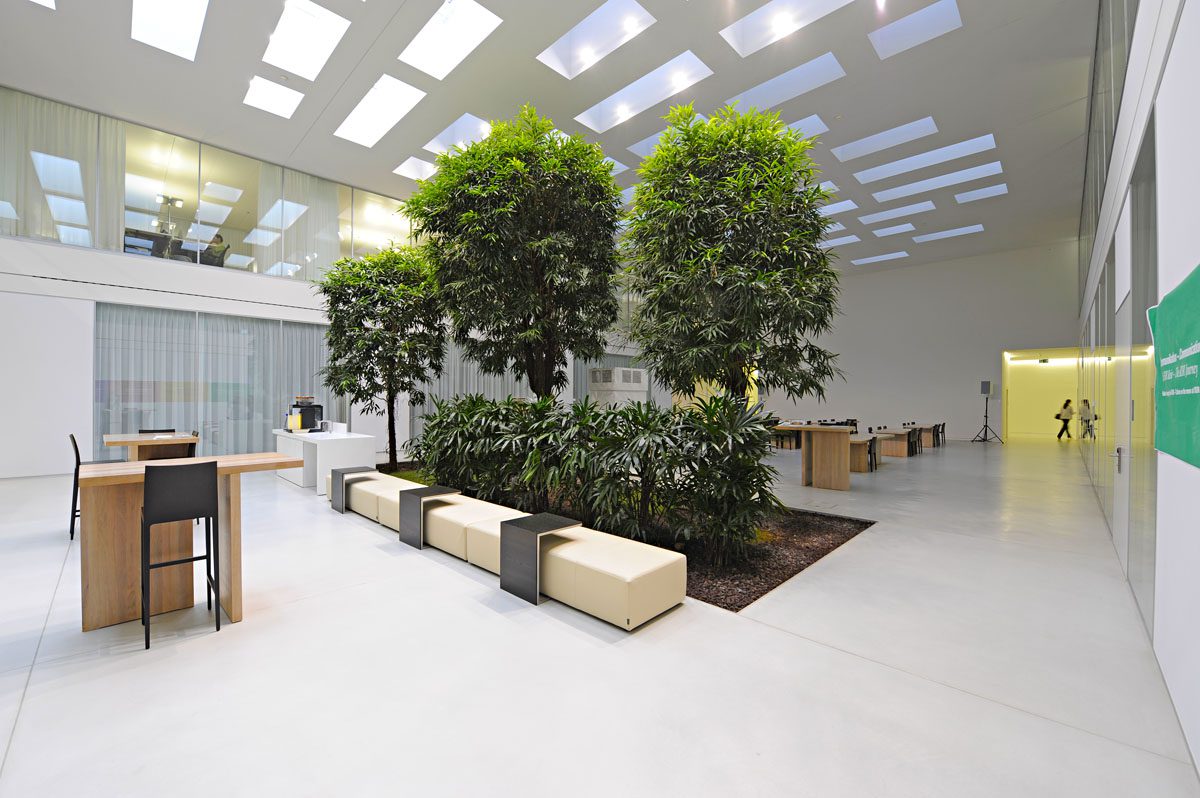
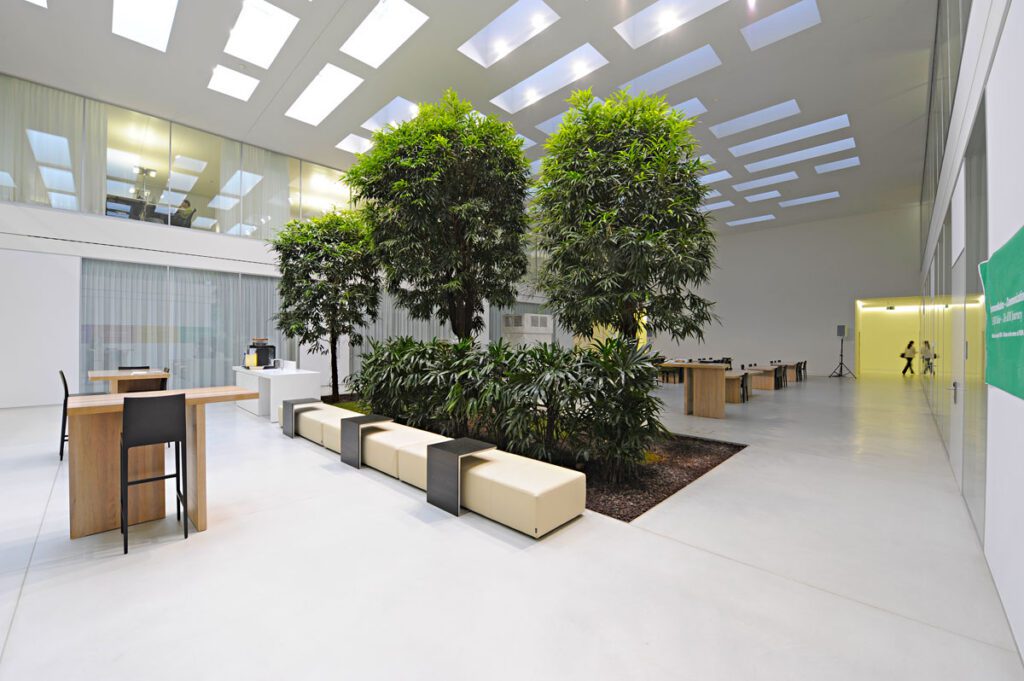
One of the biggest challenges in interior plantscape design is introducing tall indoor plants into environments that can support the long-term health of larger trees or palms. Generally, tree-size plants require more light, and most interiors do not provide enough natural light to support trees taller than ten feet. Fortunately, strategies such as supplemental lighting and thoughtful plant selection make it possible to successfully incorporate height in your workplace office design.
Below are tall indoor plant options organized by category.
Tall Indoor Trees
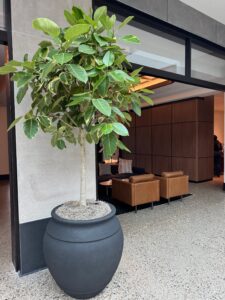 These require excellent light, so supplemental lighting is often necessary. Some specimens can be supported with something as simple as an overhead pendant fitted with a full-spectrum LED fixture on a timer.
The most well-known tree-form indoor plants belong to the genus Ficus. These trees develop woody trunks and foliage arranged in either traditional canopy forms or columnar silhouettes.
Ficus species remain the most recognizable indoor trees. They offer canopy or columnar forms and thrive in bright environments. Specimens are commonly available in heights ranging from 5 to 16 feet. Indoors, they can live for decades and, if conditions allow, may grow to 20 feet or more, depending on ceiling height and maintenance practices. All Ficus varieties can be pruned and shaped to remain within the height parameters of a commercial interior.
- Ficus lyrata (Fiddle Leaf Fig): broad foliage and sculptural presence; available in tree, column, or bush form
- Ficus elastica (Rubber Tree): glossy leaves and a woody trunk; forms a striking canopy that reads like living sculpture
- Ficus alii: narrow leaves; available in classic tree form or sculptural woody trunk configurations with aerial roots
- Ficus Amstel King: slightly broader leaf than alii; somewhat more tolerant of moderate light, though still a high-light plant
- Ficus Audrey: soft matte foliage; canopy can be maintained for a refined look.
Tall Indoor Palms
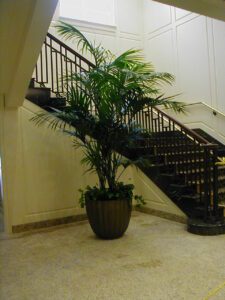 Palms are the other major category of interior foliage plants that add height. The three most widely used for interiors with significant height are Kentia, Adonidia, and Rhapis.
Interior palms are commonly installed between 5 and 16 feet tall. Once established, some species can exceed 20 feet over time. However, palms grow much more slowly indoors. Importantly, when a palm outgrows its space, the height cannot be reduced by cutting the crown — doing so will kill that stem.
Interior palms capable of reaching impressive heights include:
- Kentia Palm: graceful, premium palm with excellent interior tolerance
- Adonidia Palm (Christmas Palm): clean trunk form with tropical character; best in very bright interiors
- Rhapis Palm (Lady Palm): multi-stem structure offering height and fullness with refined texture
Dracaena Varieties with Height
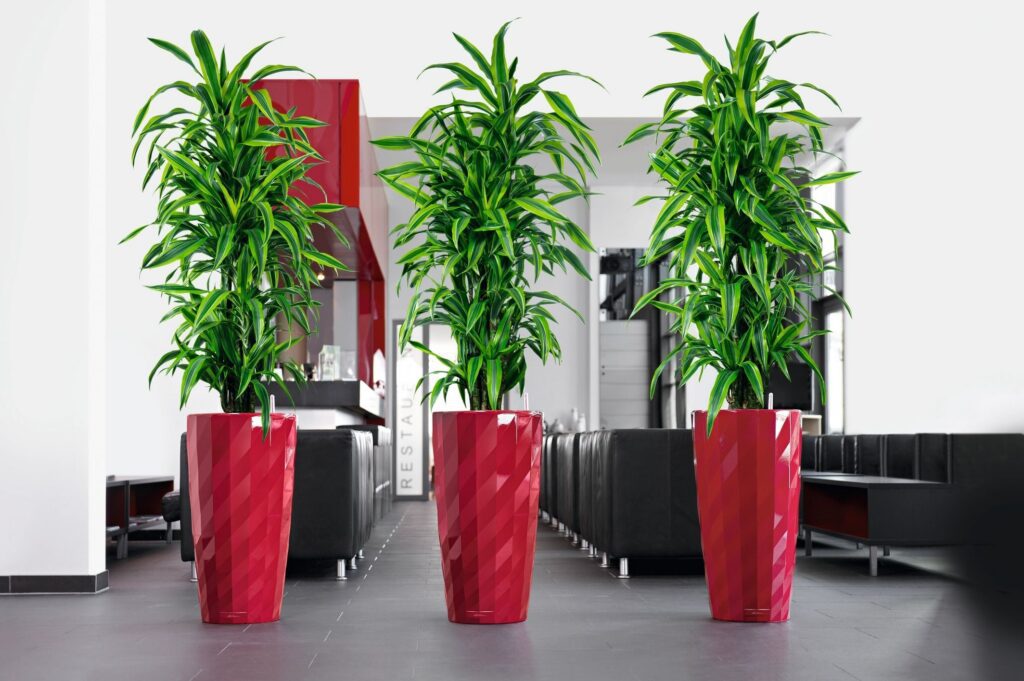
Dracaena varieties can also provide height. In general, Dracaenas tolerate lower light better than Ficus or palms. However, the tallest-growing varieties (those exceeding 10–12 feet indoors), such as Dracaena arborea and Dracaena reflexa (‘Song of India’), require brighter conditions to maintain strong growth and structure.
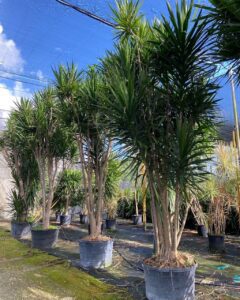 Dracaena ‘Tarzan’ can also arrive with significant height and performs well in medium to bright light.
More commonly, Dracaena is used as a floor plant in spaces requiring approximately five feet of height. These are created from staggered cane groupings and are among the most tolerant plants for typical office lighting. They are true workhorse plants of interior landscape design.
- Dracaena Compacta: dense, upright narrow form, Muli-canes.
- Dracaena Mass Cane (Corn Plant): classic office plant with cane structure
- Dracaena Janet Craig Cane: clean vertical lines ideal, tolerant of office lighting
Staggered cane heights can simulate the layered effect of taller plantings.
Vertical Height Without Trees
In many office environments, achieving vertical impact does not require large trees or high-light conditions.
Tall Totem Vines for Typical Office Lighting
 Vertical height can be achieved using climbing plants trained onto totems or moss poles.
- Pothos Totem
- Philodendron Totem
These vining plants can tolerate lower light levels than the tall Ficus or the tall palms mentioned in this article but can also provide a strong vertical presence. Even though the totems are more tolerant of lower light conditions, supplemental lighting may still be required.
Creating Height Through Planter Design
Another effective method is elevating lower-light plants using raised or tiered planters. By staggering elevations, designers can create vertical rhythm without relying solely on plant height.
Using elevated planters offers height of the planter combined with the height of the medium or even small size plant. This is an excellent technique to create separations for rooms or just a different visual impact by using decorative planters as a design feature.
Designing With Height: Bringing Vertical Greenery to Life
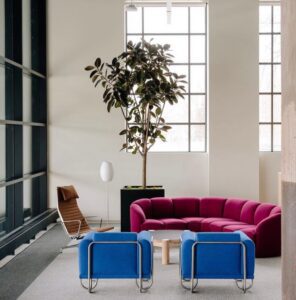 Incorporating tall indoor plants into office interiors enhances spatial perception, supports wellness, and reinforces biophilic design principles. While tall trees and palms typically require higher light levels, thoughtful strategies, including supplemental lighting, cane-form species, vining totems, and raised planters, allow designers to successfully introduce vertical greenery in almost any environment.
For more information on how to provide supplement lighting for interior foliage plants, please visit the Planterra resources guide on lighting.
When height is used intentionally, plants do more than decorate a space, they define it. Planterra is a leading provider of indoor trees and tall plants for interior landscape projects throughout the USA. We specialized in the procurement of specimen indoor plants.
Contact us to discuss your next project.