




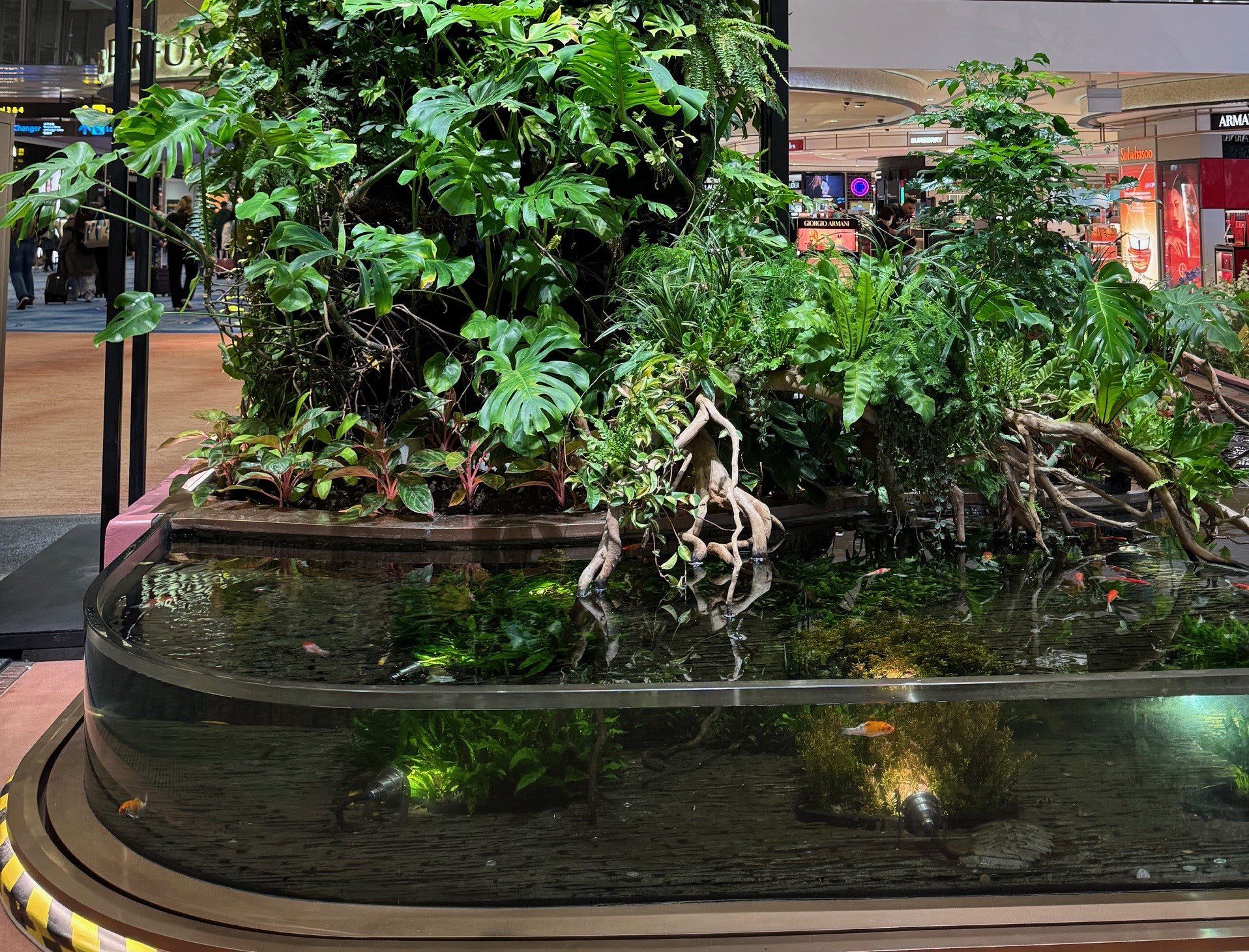
 Biophilia in architecture has become a defining principle in modern commercial design, shaping how offices, hotels, healthcare facilities, and retail environments support human wellbeing. Rooted in the idea that people are biologically wired to connect with nature, biophilic architecture integrates natural elements, materials, and spatial experiences into the built environment in ways that feel intuitive, calming, and restorative.
Unlike decorative greenery or trend-driven aesthetics, biophilia in architecture is most successful when it is intentionally designed, operationally supported, and maintained long term, especially in commercial spaces where performance and durability matter.
What Is Biophilia in Architecture?
 Biophilia in architecture refers to the intentional integration of natural elements, natural analogues, and nature-inspired spatial experiences into buildings to support human health, comfort, and cognitive performance.
The concept originates from biologist E.O. Wilson, who described biophilia as humanity’s innate affinity for the natural world. In architectural practice, this translates into environments that reconnect occupants with nature, even within dense urban or interior-only spaces.
At Planterra, biophilia in architecture is understood as something that must be designed holistically, including interior plantscapes that are planned with proper lighting, access, and professional maintenance to ensure long-term success rather than short-lived visual impact.
Biophilia Meaning in Architecture
The meaning of biophilia in architecture goes beyond aesthetics. It reflects how the human brain responds to:
- Living systems
- Organic forms and materials
- Natural light and water
- Spaces that feel safe, grounded, and empowering
Biophilic architecture recognizes that people do not experience buildings intellectually, they experience them biologically. Environments that align with these natural preferences tend to feel more comfortable, welcoming, and human-centered, even when occupants cannot articulate why.
The Three Pillars of Biophilia in Architecture
A widely accepted framework for biophilic design includes three primary categories. Together, they provide designers with flexibility across different building types and constraints.
1. Nature in the Space
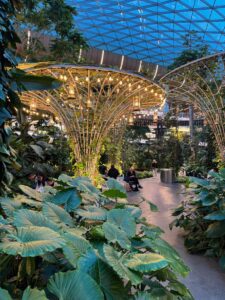 Nature in the space refers to the direct presence of nature within the built environment.
Common examples include:
- Live interior plants and mature trees
- Interior courtyards and conservatory-style spaces
- Green walls and planted atriums
- Water features such as fountains or reflecting pools
- Access to natural daylight and exterior views
Live plants provide the strongest biophilic response because they are dynamic, living systems. They can be touched, they grow and change, and they contribute humidity and naturally occurring plant compounds to the indoor environment.
However, artificial plants and preserved moss can also play a legitimate role in biophilia in architecture. Research and real-world observation consistently show that visual exposure to nature alone can stimulate the biophilic response in the brain. In environments where live plants are impractical due to lighting, access, or operational constraints, high-quality artificial greenery or preserved moss can maintain biophilic impact without compromising performance.
2. Natural Analogues
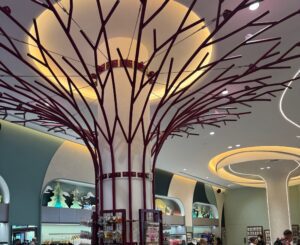 Natural analogues are design elements that reference nature without being alive.
Examples include:
- Organic and fractal patterns
- Materials such as wood, stone, sand, or clay
- Textures inspired by leaves, bark, or geological layers
- Lighting effects that mimic filtered daylight or canopy shadows
Natural analogues are particularly effective in large commercial interiors—such as corporate offices, hotels, and casinos—where fully immersive natural environments may not be feasible throughout the entire space.
3. Nature of the Space
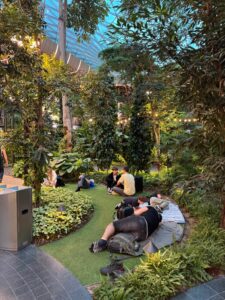 Nature of the space focuses on how a space feels to occupy, rather than what it contains.
This pillar includes:
- Clear sightlines combined with areas of refuge
- Spaces that feel open yet protected
- Gradual transitions between intimate and expansive zones
- Environments that offer visibility without vulnerability
Many principles of Feng Shui align naturally with this approach, as do strategies used in hospitality and gaming design. Casinos, for example, intentionally vary spatial conditions to create feelings of comfort, empowerment, and psychological safety—often enhanced by the strategic placement of interior plants
Examples of Biophilia in Architecture Across Commercial Spaces
Biophilic design appears across a wide range of commercial environments, each applying natural elements in ways that support its specific function and audience.
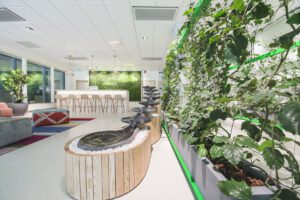
Corporate Workplaces
Biophilia in office architecture supports focus, creativity, and employee wellbeing. Interior trees, planters, and green walls soften hard edges and counterbalance technology-heavy environments.

Hospitality: Hotels and Casinos
Hotels and casinos use biophilic design to elevate guest experience and brand perception. Lush planting, conservatory-style interiors, and nature-inspired materials create memorable, emotionally engaging environments.
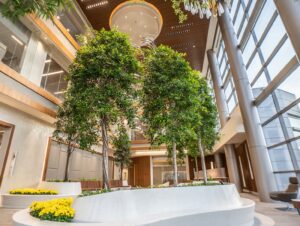
Healthcare Environments
In healthcare architecture, biophilia helps reduce stress and support emotional wellbeing. Plants, daylight, and calming spatial cues humanize clinical settings without compromising operational requirements.

Retail and Experiential Design
Retail environments increasingly rely on biophilia to encourage dwell time and emotional connection. Greenery transforms transactional spaces into destinations.
Why Plants Deliver One of the Highest ROIs in Biophilic Architecture
From a cost-to-impact perspective, interior plants are among the most effective biophilic elements available.
Compared to structural changes or major architectural interventions, plants:
- Require relatively low capital investment
- Deliver immediate visual and emotional impact
- Can be scaled or phased over time
- Adapt to existing architecture
- Reinforce wellness and brand values
When designed with proper access to light and supported by a professional maintenance plan, interior plantscapes remain visually successful for years—protecting the original design intent and avoiding the degradation commonly associated with unmanaged greenery.
Biophilia in Architecture: Key Takeaways
- Biophilia in architecture reconnects people with nature through design
- It includes live plants, natural analogues, and spatial psychology
- Successful biophilic design must account for long-term maintenance
- Interior plants offer one of the highest ROI strategies in commercial biophilic design
As commercial buildings continue to evolve toward healthier, more experience-driven environments, biophilia in architecture offers a framework that is both timeless and adaptable. When nature is thoughtfully integrated—and supported over time—it becomes one of the most powerful tools designers have to create spaces that truly work for the people inside them.
Book a CEU Presentation on Biophilia
Planterra’s Shane Pliska is a registered trainer for several CEU accredited presentations including: Nature’s Blueprint: Unleashing the Power of Biophilic Design and Biophilic Design in Fitwel, the WELL Building Standard and the Living Building Challenge produced by Green Plants for Green Buildings.
Planterra offers these presentations to the architecture and design community. If you would like to book a presentation virtually or an in-person lunch and learn please contact us.