




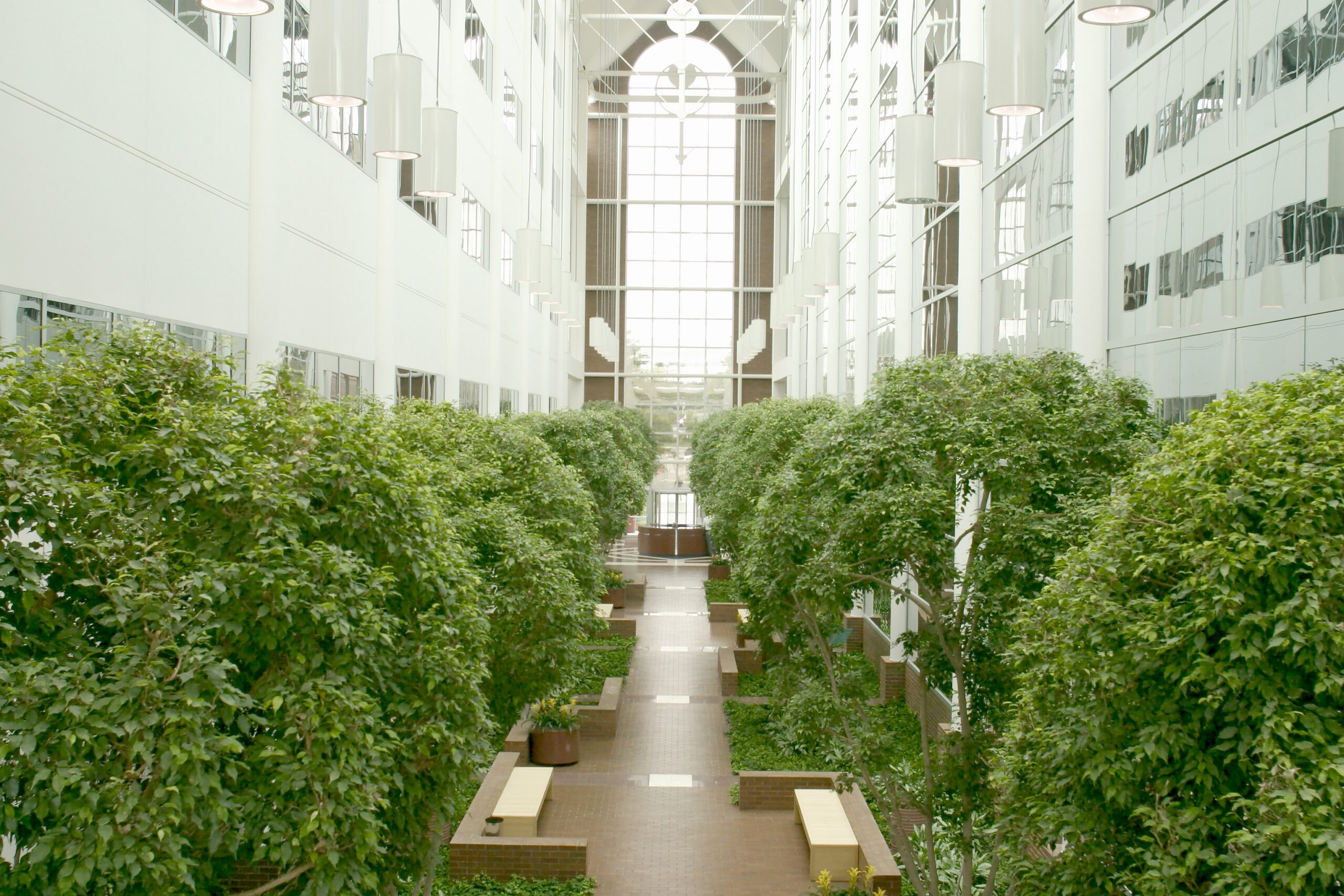
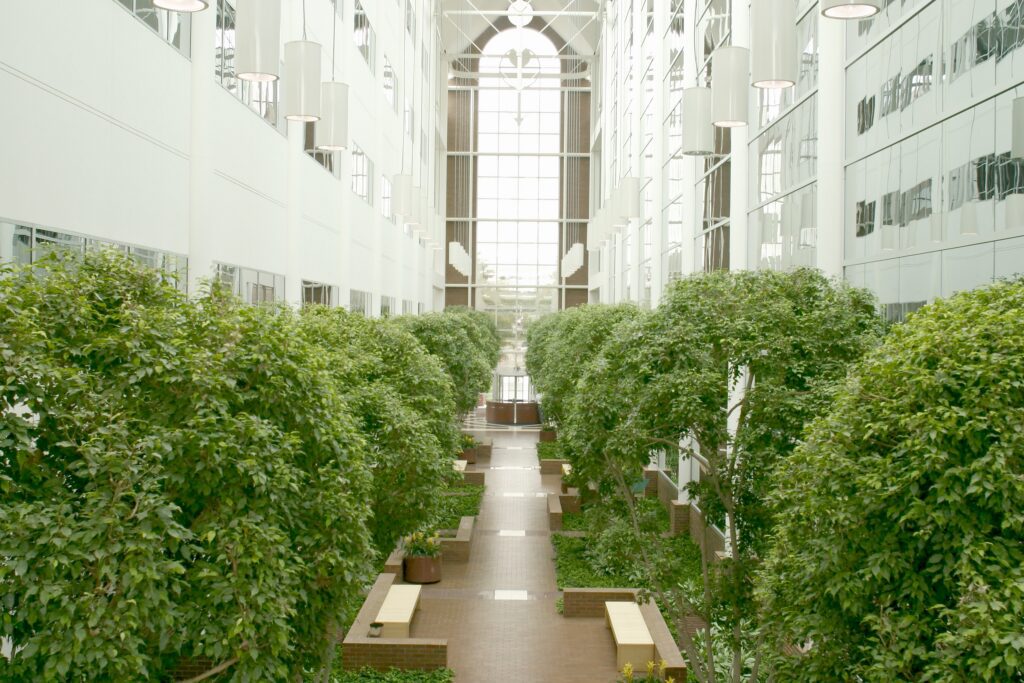
Few plant genera have shaped the interior landscaping industry like the Ficus. For decades, ficus trees have defined what it means to bring true tree form indoors, providing scale, permanence, and architectural presence that few other plant categories can match. Their woody trunks, branching structure, and defined canopy allow designers to replicate the feeling of an outdoor landscape inside commercial buildings, hospitality environments, and residential spaces.
At Planterra, ficus trees were not simply popular selections, they were foundational to the early growth of the interior landscape industry in North America. During the 1970s and 1980s, large commercial developments required such substantial quantities of ficus trees that Florida growers constructed custom shade structures specifically to meet demand. That history underscores the important role contract grown ficus trees have played in shaping modern interior plantscaping.
What Is a Ficus?
A Ficus is a genus of tropical plants comprising more than 900 species of trees, shrubs, vines, and epiphytes. Many species are commonly referred to as figs. Ficus species are native primarily to tropical regions of Asia, Africa, Australasia, and parts of the Americas. In their natural habitats, many ficus species grow into expansive canopy trees with aerial roots and dramatic branching structures.
While the genus is vast, only a limited number of ficus varieties adapt well to containerized growing and controlled interior environments. Those adaptable varieties have become essential components of interior landscaping because they offer durability, sculptural form, and long-term performance when properly maintained.
Why Ficus Became Essential to Interior Landscaping
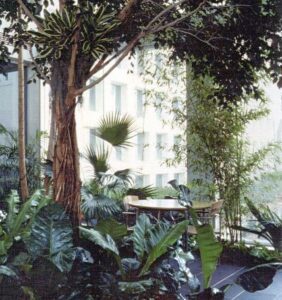 Ficus trees offer something rare in the indoor plant world: authentic tree architecture. Unlike smaller foliage plants, ficus varieties develop woody trunks, structured branching systems, and defined canopies that create the visual mass of a true tree. This allows designers to introduce height, vertical scale, and spatial balance in large rooms, lobbies, and atriums.
In addition to their visual impact, ficus trees tolerate pruning and shaping well, allowing them to be maintained within specific design parameters. They adapt to containerized growing, can live for many years indoors under professional care, and complement a wide range of architectural styles from traditional to contemporary. Historically, in office buildings, hotels, shopping centers, and corporate atriums, ficus trees were among the only species capable of convincingly delivering the experience of an indoor park.
When Does a Ficus Become a Tree?
Botanically, many ficus species are technically trees. However, within the interior landscaping trade, terminology is often based on scale and structural maturity rather than botanical classification. A ficus plant typically refers to a juvenile or smaller specimen, often under five feet in height. A ficus tree, by contrast, generally describes a specimen exceeding five feet with a developed woody trunk and branching canopy.
The distinction is not solely about height but about architectural presence. Once a ficus develops a defined trunk and canopy structure, it begins to function visually as a tree within a space, even if it is relatively compact. The transition from plant to tree is therefore a matter of structural maturity and spatial impact.
Popular Ficus Trees for Interior Design
Several ficus varieties dominate contemporary interior design.
Ficus Lyrata
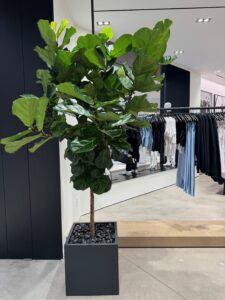 Ficus lyrata, commonly known as the Fiddle Leaf Fig, features large, violin-shaped leaves and a bold sculptural presence. It performs best in highlight environments and is widely used in modern residential and hospitality settings.
Ficus Elastica
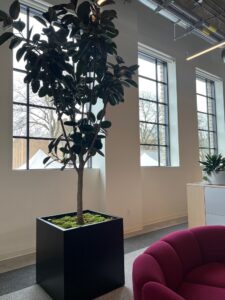 Ficus elastica, often called the Rubber Tree, is valued for its thick, glossy foliage, which may range from deep green to burgundy tones. It tends to be somewhat more tolerant of moderate light conditions and works well in both contemporary and corporate interiors.
Ficus Audrey
 Ficus Audrey has gained popularity as a refined alternative to older ficus selections. With softer green foliage and improved leaf retention, it offers stability and elegance in both residential and commercial installations.
Ficus Alii
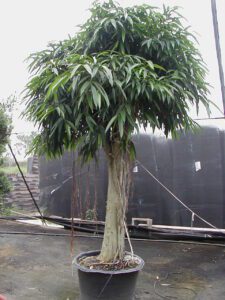
Ficus Alii and Ficus Amstel King are characterized by their long, narrow leaves and more controlled canopy forms. These varieties are often selected for professional maintenance programs because they demonstrate improved adaptability to interior conditions and offer a cleaner, more architectural silhouette.
What Is a Full Ficus Tree?
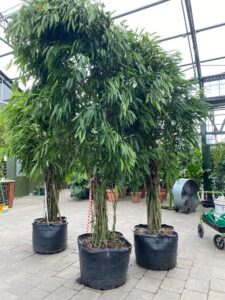 A full ficus tree refers to a specimen with a dense, well-developed canopy and a defined woody trunk, as opposed to a single-stem or juvenile plant. The term is commonly used to describe mature ficus trees that have reached architectural scale, typically five feet or taller, with branching that fills the visual space around them rather than growing in a single upright column.
Full ficus trees are often the result of multi-stem planting, intentional shaping, or simply time and proper growing conditions. In commercial interior design, a full ficus delivers the kind of visual mass and spatial presence that smaller specimens cannot achieve. They are frequently specified for lobbies, atriums, and large open-plan offices where a single statement tree anchors the design.
Achieving and maintaining a full canopy indoors requires adequate light, professional pruning, and consistent care. Without these, even a naturally full specimen will thin over time as lower and interior leaves are shed in response to reduced light exposure.
Ficus Trees Less Common Today
Some ficus varieties that were once dominant in commercial interiors are less widely used today. Ficus benjamina, commonly known as the Weeping Fig, was extremely popular in the 1980s and 1990s but is sensitive to environmental changes. It often responds to shifts in light or airflow with significant leaf drop.
Ficus nitida was historically used in large atriums but presents challenges related to size management and long-term interior performance. As newer, more stable cultivars became available, designers increasingly favored alternatives that offered improved reliability.
What Environmental Conditions Does a Ficus Tree Require?
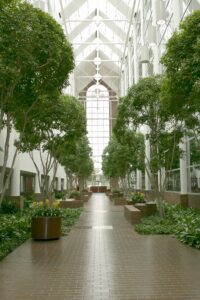 Ficus trees are adaptable, but they are not indestructible. Because most indoor ficus varieties originate from tropical and subtropical regions, they perform best when interior environments replicate certain natural conditions. Understanding light, temperature, humidity, irrigation, soil structure, and air movement is critical to long-term success.
Light is the single most important factor. Most ficus trees require bright, indirect light to maintain leaf density and structural integrity. In commercial settings, this often means placement near large windows with filtered exposure or the integration of supplemental grow lighting. Light levels below optimal thresholds can result in leaf drop, elongated growth, thinning canopies, and overall decline. Taller tree-form specimens require more light than smaller foliage plants because they support greater leaf mass.
Temperature stability is equally important. Ficus trees prefer consistent indoor temperatures typically between 65 and 80 degrees Fahrenheit. Sudden fluctuations caused by drafty entrances, HVAC vents, or seasonal changes can trigger stress responses, including leaf shedding. Unlike some tropical plants, ficus varieties do not respond well to repeated environmental shifts.
Humidity plays a supporting role in plant health. While many ficus varieties can tolerate average indoor humidity levels, excessively dry air — particularly during winter heating months — may lead to browning leaf edges or increased susceptibility to pests. In large commercial buildings, humidity control within standard comfort ranges is typically sufficient when combined with proper irrigation practices.
Water management must be carefully calibrated. Ficus trees prefer evenly moist soil but are highly sensitive to overwatering. Containers must provide adequate drainage, and irrigation schedules should account for seasonal growth cycles, light availability, and container size. Over-saturation can lead to root rot, while chronic underwatering can cause leaf drop and canopy thinning.
Soil composition is another important variable. A well-aerated, professionally formulated growing medium that balances moisture retention with drainage is essential for long-term root health. Compacted soils reduce oxygen availability to roots and can accelerate decline in interior environments.
Finally, placement stability is critical. Ficus trees do not appreciate frequent relocation. Once acclimated to a specific light direction and intensity, moving a tree can trigger temporary stress and leaf drop. For this reason, careful site evaluation prior to installation is one of the most important decisions in interior ficus success.
What Is a Faux Ficus Tree?
A faux ficus tree is a high-quality artificial replica of a live ficus, designed to replicate the look of a real tree without the need for light, water, or ongoing plant care. The best faux ficus trees use real preserved wood trunks for authenticity, with UV-rated synthetic foliage that resists fading in light-exposed environments.
Faux ficus trees are a practical solution in environments where light levels are insufficient to support live trees, but they are not maintenance-free. Dust accumulation requires regular cleaning, and long-term exposure to light may cause fading. In many cases, high-end faux trees cost more than live installations. The decision between live and artificial material should be based on environmental conditions, design life cycle, budget and long term goals.
Bring the Right Ficus Tree Into Your Space
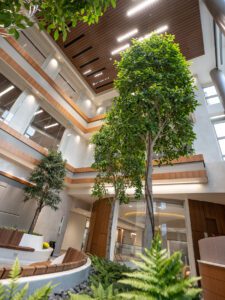 Selecting the right Ficus tree is not simply about choosing a beautiful plant, it is about understanding light levels, architectural scale, irrigation strategy, and long-term maintenance. A ficus can elevate a space for decades when properly specified. It can also decline quickly when environmental conditions are misunderstood.
At Planterra, we have been designing, sourcing, installing, and maintaining ficus trees in commercial environments for over 50 years. From large atriums and corporate headquarters to hospitality spaces and co-working spaces, we understand what it takes to make tree-form plants thrive indoors.
Whether you are designing a new space or troubleshooting an existing installation, our team can help you:
- Evaluate light conditions and recommend appropriate varieties
- Specify tree form, size, and container solutions
- Consult on supplemental lighting strategies when needed
- Develop long-term maintenance programs
- Compare live and high-quality faux ficus options
If you are considering a Ficus tree for your commercial environment, contact interior landscape design our team for a consultation.
Related blog articles:
- Tall Indoor Plants that Add Height and Style to Office Interiors
- What is My Indoor Tree Worth?
- How Planterra Procures Rare Tropical Plants and Contract-Grown Foliage
- Ficus Myths Debunked: Facts for Healthier Indoor Trees