




A Guide to Indoor Tree Appraisal for Building Owners, Designers and Renovation Teams
When you purchase or begin renovating a building with existing indoor trees, especially large, mature specimens, you inherit more than just plants.
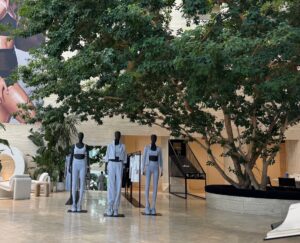
The signature Ficus tree in the former headquarters of Sony Pictures was saved when this space converted into the headquarters of a major fashion brand.
These trees may be architectural features, legacy assets, or liabilities depending on their condition and the scope of your project. Before making decisions about removal, redesign, or replacement, it’s essential to understand the indoor tree appraisal process and what these long-standing trees may actually be worth.
In many commercial properties built between the 1980s and early 2000s, atriums and lobbies included large interior trees in built-in beds, many of which have now reached decades of growth. For new owners or renovation teams, these trees can be surprising treasures, or surprising challenges. A proper valuation helps determine whether to preserve them, relocate them, protect them during construction, or replace them entirely.
What Makes an Indoor Tree Valuable?
A legacy indoor tree is typically a specimen that has been thriving inside a building for 20 years or more. Over time, it adapts to the unique microclimate created by the building, light levels, airflow, humidity, and temperature, and grows far beyond the scale of anything that can be easily sourced or delivered today.
Several factors influence the value:
1. Size and Scale That Cannot Be Replaced
A mature Ficus or Schefflera, for example, may have a trunk diameter or canopy width that exceeds what can fit through modern entryways, elevators, or stairwells. Even if a similar tree could be purchased, it cannot be transported into the building, making the existing one uniquely valuable.
2. Acclimation to the Environment
Legacy trees have survived decades of seasonal lighting changes, HVAC conditions, and indoor environmental fluctuations. These trees have adapted to their environment and thrived. It takes time for a new tree to establish itself, and in some cases, new installations fail.
3. Aesthetic and Biophilic Impact
Large indoor trees dramatically enhance a space. Their presence contributes to:
- Visual identity
- Tenant satisfaction
- Biophilic wellness benefits
- Real estate value
- Retail or hospitality ambience
4. Difficulty and Cost of Removal
There is typically no value in attempting to sell or move oversized specimen trees. The labor required to remove them and the disturbance caused is extremely costly, and even with ideal conditions, it is difficult to guarantee a successful transplant from a building interior.
When these factors combine, the result is often a tree that holds far greater value than an outside observer might realize.
Unsure Whether to Keep the Tree? Start with a Health Assessment

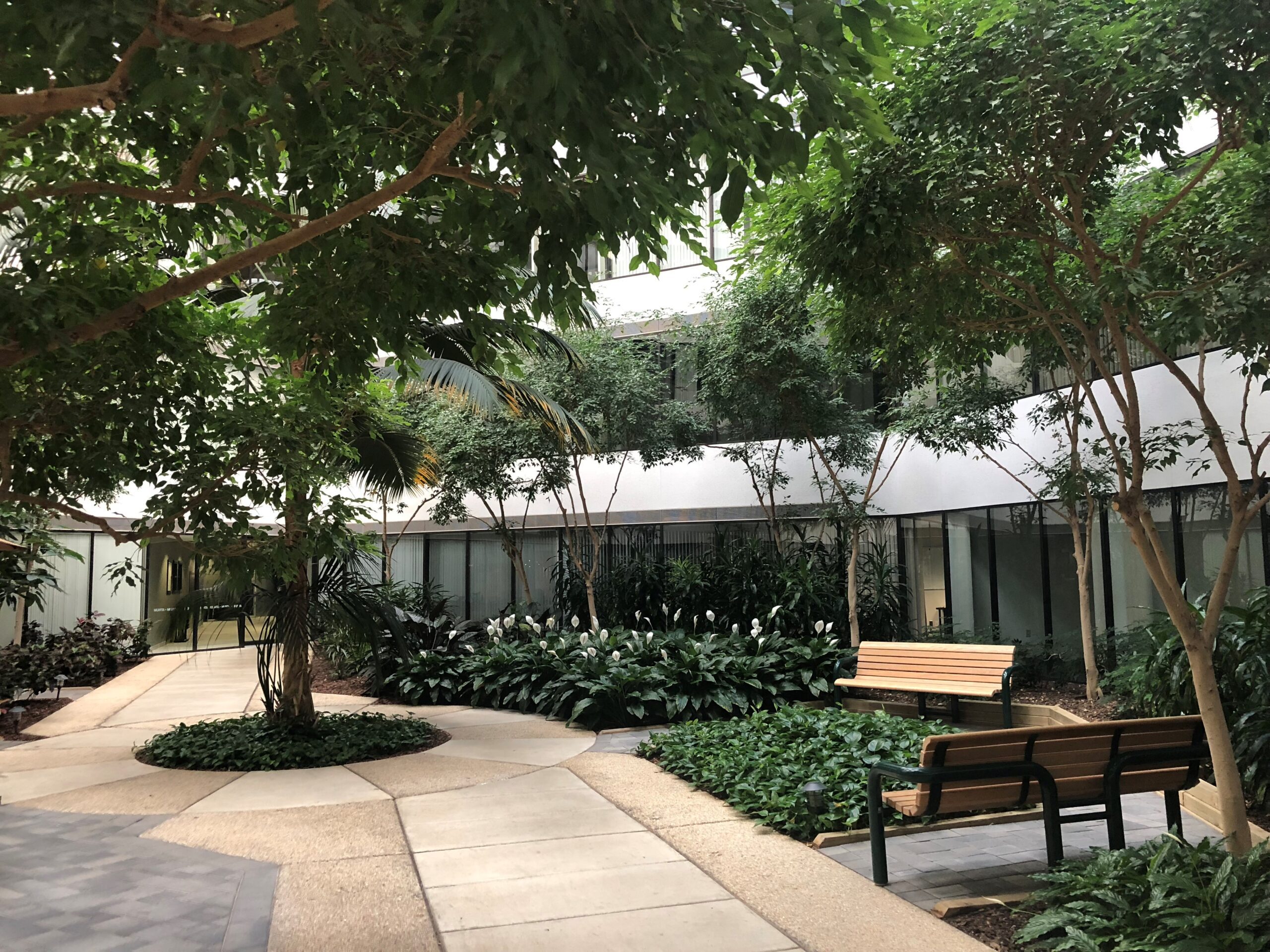
This atrium originally featured live Ficus trees planted in 1984, which matured over a 30-year span. New building owners later removed the living trees and replaced them with smaller artificial trees.”
If a tree looks unattractive, overgrown, sparse, or neglected, you may question whether it’s worth saving, especially during a modernization project.
A professional interior landscape firm can provide a health assessment, but be clear about your goals. Some vendors may be incentivized to recommend replacements or artificial replicas, and while that information is useful, it shouldn’t replace an objective evaluation.
Key Questions to Determine Whether a Tree Is Worth Saving
1. Does it have unique or architectural value?
A large canopy or sculptural trunk form can significantly enhance a space.
2. Can the species be rejuvenated?
Ficus trees, for instance, can be heavily pruned and rebound beautifully.
Palms cannot—removing the crown will kill them.
3. Is the building operating during renovation?
After severe pruning, the tree may look unattractive for a period. Many species require six months or more to fully leaf out again.
4. Can the tree survive renovation conditions?
During construction, the tree must be protected and kept alive with:
- Stable temperatures
- Controlled dust levels
- Adequate light
- Regular water and maintenance access
If these conditions cannot be guaranteed, even a healthy tree may decline.
Why Saving Legacy Indoor Trees Is a Smart Strategy for Renovation Projects

Trees with sculptural characteristics are worth keeping and regrowing.
Many older commercial properties, shopping centers, corporate offices, bank lobbies, municipal buildings, originally featured interior landscapes with large Ficus trees. Owners who retained these trees are now discovering a powerful advantage:
You cannot buy this scale of tree anymore.
Very few nurseries grow 25–40-foot interior-grade specimens, and the lead time for such trees is generally at least 12 months. Transporting a tree of this size into an existing building is often impossible. When many of these buildings were originally constructed, the trees were brought in through open window bays before the final glazing was installed.
With the surge in demand for biophilic design, legacy indoor trees have become rare, irreplaceable assets that:
- Increase the perceived value of the building
- Improve the tenant experience
- Support wellness and productivity
- Create a distinctive visual identity
In fact, these trees may be the only feature in an older building that has appreciated in value. Before cutting down a legacy tree, consider whether you are removing something that cannot be re-created at any cost.
What Is the Replacement Value of a Large Indoor Tree?
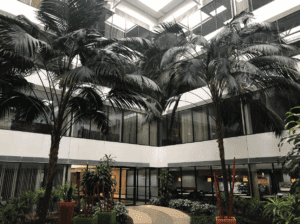
Palm trees die if the crown is cut. These specimen Kentia trees are very valuable and if maintained will do well in this space for another 10 to 20 years.
Appraising the value of a mature indoor tree involves estimating what it would cost to recreate the same effect today. This includes the tree itself, plus labor, logistics, and installation.
Modern replacement costs:
- Full interior atrium installation with large trees: $100,000 to $500,000+ (live or artificial)
- Single large-scale artificial tree: $50,000–$250,000+
- Live replacement equivalent to a 30–40-year-old tree: Often impossible due to logistics.
Because a legacy tree may simply not be replaceable, its value often exceeds any direct dollar comparison.
When to Request a Professional Indoor Tree Appraisal
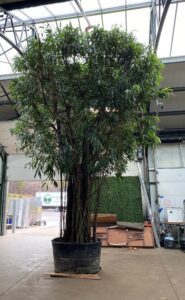
This Ficus Ali tree with a substantial trunk was handpicked in Florida by Planterra designers.
You should seek an appraisal when:
- Purchasing a building with existing indoor trees
- Planning renovations or repositioning
- Filing insurance claims
- Considering removal or replacement
- Evaluating property value and amenities
- Creating long-term tenant experience strategies
An expert appraisal will detail replacement value, aesthetic value, logistical constraints, and the feasibility of preservation.
Planterra Can Help
Planterra’s horticultural experts specialize in indoor tree appraisal and renovation planning for buildings with enclosed atrium spaces. Whether your goal is restoration, replacement, or modernization, our team can provide the insight needed to make informed decisions and preserve the living assets that make your space unique. Planterra is a contractor that provides large scale indoor trees. Contact us for more information.
Articles related to this subject: