




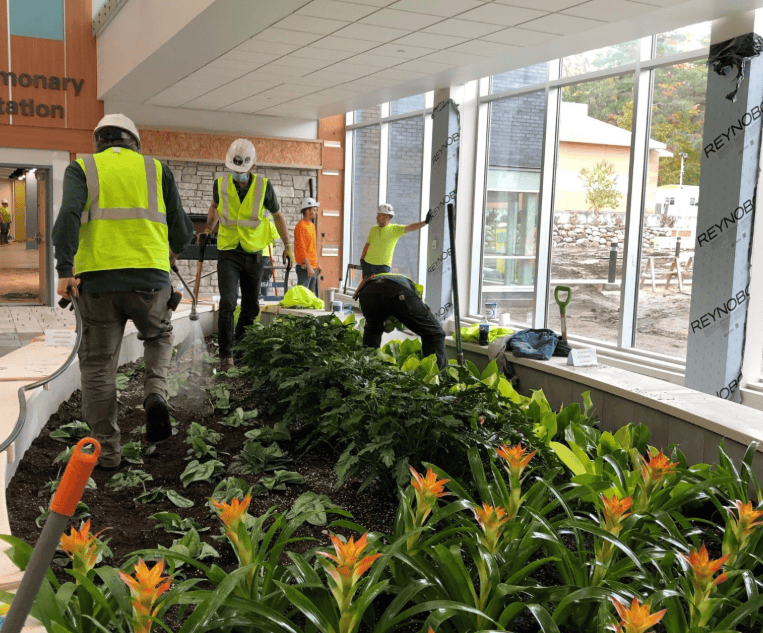
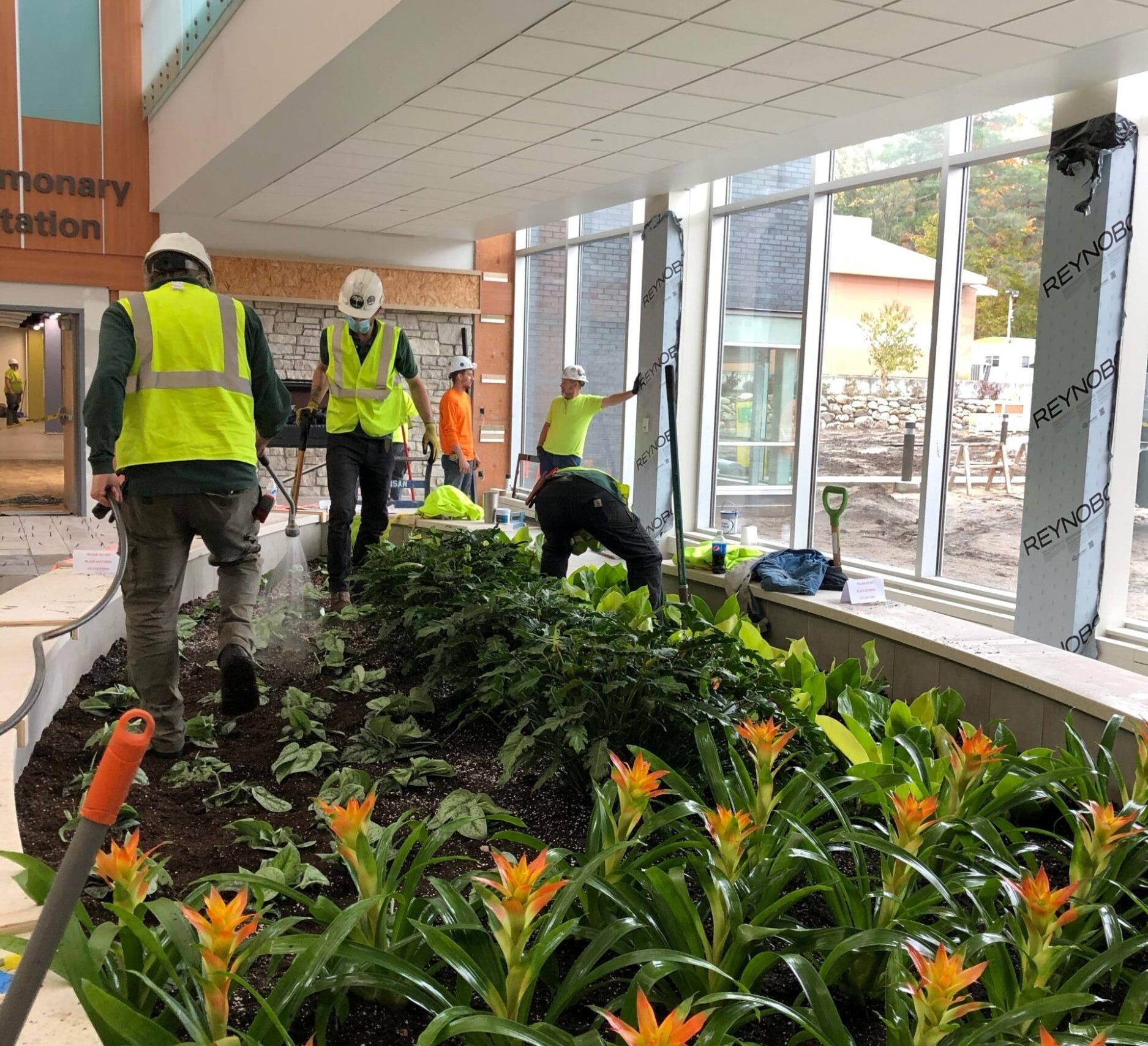
Putting a few plants in a single office is a purchase. Running a plant program across a million-square-foot campus, or a hundred locations, is an operation. The two look similar on the surface and behave nothing alike, and the difference is exactly where facility leaders get caught out.
At scale, plants stop being décor and become a program with procurement, logistics, standards, budgets, and accountability attached. Managed well, that program is an asset that pays back in productivity, brand, and even certification credits. Managed loosely, it becomes a slow, expensive mess spread across every site you oversee. Here is what to know before you commit.
What Is a Large-Scale Plant Program?
A large-scale plant program is a coordinated system for designing, procuring, installing, and maintaining interior plants across a large facility or many locations, managed to a single standard rather than site by site. It treats greenery as managed infrastructure, with defined specifications, a maintenance schedule, and one party accountable for the result.
The distinction from a typical office order is the coordination. A single office can buy plants and figure out watering later. A program cannot, because every decision multiplies: by square footage, by number of sites, by the years the program has to hold up. That multiplication is the whole challenge, and it is why the approach that works for one lobby fails badly at scale.
Why Scale Changes Everything
The jump from a single installation to a large program is not a matter of ordering more plants. It changes the nature of the problem in a few specific ways.
- Procurement and logistics. Sourcing hundreds of specimens in consistent sizes and health, delivering and installing them across sites, and replacing them on a schedule is a supply-chain exercise, not a shopping trip.
- Consistency across space and sites. The program has to look and perform the same in every location, which is impossible to guarantee when each site is left to its own devices.
- Maintenance at volume. More plants across more places means more that can quietly decline, and the failure of a program almost always traces back to maintenance, not design.
- Accountability. With many locations and vendors, responsibility diffuses until no one owns the outcome, which is when quality slips.
Each of these is manageable. What makes them hard is that they compound at once, and a large program has to solve all four at the same time.
What Facility Leaders Need to Evaluate
Before signing off on a program, it helps to have a short checklist of what actually determines whether it succeeds. These are the factors worth pressing any provider on.
| Consideration | Why It Matters | What Good Looks Like |
|---|---|---|
| Single point of accountability | Diffused responsibility is why programs drift | One account manager owns the entire program |
| Coordinated national network | Local execution has to match central standards | Managed centrally, performed by vetted local crews |
| Documented design standards | Consistency is impossible without a defined spec | Custom specifications for every site and season |
| Procurement model | Buying and renting have very different economics at scale | A clear recommendation based on your horizon |
| Maintenance and warranty | The program lives or dies on upkeep | Scheduled service and plant replacement guarantees |
| Standards and certification | Programs can earn WELL or LEED credit | Design mapped to the credits you are pursuing |
| Budget predictability | Surprises kill programs mid-contract | Transparent, multi-year cost structure |
The through-line across the whole checklist is coordination under one roof. Most program failures are not design failures. They are management failures, and they are prevented by structure rather than effort.
Buy or Rent at Scale?
One of the first real decisions is whether to purchase the plants outright or run a rental program that bundles the greenery with its care. At scale, the math is different than it is for a single office.
Buying can make sense when a design is expected to stay fixed for many years and the organization is prepared to contract separately for ongoing maintenance. Renting tends to win for large and multi-site programs because it avoids the upfront capital outlay, folds maintenance and replacement into a predictable monthly cost, and builds in the flexibility to refresh the design as the space evolves. We lay out the full tradeoff in our comparison of commercial plant rental versus buying, which is worth reading before a large commitment. For most facility leaders managing scale, predictable operating cost beats owned inventory.
Plants and Green-Building Standards
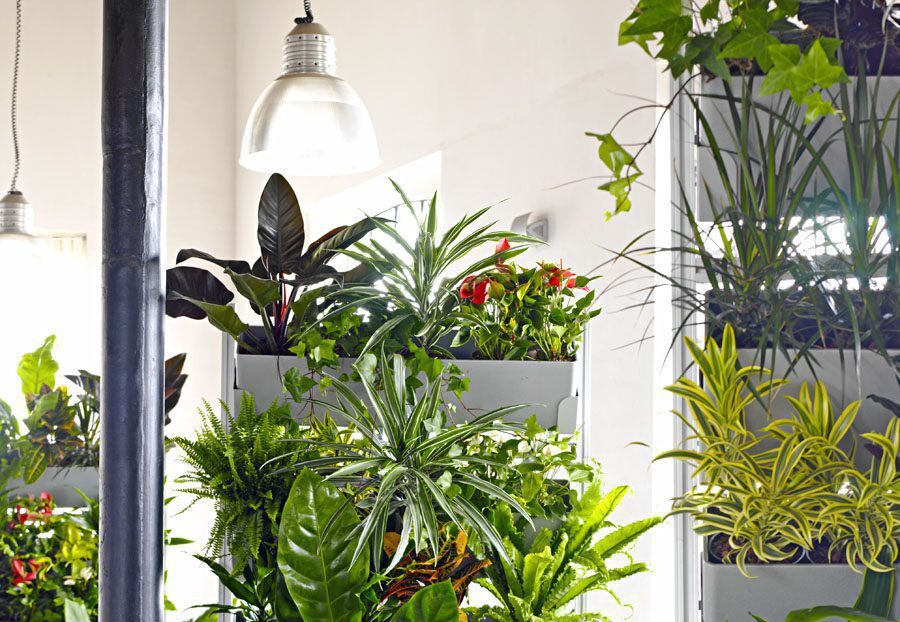
For many large programs, plants are not only an amenity. They are part of a certification strategy, and this is where scope and standards intersect in a way facility leaders should know about.
The WELL Building Standard treats biophilia as a formal feature within its Mind concept, with specific, quantitative thresholds. Its requirements include indoor plantings covering at least 1 percent of floor area per floor and plant walls covering at least 2 percent of a floor’s wall area, among other elements. In other words, the size and coverage of your plant program can directly support WELL certification, and similar logic applies to LEED and Fitwel. Designing a program with those thresholds in mind turns an expense into a credit-earning investment. This is where working with a provider fluent in the standards matters, a fluency reflected in our own approach to biophilia in architecture.
Protecting Consistency and the Investment at Scale
A large program’s biggest risk is not the installation. It is what happens in month seven, across a dozen locations, when no one is watching closely.
The two safeguards are the same ones the checklist points to: consistent professional maintenance so the program stays healthy everywhere, and a single accountable partner so quality does not fracture from one site to the next. We cover both in depth in our pieces on consistent plant care across locations and the hidden cost of poor plant maintenance. This is also where experience shows. Planterra installed the interior landscape at the 2-million-square-foot Detroit Renaissance Center, at the time the largest such installation in the country, and delivered an early large-scale living wall at MGM Grand Las Vegas, and today runs national account programs for organizations with locations across the United States and Canada. Scale is a discipline, and it is one built over decades rather than improvised per project.
Plan a Program Built to Scale
A large plant program rewards the same things any large facilities investment does: clear standards, one accountable partner, and a plan for the long term. Planterra designs, procures, installs, and maintains interior plant programs for large campuses and multi-location organizations across the country, managed to one standard everywhere. Talk to our team about scoping a program for your footprint.