




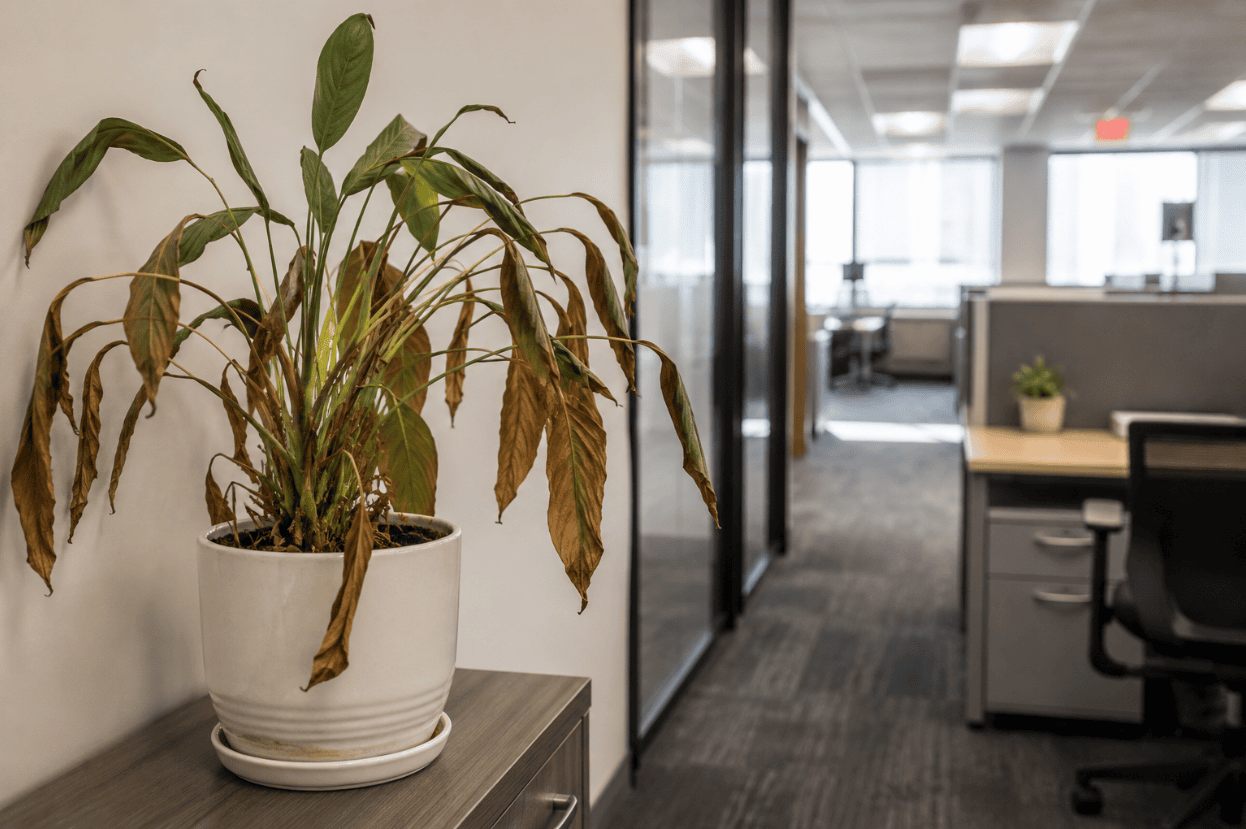
Every office has one. The plant in the corner with brown-tipped leaves and a film of dust, the one nobody remembers watering and everybody has stopped noticing. It looks like a small thing. It is not. That plant is quietly costing the organization money, and more than the price of the plant itself.
Companies invest in interior plants for good reasons: a healthier, more appealing workplace that reflects well on the brand. When maintenance slips, that investment does not simply pause. It reverses. Poor office plant maintenance carries a stack of hidden costs that rarely show up on a budget line, and they add up faster than most facility leaders expect.
The Real Cost of Poor Office Plant Maintenance
The obvious cost is the plant you have to replace. It is also the smallest one. The expensive damage happens in four places most organizations never think to measure.
Replacing Plants is Only the Visible Cost
Dead plants get replaced, and replacement has a price, but the deeper waste is the capital already spent. A specimen tree or a living green wall, which can run around 200 dollars per square foot to install, represents a serious investment that neglect throws away. Worse, without a maintenance program the same failures repeat, so you are not paying once. You are paying again every time the cycle runs, funding the same installation two or three times over instead of protecting it once.
Neglect Quietly Damages Your Brand
A dying plant is a signal, and people read it without realizing they are. A prospect walking through your lobby, a candidate interviewing for a role, a client visiting for the first time: each one registers a wilting, dusty plant as a small sign that the details here are not attended to. It is unfair, but it is human. The greenery that was supposed to say the organization is thriving and cared for ends up saying the opposite, and no one tells you that is the impression they left with.
You Forfeit the Return You Paid For
The business case for office plants rests on outcomes: focus, wellbeing, a workplace people want to be in. A 2024 systematic review of 74 peer-reviewed studies confirmed those benefits are real and consistent. But they depend on healthy, thriving plants. A struggling plant delivers none of the wellbeing lift and all of the cost. You keep the expense on the books and quietly lose the entire reason you made it, which is the most expensive outcome of all. We make the full performance case in our guide to biophilic office design.
Failed Plants Create Real Operational Problems
Neglected plants do not just look bad. Overwatered or poorly maintained plantings invite pests, mold, and odor, and a failed living wall with malfunctioning irrigation can mean actual water damage to finishes and structure. Then there is the staff time. When there is no professional program, keeping plants alive falls to employees who were not hired for it and do it inconsistently, which is how most office plants die in the first place.
Why Office Plants Fail in the First Place
 Most plant failures are not bad luck. They trace back to a handful of predictable causes, and understanding them is the first step to avoiding the costs above.
The most common is the wrong plant in the wrong place, usually a species that needs more light than the space provides. Selecting resilient plants matched to actual conditions, as we cover in our guide to the best low light office plants, prevents a large share of failures before they start. The next cause is care by default: watering that happens when someone remembers, with no schedule, no accountability, and no one who can spot a problem before it spreads. And in multi-location organizations, the deepest cause is inconsistency, where each site handles plants in its own way and quality drifts from one address to the next.
What Professional Office Plant Maintenance Actually Includes
Avoiding these costs is not about trying harder in-house. It is about treating plant care as the specialized service it is.
A professional office plant maintenance program builds in what ad-hoc care cannot: scheduled service visits at the right frequency, species chosen for the conditions, seasonal rotation, and a warranty that replaces covered plants that decline at no extra cost. Crucially, it puts one accountable partner in charge of the outcome rather than leaving it to whoever is nearest the watering can. Many organizations pair this with a rental model, leasing the plants and the care together, which is worth weighing against buying outright, as we break down in our comparison of plant rental versus buying. Either way, the point is the same: someone whose job it is to keep the investment healthy.
Low-Maintenance is Not No-Maintenance
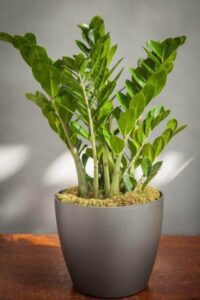 One reasonable response to all this is to specify hardier plants, and it is a smart move, as long as it is not mistaken for a way to skip care entirely.
Resilient species genuinely lower the risk. A ZZ plant, snake plant, pothos, cast iron plant, or the right dracaena can tolerate lower light and irregular watering far better than a fussy specimen, which makes them dependable choices for offices. But low maintenance is not no maintenance. Even the toughest plants need periodic cleaning, pruning, rotation, and a trained eye to catch trouble early, so the most resilient interiors still pair good plant selection with a real maintenance plan rather than treating one as a substitute for the other.
The Cost Multiplies Across Locations
For a single office, poor maintenance is a manageable problem. Across a footprint of locations, it compounds into something bigger.
Every additional site multiplies the number of places a plant can quietly die and the number of visitors who might notice. Worse, inconsistency itself becomes a cost: when a workplace in Boston looks cared for and the one in Chicago looks abandoned, the brand fractures in a way employees and clients feel even if they cannot name it. Delivering the same standard of design and care in every market, through one accountable national program rather than a patchwork of local vendors, is what keeps the investment, and the brand it represents, intact everywhere you operate.
Protect the Investment You Already Made
Interior plants only pay off when they stay healthy, and staying healthy is a matter of consistent, professional care rather than good intentions. From a single office to a footprint across the country, Planterra designs, installs, and maintains office plant programs built to keep your investment, and the impression it makes, in top condition. Talk to our team about protecting yours.