




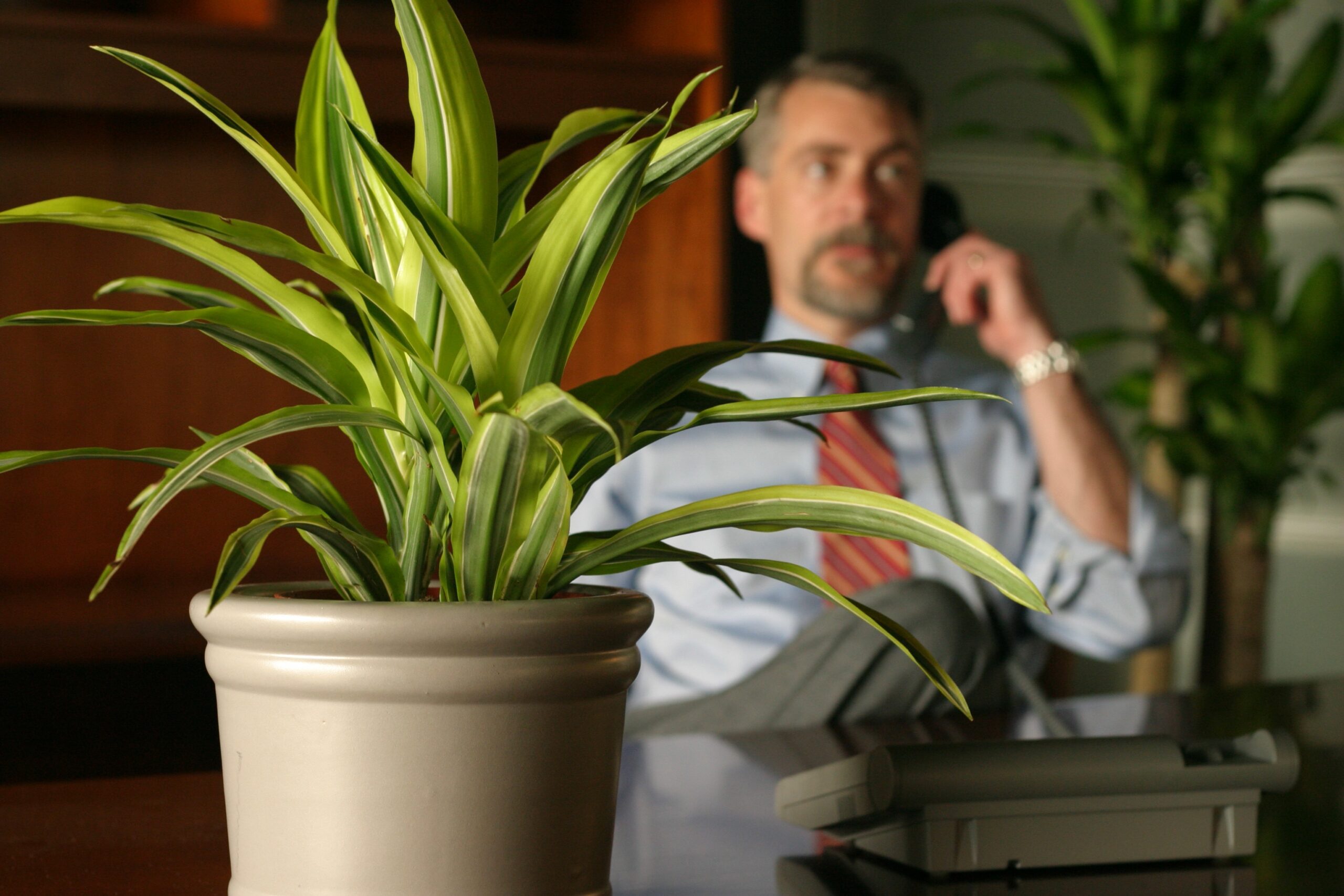
 Selecting plants for offices with limited light is one of the most misunderstood aspects of interior landscape design. While there are plants that tolerate low light, it is important to state upfront that there is no such thing as a true low light plant. All living plants require light to photosynthesize and sustain foliage. The difference is not whether a plant needs light, but how much light it can tolerate before decline begins.
Most workplaces are not naturally supportive environments for live plants, and poor plant selection often leads to premature decline, unnecessary replacement costs, and frustration for facility teams. The reality is that many plants commonly marketed as “low light” struggle in real commercial conditions when light levels, lighting duration, and building systems are not properly understood.
This article explains what low light truly means in an office setting and identifies the most forgiving low light office plants, plants that tolerate limited light better than others and remain stable in professional, long-term workplace installations. These recommendations are based on commercial experience, not residential plant care assumptions.
What Is Considered Low Light in an Office Environment?
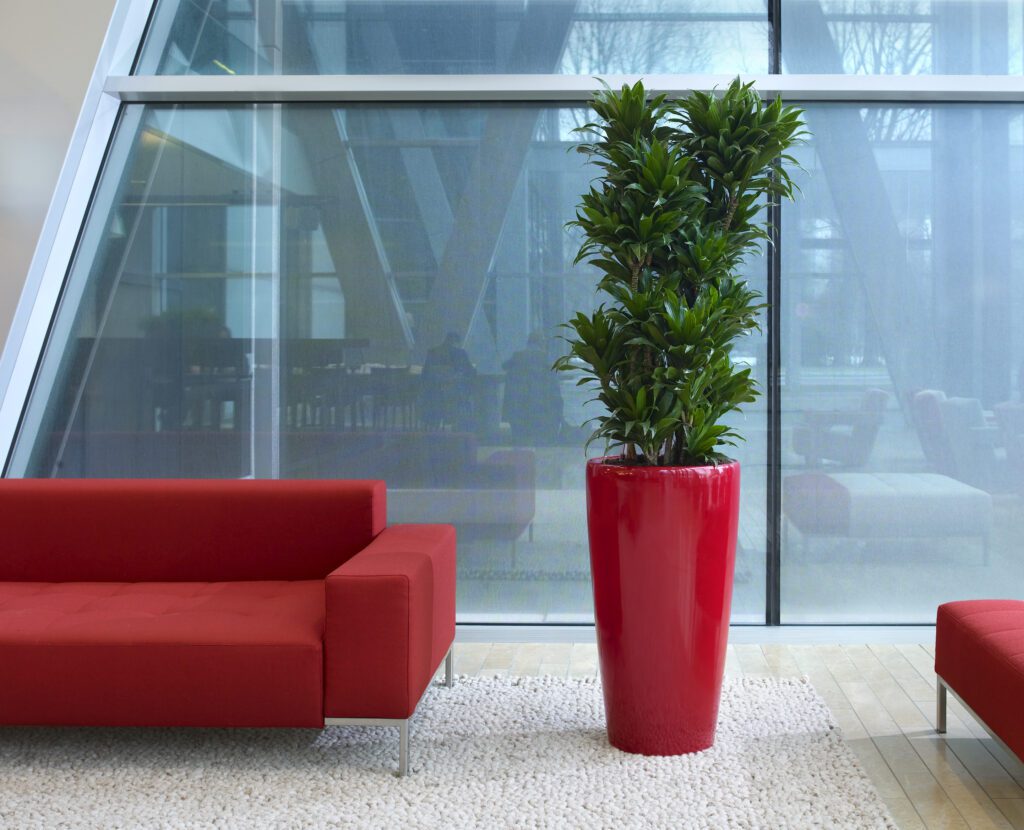
In commercial interiors, low light is generally defined as light levels below 100 foot-candles, with most offices falling between 50 and 75 foot-candles. Foot-candles measure light visible to the human eye and were historically used as a general guideline for plant performance. Prior to the early 2000s, this rule of thumb was often sufficient for basic plant selection.
Modern offices, however, rely heavily on LED lighting, low-emissivity glazing, and energy-efficient building systems that significantly alter the quality of light available to plants. While a space may appear adequately lit to occupants, it may not deliver the spectral energy plants require for photosynthesis. As a result, foot-candles alone are no longer a reliable indicator of plant viability.
For projects involving higher-light plant species, professional designers now rely on PPFD (Photosynthetic Photon Flux Density) to determine whether the available light includes sufficient usable spectrum. In contrast, most offices do not meet these thresholds, which is why the majority of workplace interiors should be classified, and designed, as low light environments from the outset.
If you are interested in intentionally engineering lighting to support a wider range of plant varieties, we recommend consulting the Planterra Lighting Guide for Interior Landscape Design by Shane Pliska.
Why Most Offices Should Default to Low Light Office Plants
At Planterra, we recommend low light tolerant plants for most office interiors unless excellent natural light is an existing site condition or lighting has been intentionally designed into the project to support higher-light species. In some cases, particularly for specimen plants or interior trees, a single, full-spectrum spotlight can be added above the plant to expand viable plant options.
Low light does not mean no light. Even the most tolerant low light office plants require a minimum level of consistent illumination to sustain foliage. In offices dependent on artificial lighting, fixtures must remain on for approximately eight to ten hours per day. Automated lighting controls and motion sensors, common in conference rooms, corridors, and private offices, can create conditions where lights remain off for extended periods. Spaces that are dark for more than eight hours per day will result in gradual plant decline and typically void most commercial plant warranty programs.
Why This Guidance Is Commercially Credible
Planterra has been designing, installing, and maintaining interior plantscapes for corporate environments for more than fifty years across the United States and Canada. Unlike firms that only retail plants, Planterra provides guaranteed maintenance programs for office plantings. If a plant declines under our care, it is replaced at no charge to the client.
This model creates a direct incentive to specify only plants that are proven to survive long-term in low light office environments. The recommendations in this article reflect what performs reliably at scale, under real building conditions, and over extended periods of time.
The Best Low Light Office Plants
The following plants are proven performers in low light offices, offering reliable growth and minimal maintenance demands.
Dracaena
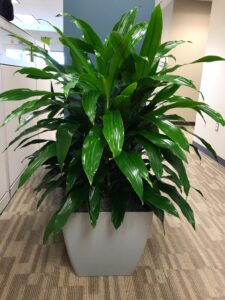 Dracaena varieties are among the most reliable and versatile low light office plants available, but it is important to understand that not all Dracaena have the same light requirements. The success of Dracaena in offices depends heavily on selecting the correct species and cultivar for the available light.
Certain Dracaena varieties, such as Dracaena Janet Craig, Compacta, Fragrans Cane, and Warneckii, are exceptionally tolerant of low light conditions. These plants combine strong drought tolerance, durable root systems, and upright growth habits that integrate well into professional interiors. They are available in a wide range of sizes, making them suitable for both small offices and large corporate environments.
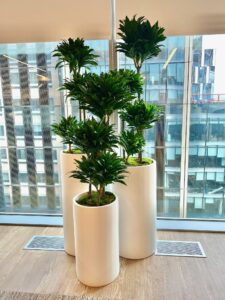 However, other Dracaena varieties require moderate to high light and should not be classified as low light office plants. For example, Dracaena marginata and Dracaena ‘Tarzan’ typically perform best in medium light environments and will struggle in darker offices without supplemental lighting. Even higher on the light spectrum, Dracaena arborea varieties require bright, consistent light and are not suitable for low light conditions at all.
This distinction is critical. In low light offices, solid green Dracaena varieties consistently demonstrate better long-term health and appearance, while lighter variegated or more architectural cultivars often decline without additional light support.
The most reliable Dracaena varieties for low light offices include Dracaena Janet Craig, Dracaena Compacta, Dracaena Fragrans Cane, and Dracaena Warneckii.
Sansevieria (Snake Plant)
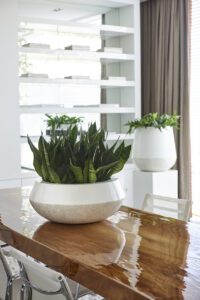 Sansevieria, commonly known as snake plant or mother-in-law’s tongue, are among the most durable and widely used office plants in the world. These plants tolerate very low light levels, irregular watering schedules, and dry interior air better than most species.
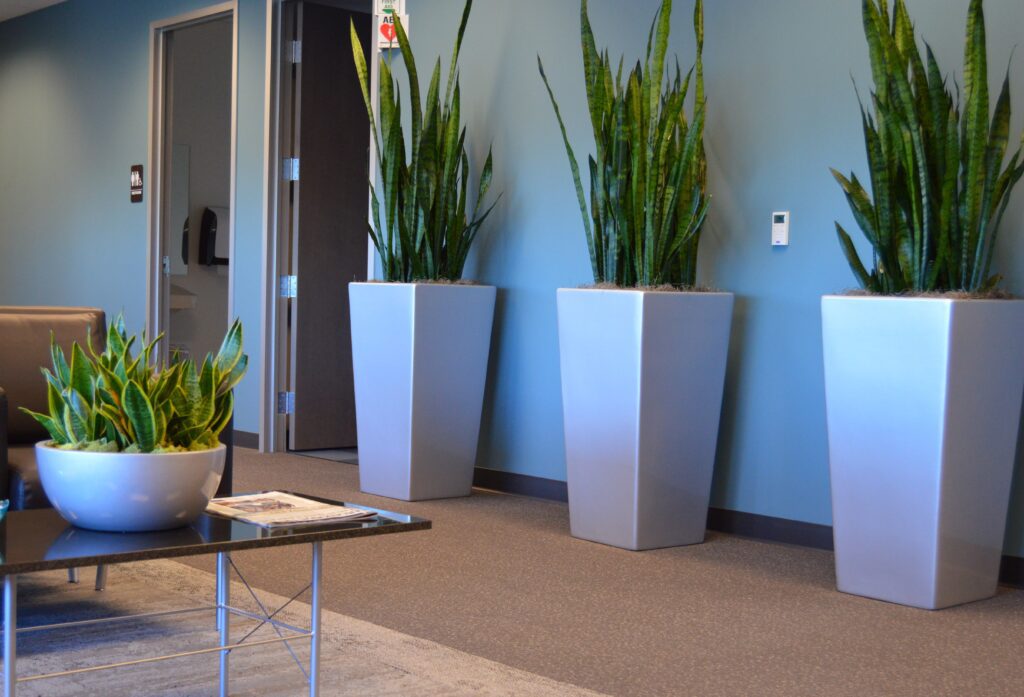
Standard Sansevieria varieties perform well as floor plants, either grouped together or used individually in standalone planters. Dwarf or “bird’s nest” Sansevieria varieties are compact, cost-effective options for tabletops and desktops. From a sustainability and longevity standpoint, Sansevieria remain one of the strongest low light office plant choices available.
ZZ Plant (Zamioculcas zamiifolia)
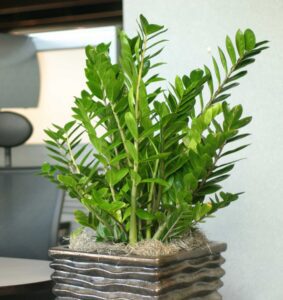 The ZZ plant is an excellent choice for low light office environments due to its thick rhizomes and strong drought tolerance. These characteristics allow the plant to store energy and moisture, making it resilient in spaces with inconsistent lighting or care routines.
In professional maintenance programs, ZZ plants should be rotated and pruned periodically to maintain a balanced form. Without management, they tend to stretch toward available light over time. When properly maintained, ZZ plants remain among the most dependable and visually stable low light office plants.
Aglaonema (Chinese Evergreen)
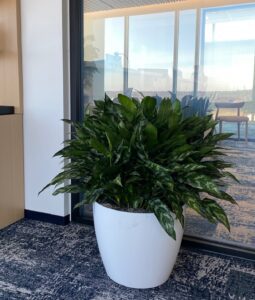 Aglaonema plants are effective low light office plants for both tabletop and floor applications. Their broad leaves and dense growth habit provide visual fullness without requiring high light levels.
For low light environments, darker green Aglaonema varieties perform best. Lighter variegated or colorful cultivars such as Aglaonema multicolor, typically require higher light levels and are less suitable for offices with limited illumination. When correctly specified, Aglaonema offers texture, durability, and long-term stability.
Aspidistra (Cast Iron Plant)
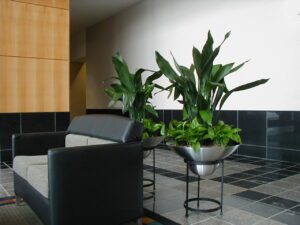 Aspidistra tolerate low light extremely well, but they rank lower among preferred office plants due to design and availability limitations. In single containers, the plant can appear sparse and underwhelming. Aspidistra achieve their best visual impact when massed together in built-in planters or rectangular troughs.
Availability at commercial scale can also be inconsistent, making Aspidistra a situational choice rather than a default solution for low light office environments.
Maintenance Considerations for Low Light Office Plants
Because photosynthesis slows in lower light environments, plants require less frequent watering. For this reason, the most successful low light office plants are those that tolerate drying between waterings and have durable root systems. This is also why commonly requested plants such as Peace Lily and Pothos, despite being marketed as low light tolerant, are not included on this list for commercial offices.
These plant characteristics allow for longer maintenance intervals, more sustainable service schedules, and lower long-term costs. This strategy is particularly effective in private offices and controlled workplace environments. In contrast, public-facing spaces such as hotels or shopping centers experience higher dust levels, increased air movement, and more physical interaction, all of which raise maintenance demands regardless of plant selection.
Final Thoughts on Low Light Office Plants
Most offices are low light environments, regardless of how bright they may appear to occupants. While there are plants that tolerate low light better than others, there are no true low light plants, only species that can survive and remain stable with limited light.
Successful interior plant design depends on recognizing this reality and selecting plants that are forgiving, durable, and proven in commercial conditions. Low light office plants are not about pushing plants to thrive in marginal environments. They are about choosing species that remain attractive, predictable, and sustainable over time.
When plant selection aligns with how offices actually operate, the result is healthier plants, lower costs, and more successful workplace interiors.
Why Planterra?
Planterra is one of North America’s top providers of office plants. We serve businesses across the U.S. and Canada, delivering consistent, professional standards of plant design and care. Outfitting one office or 200 branch locations across the USA, our team ensures your plants remain vibrant, healthy, and aligned with your brand.