




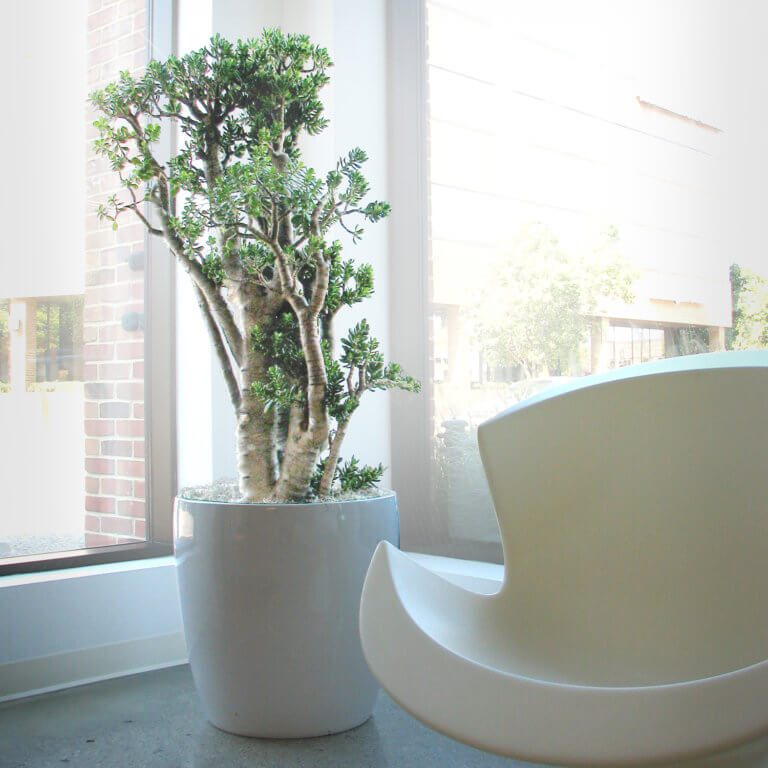
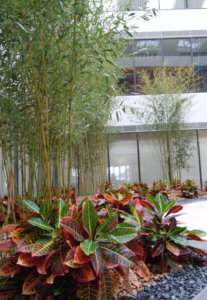
 There’s a reason the most inspiring workplaces feel alive, and it’s not just the architecture or the lighting. Plants play a central role in how a space feels, functions, and flows. In the practice of feng shui, living plants are considered among the most powerful tools for attracting positive energy, promoting focus, and bringing balance to any environment.
If you’re designing a full office refresh or simply looking for the right feng shui plant for your desk, the choices you make can have more impact than you might expect. The wrong plant in the wrong location can disrupt the energy of a room. The right one can transform it.
At Planterra, we’ve spent years helping businesses create thriving plant environments. In this guide, we’ll walk you through the best feng shui plants for the office, how to place them for maximum benefit, and which lucky plants are particularly well-suited for your office desk.
What Is Feng Shui and Why Does It Matter for the Office?
Feng shui (pronounced “fung shway”) is an ancient Chinese system of design that focuses on harmonizing individuals with their surrounding environment. The central concept is chi — the invisible life force energy that flows through all living things and spaces. The goal of feng shui is to encourage the healthy flow of chi while reducing stagnant or negative energy.
In an office setting, feng shui principles can influence everything from desk placement and lighting to color choices and, most relevantly, plants. Living plants are believed to activate positive chi, purify the air, and connect the built environment back to nature. This connection, known in feng shui as the Wood element, is especially important in modern offices dominated by screens, artificial light, and hard surfaces.
The 5 Best Feng Shui Plants for the Office
When selecting feng shui plants for your office, look for plants that are healthy, actively growing, and free of dead or yellowing leaves, in feng shui, dying plants are considered a source of negative energy. Here are the top picks:
1. Lucky Bamboo (Dracaena sanderiana)
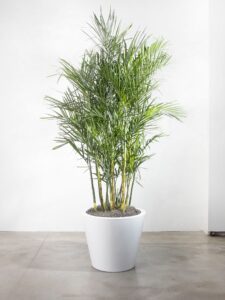 Lucky bamboo is perhaps the most iconic of all feng shui plants for the office. It’s associated with good fortune, resilience, and upward growth, all qualities you want present in a workplace. The number of stalks carries specific meaning: two stalks represent love and partnership, three stalks bring happiness and longevity, and five stalks attract wealth.
Best placement: East or southeast area of your office or desk to activate the Wood element and invite prosperity.
Care level: Very easy. Grows well in water or soil, tolerates low light.
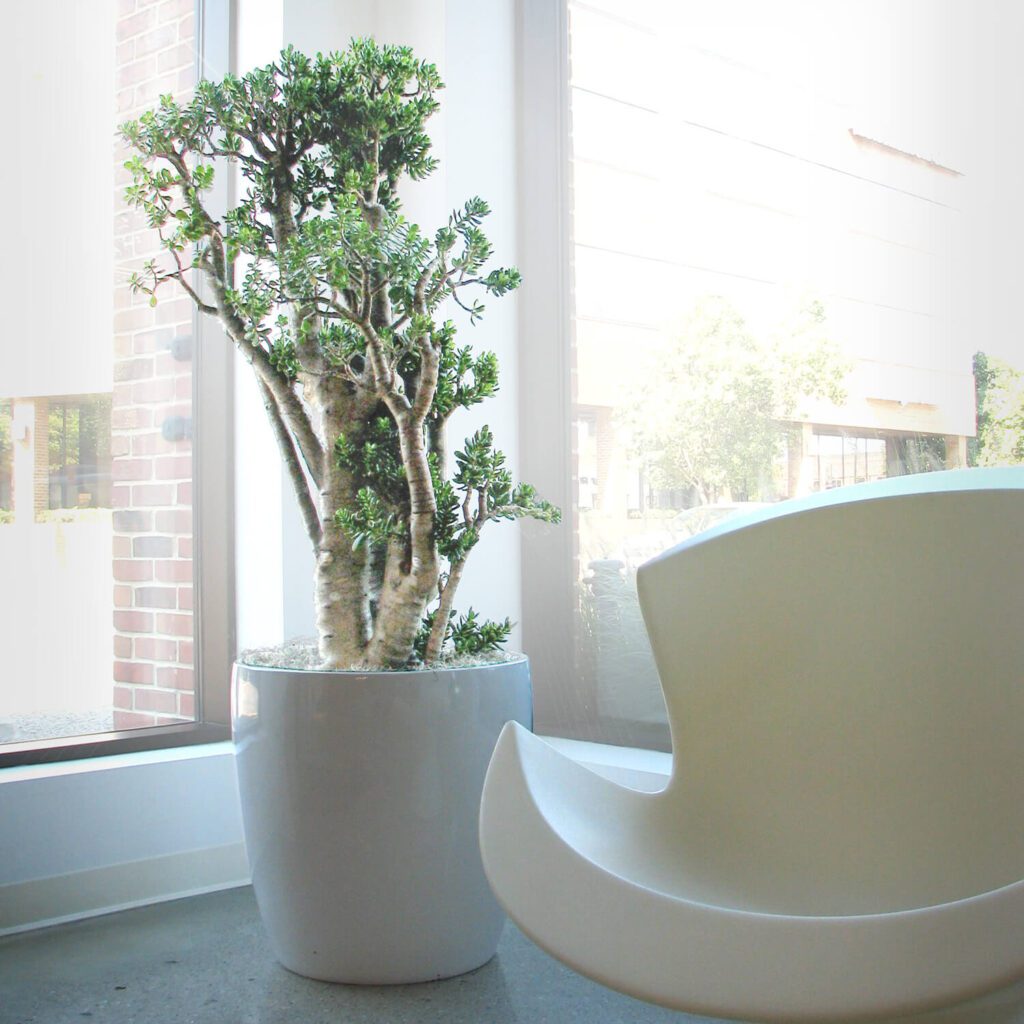
2. Jade Plant (Crassula ovata)
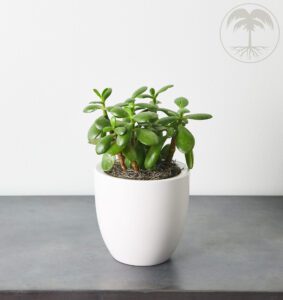
The jade plant is one of the most well-known lucky plants for office desk feng shui. With its round, coin-shaped leaves, it’s long been associated with financial abundance and business growth. In feng shui, it activates the wealth corner of any space.
Best placement: The southeast corner of your office or near the entrance. Avoid placing it in the bedroom or bathroom.
Care level: Low maintenance. Prefers bright indirect light and infrequent watering.
3. Peace Lily (Spathiphyllum)
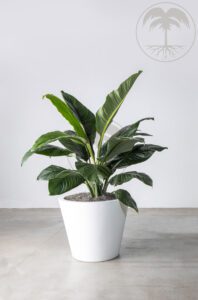 The Peace Lily is one of the best plants for office feng shui when harmony and clear communication are the goal. It’s associated with purification, both literally (it’s a proven air-filtering plant) and energetically. The white blooms represent clarity and fresh starts, making it ideal for conference rooms, reception areas, and shared workspaces.
Best placement: North or east-facing areas of the office. Avoid sharp, cluttered corners; the Peace Lily works best in open, airy spots.
Care level: Easy. Thrives in low to medium light and tolerates inconsistent watering.
4. Pothos (Epipremnum aureum)
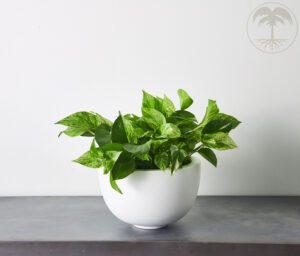
Pothos is a feng shui favorite for its cascading vines, which are believed to soften sharp angles and redirect the flow of energy around hard architectural features like corners and beams. In offices with lots of right angles, cubicle walls, desks, shelving, pothos acts as a natural energy buffer.
Best placement: On top of cabinets, bookshelves, or elevated desk surfaces where the vines can trail downward. Particularly effective in corners.
Care level: Very easy. One of the most forgiving office plants available.
5. Snake Plant (Sansevieria trifasciata)
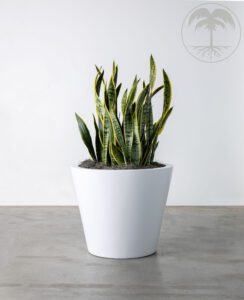
The Snake Plant (also called mother-in-law’s tongue) is a feng shui plant that brings protective energy to the office. Its tall, upright leaves are said to ward off negative energy and promote clarity and focus. While it is a spiky plant (which some feng shui practitioners suggest using with intention), when placed correctly, it is a powerhouse for office environments with stagnant or heavy energy.
Best placement: Near the entrance of an office to block negative chi from entering, or in the southeast corner to activate growth energy. Avoid placing it in relaxation areas.
Care level: Extremely low maintenance. Tolerates neglect, low light, and irregular watering.
Additional Recommended Plant Options
- Dwarf Umbrella Tree, Schefflera arboricola (prosperity)
- Ficus, (Buddha achieved enlightenment while sitting under a ficus tree)
- Money Tree, Pachira aquatica (attracts wealth and prosperity)
- Rubber Plant, Ficus elastica (thrives in spaces with abundant natural light)
- ZZ Plant, Zamioculcas (round smooth waxy leaves)
Feng Shui Placement Tips for Office Plants
Choosing the right plant is only half the equation. Placement is equally important in feng shui. Here are the key principles to follow:
Focus on the Entrance to the Building
The front door is one of the most important areas to focus on. If you look at the chart, you will notice the front entrance is listed as Journey, which is your personal path and destination. It is here that you welcome visitors to your establishment and set the tone for the success of your entire business. Your front door is the first impression that new clients come across. It is a statement of your productivity, profitability and organizational skills. Positioning plants at the front entrance creates a sense of life. It is also where the air circulates most freely. You can create the right atmosphere by using potted plants, hanging plants or both.
Use the Bagua Map
The Bagua is a feng shui energy map that divides any space into nine zones, each governing a different area of life. By standing in front of the entrance to a building or office suite, and holding up this chart, you can visualize the different portions of the building and what should become the focus in each of those areas.
The Bagua Chart and each area mapped out relates to a key aspect of one’s life, as seen below:

By looking at the Bagua Chart, you can then place symbolic items in the relevant areas to enhance those areas of your life. This can be done in an office building or in your personal office space. If using just one room, break down the chart to reflect different corners of the room you are using to create the feng shui atmosphere.
Keep Plants Away from the Bathroom
Water features (including toilets and sinks) are believed to drain energy in feng shui. Placing a plant too close to a bathroom can diminish rather than enhance its positive effects.
Never Let Plants Die
Dead or dying plants are considered one of the most significant sources of negative energy in feng shui. If a plant is struggling, address it immediately or replace it. At Planterra, our ongoing plant care programs ensure your office plants stay healthy and vibrant year-round.
Choose Round or Oval Leaves Over Spiky Ones
Generally speaking, plants with soft, rounded leaves (like jade or pothos) promote gentle, flowing chi. Spiky plants (like cacti or agave) carry more protective, aggressive energy and should be used intentionally and sparingly in office settings.
Avoid Sharp Corners and Cluttered Areas
In feng shui, sharp angles create what’s known as “poison arrows”, points where chi accelerates and becomes aggressive. Placing a plant near a sharp corner can soften and redirect that energy.
Don’t Forget to Use Plants in Cubicles or Individual Offices
Your desk is where you spend the majority of your working hours, making it one of the most important areas to get right from a feng shui perspective. The best feng shui plants for office desks share a few common traits: they’re small enough not to overwhelm the space, they’re healthy and actively growing, and they carry symbolic energy aligned with your goals.
Here are the top recommendations specifically for desk placement:
- For career growth and prosperity: Lucky bamboo (2 to 3 stalks) or a small jade plant in the southeast corner of your desk.
- For focus and mental clarity: A small snake plant or air plant placed to your left, which is your “dragon side” in feng shui, associated with active, productive energy.
- For creativity and new ideas: A small pothos or philodendron placed to the right of your monitor.
- For calm and stress reduction: A peace lily or small fern in a white or ceramic pot placed in front of you but off to one side so it doesn’t block your sightline.
- General desk rule: Keep desk plants small, healthy, and uncluttered. A single thriving plant beats a cluster of struggling ones every time.
Plants to Avoid in Office Feng Shui
Not every plant is a good fit for a feng shui-aligned office. Here are a few to approach with caution:
Cacti and succulents with sharp spines: While visually striking, their spiky energy can introduce tension and conflict into a workspace, particularly if placed on a desk or near where people collaborate.
Bonsai trees: Despite their beauty, some feng shui practitioners consider bonsai inauspicious in workplaces because the practice of deliberately stunting growth runs counter to the prosperity-minded goals of a business environment.
Artificial plants: In feng shui, only living plants carry chi. Artificial or dried plants are considered energetically inert at best, and sources of stagnant energy at worst. If you can’t maintain a live plant, it’s better to have none than to use a fake one.
Bring Feng Shui to Life in Your Workplace with Planterra
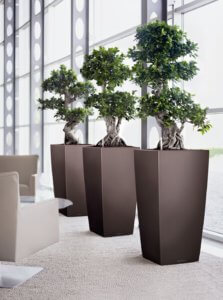 Selecting the right feng shui plants for your office is a meaningful investment in the energy of your space, the well-being of your team, and the culture of your business. At Planterra, we don’t just supply plants. We design plant environments tailored to your space, your goals, and your aesthetic.
From initial design consultation to ongoing plant care, our team ensures your office plants stay healthy, beautiful, and energetically aligned year-round.
Ready to transform your workspace? Contact Planterra today to schedule a consultation and discover the perfect feng shui plant design for your office.

Shane Pliska is president of Planterra, a nationally-known interior landscaping business that provides and maintains office plants for corporate spaces. He also serves as president of Planterra Conservatory, an award-winning botanical garden wedding and event venue in West Bloomfield, Michigan.