




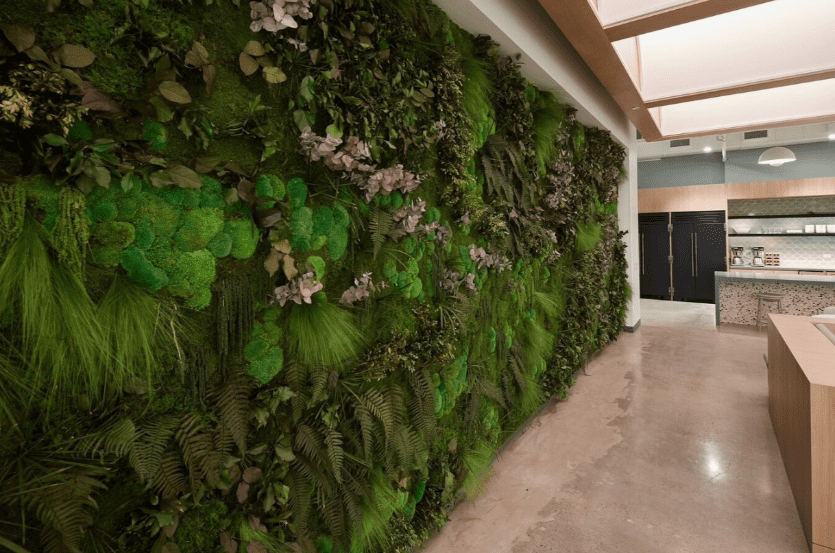
If you’re specifying an artificial green wall for a commercial interior or exterior, the options are wider than most people realize, and so is the range in quality. From faux green wall panels to preserved moss installations, each type serves a different set of conditions, budgets, and design goals.
This guide breaks down what you need to know before you specify or buy.
What Makes an Artificial Green Wall Work
The most common mistake in artificial green wall design is treating the installation as a wall covering like wallpaper. Done right, an artificial plant wall is a focal point, something that anchors the room and commands attention from the moment someone walks in. The highest-impact locations tend to be behind reception desks, as backdrops in hospitality spaces, or framing signage and brand elements where visual weight matters.
What separates a wall that looks intentional from one that looks staged is composition. A well-designed artificial green wall layers shapes, tones, textures and colors. When every panel reads as the same flat shade of green, it signals fake immediately. Depth and variation are what make it believable. Think of it less like installing a product and more like composing a piece of wall art, because that’s effectively what it is.
Portable Artificial Green Walls
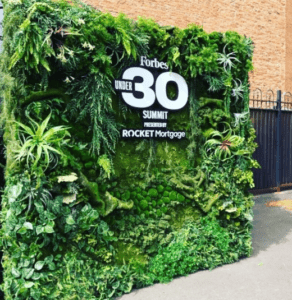
There’s growing demand for flexibility in commercial environments, and portable artificial green walls address that directly. Built on rolling
frames or modular panels, these systems can be moved, reconfigured, transported and stored between uses, making them one of the strongest ROI applications in the category. A single well-built portable faux green wall can be deployed across trade shows, corporate events, temporary partitions, and photo backdrops, delivering consistent visual impact every time without rebuilding from scratch.
Outdoor Artificial Green Walls
Exterior installations come with a different set of durability requirements than indoor ones. Sun, wind, and temperature variation will degrade low-quality materials quickly, often within a single season. When specifying an outdoor artificial green wall, UV stabilization is non-negotiable. So is weather-resistant backing and a mounting system designed for sustained exposure. Done correctly, an outdoor faux green wall is an excellent solution for patios, rooftops, and building facades where irrigation is impractical. Done wrong, it fades, cracks, and ends up looking worse than a bare wall.
Artificial Succulent Green Walls
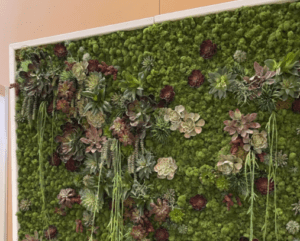
Succulents are one of the most popular styles in artificial green wall design, and the reason is practical: they have natural structure, variation, and geometry that holds depth and shadow well even in synthetic form. A well-designed artificial succulent wall reads more like a sculptural installation than décor. They’re particularly effective in modern commercial interiors, hospitality environments, and anywhere a clean architectural finish is the goal.
Preserved Plant Walls: Real Material, Low Maintenance
Some artificial green walls are built from preserved plant material, real foliage treated and preserved. Moss walls are the most common example, and they sit somewhere between live and artificial: no watering or sunlight required, but with the texture and warmth of genuine plant material. A preserved moss wall is often the most convincing option visually, but it comes with real limitations. Moisture, direct sunlight, and exposure to the public in heavy foot-traffic environments will degrade it. Think of preserved plant walls as a premium interior finish, excellent in the right application, but not a universal solution.
Technical Specifications That Determine Project Success
This is the part of the conversation that should not be skipped, and it’s where projects either succeed or fail.
UV protection matters for any artificial green wall with sunlight exposure. High-quality systems use UV inhibitors built into the material itself, not just applied as a surface coating, that’s what delivers up to 3 years of color retention rather than a single season. For commercial interiors, fire ratings are a requirement, not a consideration. Many jurisdictions require materials to meet specific flame-spread or fire-retardant standards. Before any artificial green wall goes up in an office, hotel, or public building, verify that the product meets local fire code.
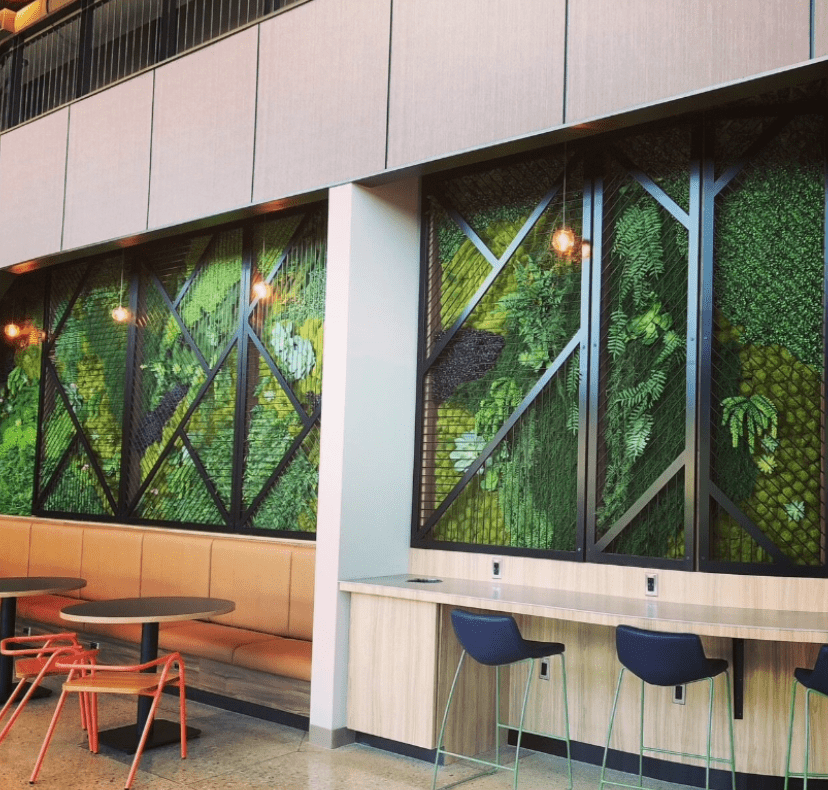
Density is the third factor most buyers overlook. A realistic artificial plant wall has multiple layers of foliage, varied textures, and minimal visible backing. If you can see through it easily, it won’t read as a finished installation, it’ll read as a grid of plastic panels. Density is what creates the dimensional quality that makes a faux green wall feel like the real thing.
The Bottom Line on Artificial Green Walls
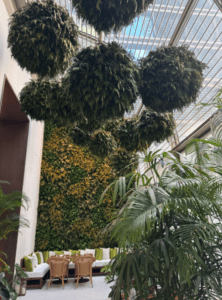
An artificial green wall is ultimately a decision about control, control over appearance, maintenance cost, and outcome over time. That’s why they’ve earned a permanent place in commercial interior design and hospitality. Fewer variables, predictable results, and longevity that a live wall can rarely match in a demanding commercial environment.
The details are what determine whether the result looks elevated or looks like décor. Material quality, density, UV performance, and fire compliance are what separate a wall that holds up for years from one that disappoints in a season. Treat it like a design decision, not a product purchase, and an artificial green wall can transform a space immediately and hold that look for the long term.
Work With a National Artificial Green Wall Provider
Most artificial green wall projects run into the same issues: wrong material for the environment, poor density, or specs that don’t meet fire code. Planterra has installed commercial green walls in markets nationwide, and we know what it takes to get the details right, from product selection through final installation.
→ Talk to our team about your project
Related Articles:
Green Walls in Architecture: Systems, Performance, and Specification Strategy
Living Moss Wall Systems That Support Employee Wellness in the Workplace