




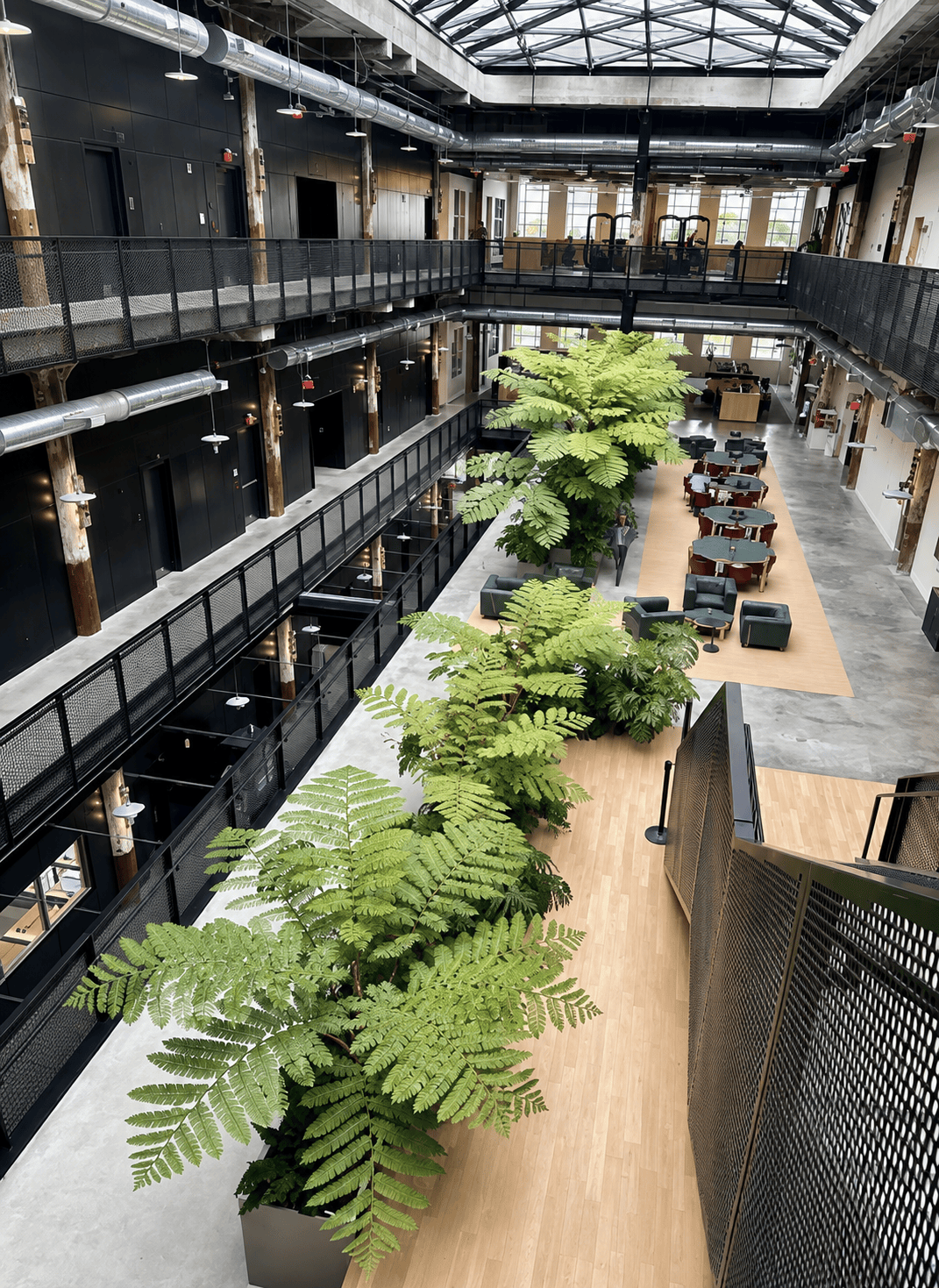
Biophilic design is usually sold on how it makes people feel. That matters, but it’s not the argument that moves a budget meeting. The stronger case is financial: a well-designed biophilic workplace returns more than it costs, and that return shows up in the numbers finance teams actually track.
This is the business case, stated in dollars instead of adjectives. Here’s where the return comes from, how large it tends to be, what biophilic design costs to implement, and how to make sure the investment actually pays off.
What Is the ROI of a Biophilic Workplace?
The ROI of a biophilic workplace is the measurable financial return a company earns from designing with nature, driven mainly by higher productivity, lower absenteeism, stronger talent retention, and increased space value, set against a relatively modest cost to implement.
That framing matters because it reorders the conversation. Biophilic design is not an amenity competing with other perks for a share of the budget. It is an operational investment with a payback period, and once it is measured that way, it tends to compare favorably to almost anything else a facilities team could spend the same money on.
Why the Return Is Larger Than the Cost
The reason biophilic ROI is so favorable comes down to where a company’s money actually goes. In any office, the cost of the building is small next to the cost of the people inside it. Rent and energy are measured in tens of dollars per square foot per year. Payroll is measured in the hundreds. Salaries and benefits dwarf every other line item in the building.
That imbalance is the whole ROI argument. When your largest cost by far is your people, even a small improvement in how well they work, or how often they show up, outweighs a large swing in rent or utilities. Biophilic design works precisely on that largest cost, which is why a modest investment in the environment can return a multiple of itself. You are spending on the cheap line to move the expensive one.
The Four Returns of a Biophilic Workplace
The financial return is not a single number. It arrives through four distinct channels, each measurable on its own:
| Return | What It Looks Like | Representative Finding |
|---|---|---|
| Productivity | Better focus, engagement, and output | A firm that redesigned its headquarters recorded a 16% productivity gain |
| Reduced absenteeism | Fewer sick days and less presenteeism | About $2,000 saved per employee per year |
| Talent attraction and retention | Easier hiring, lower turnover | A third of workers say office design affects job decisions |
| Space and asset value | Rent premiums and brand differentiation | Natural-feature offices command roughly 5 to 14% rent premiums |
The two operational returns tend to be the largest. Terrapin Bright Green’s Economics of Biophilia estimates that organizations can save roughly 2,000 dollars per employee per year through reduced absenteeism alone. For a 500-person office, that is about a million dollars a year before productivity is even counted. On the productivity side, the same body of research documents a case in which the American Society of Interior Designers, after moving into a biophilic headquarters, measured a 16 percent productivity gain and around 694,000 dollars in returns in the first year of operation.
The other two returns are slower but real. A workplace people genuinely want to be in becomes a recruiting and retention asset, a point our own Nature of the Post-Pandemic Workplace white paper found weighs on whether people accept a job at all. And on the real estate side, space with strong natural features tends to command a rent and occupancy premium, turning design into asset value rather than pure expense.
What Biophilic Design Actually Costs
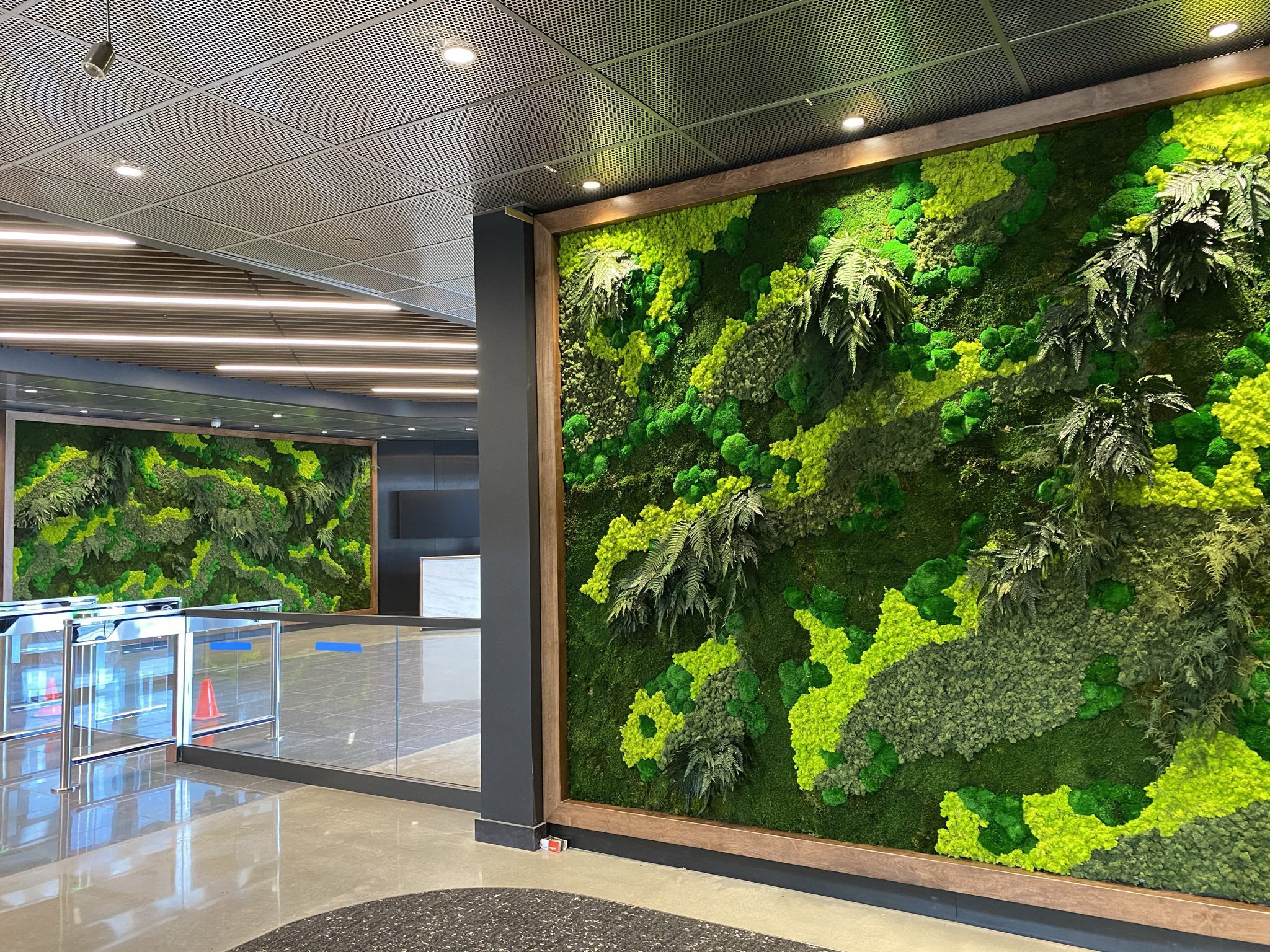
The other half of any ROI calculation is the investment, and this is where biophilic design surprises people. The cost is far lower than the returns above would suggest.
For most offices, an interior plant program is a modest line item rather than a capital project. A typical small to mid-size office plans on roughly 3,000 to 5,000 dollars for plants and containers, or a rental program that bundles the plants and their care from around 200 dollars per month, with maintenance-only service starting near 150 dollars per month. For most office plant installations there is no separate design fee. Set that against a per-employee absenteeism saving in the thousands and a six-figure first-year productivity return, and the math is not close. This is one of the few workplace investments where the payback period is measured in months.
How to Protect the Return
An ROI this strong comes with one condition: it only materializes if the design is done well and kept healthy. A neglected installation delivers the cost and none of the return.
Two things protect the investment. The first is consistent, professional care, because the productivity and wellbeing effects depend on plants that are actually thriving, not declining in a corner. The second is designing to current best practice rather than a dated interpretation of “add some plants,” which is why it pays to build around the biophilic design trends shaping high-performing workplaces now. Get both right and the return compounds year over year. Neglect either and, as we detail in our look at the hidden cost of poor plant maintenance, the investment quietly reverses.
Build the Case for Your Workplace
Biophilic design is one of the rare workplace investments where the numbers make the argument for you. Planterra designs, installs, and maintains interior plant programs built to deliver, and protect, that return, whether for a single office or a footprint across the country. Talk to our team about what the ROI looks like for your space.