




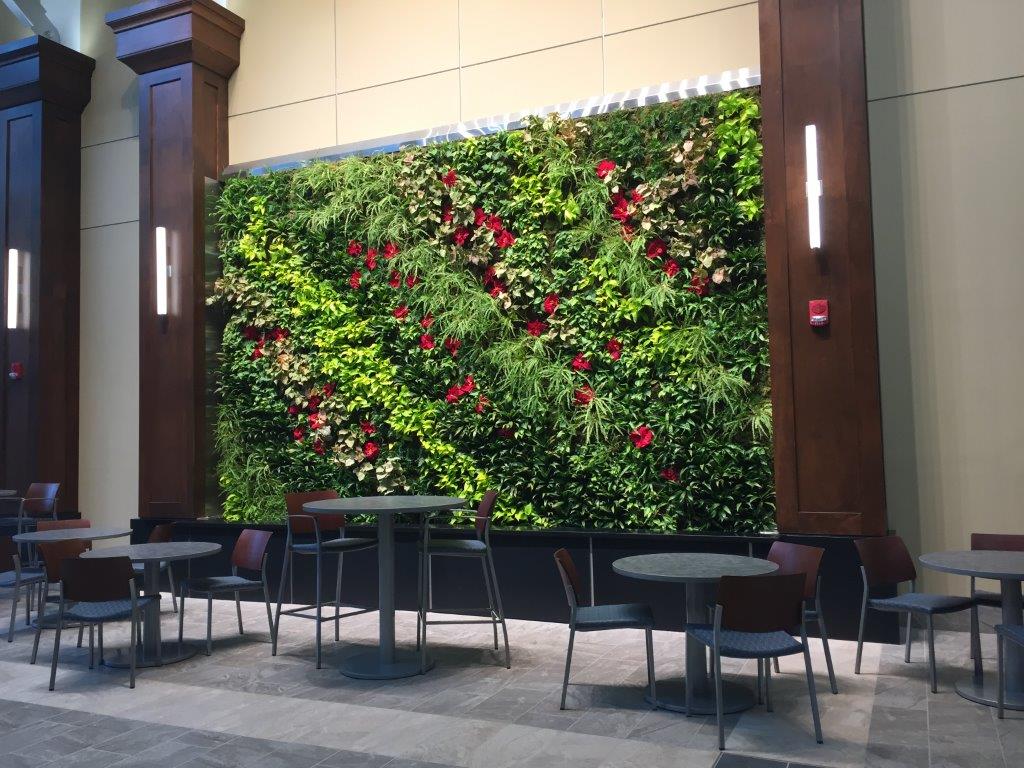
A Green wall is no longer a decorative gesture. In modern architecture, it is a performance-driven vertical system that integrates horticulture, building science, and experiential design. In dense urban environments where horizontal green space is limited, the Green wall reintroduces nature into the architectural plane, transforming blank surfaces into living infrastructure that improves wellness, acoustics, and environmental performance. When specified correctly, a green wall enhances occupant well-being, supports sustainability goals, reinforces brand identity, and maximizes vertical real estate. When specified incorrectly, it fails quickly, making system selection and planning critical.
What is a Green Wall?
A Green wall is a vertical surface intentionally covered in greenery. The term includes living Green walls with actively growing plants, preserved botanical walls made from real but non-living plant materials, and faux Green walls constructed from high-quality artificial foliage. Each approach creates the visual experience of greenery, but only living systems create an active ecosystem. Importantly, all Green walls require maintenance. There is no such thing as a maintenance-free Green wall.
Living Green Walls
 Living Green walls consist of rooted plants integrated into modular panel systems or climbing vine assemblies that include irrigation, drainage, lighting, and structural support. These systems are ideal for corporate headquarters, healthcare environments, universities, and long-term architectural installations pursuing WELL or LEED strategies. Nearly all interior living Green walls require supplemental lighting. A lighting study must evaluate natural daylight contribution and integrate plant-supporting illumination into the architectural lighting design to ensure long-term plant health and visual performance.
Living Green Wall Technical Considerations
Automated irrigation is typically required for living systems, incorporating shut-off valves, timers, and leak detection planning. It is best practice to avoid irrigation cycles during unoccupied hours in case of a malfunction. Proper drainage planning matters, since unmanaged water can lead to damage and long-term issues. A continuous moisture barrier membrane must protect the wall assembly from water migration, and a basin or trough should capture stray water droplets to protect surrounding finishes. Living Green walls offer the best ROI when intended to remain in place for ten years or more, allowing their wellness, acoustic, and experiential benefits to justify infrastructure investment over time.
Moss Green Walls and Preserved Botanicals
Preserved moss and botanical Green walls use real plant materials treated to maintain color and texture. Moss walls can support wellness. These systems are well-suited for environments with insufficient light, limited access, or where irrigation infrastructure is impractical. Although watering is not required, preserved systems are not maintenance-free. Periodic dust removal, humidity stability, and eventual refurbishment are necessary, as preserved materials have a finite lifespan. Their density and texture provide excellent acoustic absorption, making them valuable in open offices and hospitality spaces.
Artificial Green Walls
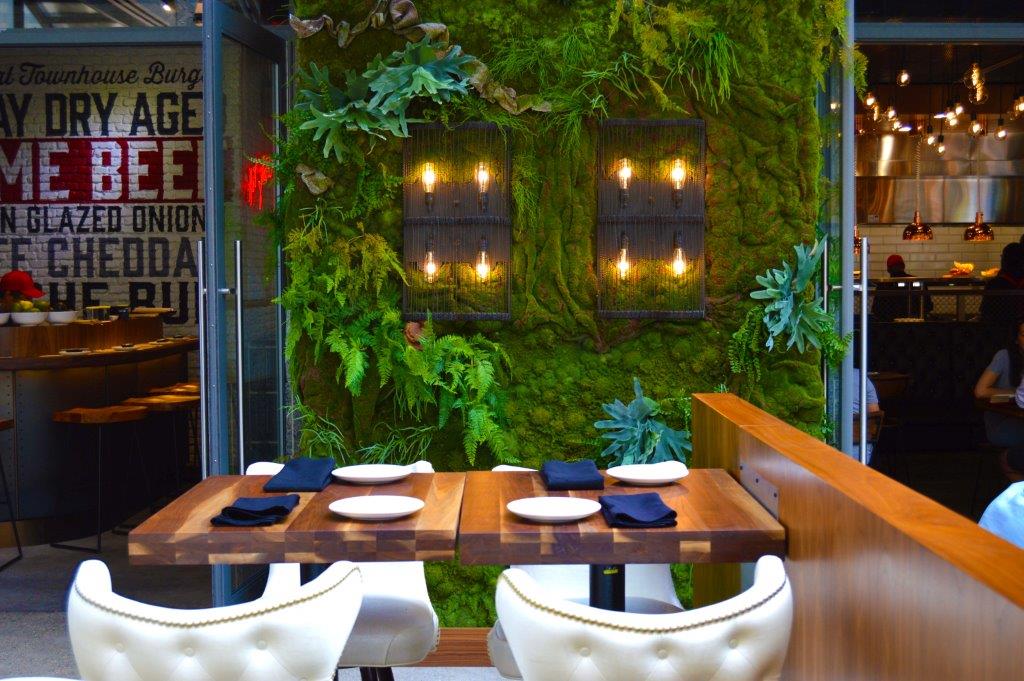
Faux Green walls provide visual greenery where live plants cannot survive, renovation cycles are short, or maintenance budgets are constrained. Restaurants and retail environments often favor faux installations because their design refresh cycles align with the lifecycle of artificial materials. However, faux Green walls still require periodic cleaning and eventual refurbishment. UV-stabilization is mandatory near windows, skylights, or exterior exposures, as artificial materials can fade or become brittle without proper protection. Faux systems often deliver the strongest return on investment when installations are expected to remain in place for five years or less.
Living Green Walls Systems vs Climbing Vines
Living Green walls may be constructed using modular panel systems or climbing vines. Modular systems offer immediate visual density and artistic composition, making them ideal for high-visibility interior feature walls. Climbing vines, one of the oldest vertical greening strategies, are commonly used on exterior facades where they provide shading, reduce solar heat gain, and soften building mass. Interior vine installations can succeed with appropriate species and moisture protection planning.
Interior Green Walls vs Exterior Green Walls
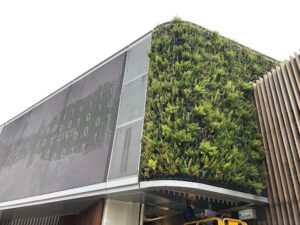 Interior Green walls are typically designed to enhance biophilic impact, improve acoustics, strengthen brand identity, and elevate occupant wellness. Exterior Green walls function as environmental performance systems, contributing to heat island reduction, envelope performance, and energy efficiency. Exterior systems must withstand wind loads, freeze-thaw cycles, dormancy, and irrigation winterization in cold climates. Material durability is critical outdoors, and both faux and preserved materials must be UV-rated for sunlight exposure.
Green Wall Maintenance
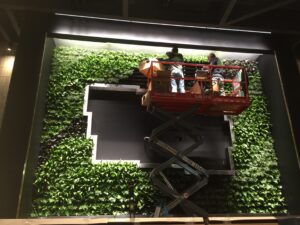 Maintenance access is one of the most overlooked yet critical aspects of Green wall design. Public-facing installations typically require weekly professional service. Design teams must coordinate ladder or lift clearance, irrigation shutoff access, drainage access, lighting serviceability, and safe technician positioning. Walls installed in atriums, stairwells, or above water features require specialized access engineering. Without proper access planning, deterioration is inevitable.
Mistakes to Avoid in Green Wall Designs
Common specification mistakes include selecting systems incompatible with lighting conditions, ignoring lifecycle alignment, omitting waterproofing membranes, failing to design adequate drainage, and underestimating maintenance access requirements. A dimly lit restaurant may be better suited for faux systems, while a long-term corporate headquarters may justify the infrastructure of a living Green wall. System selection must align with the function and lifecycle of the space.
Green Walls in WELL and LEED Buildings
When integrated properly, a Green wall can support WELL and LEED frameworks. Within the WELL Building Standard, Green walls strengthen biophilic design strategies, support stress reduction, and enhance occupant experience. Exterior systems may assist LEED strategies related to heat island reduction and envelope performance, while interior systems may contribute to Indoor Environmental Quality and Innovation in Design credits. A Green wall should be integrated into a broader sustainability strategy rather than treated as an isolated decorative feature.
As cities densify and buildings increasingly prioritize wellness and sustainability, the Green wall continues to evolve from aesthetic feature to architectural system. Early coordination during schematic design is essential to integrate structural support, irrigation, drainage, lighting, waterproofing, and maintenance access. When properly planned and executed, a Green wall becomes a long-term performance asset that enhances both human experience and building value.
Work With Greenwall Experts
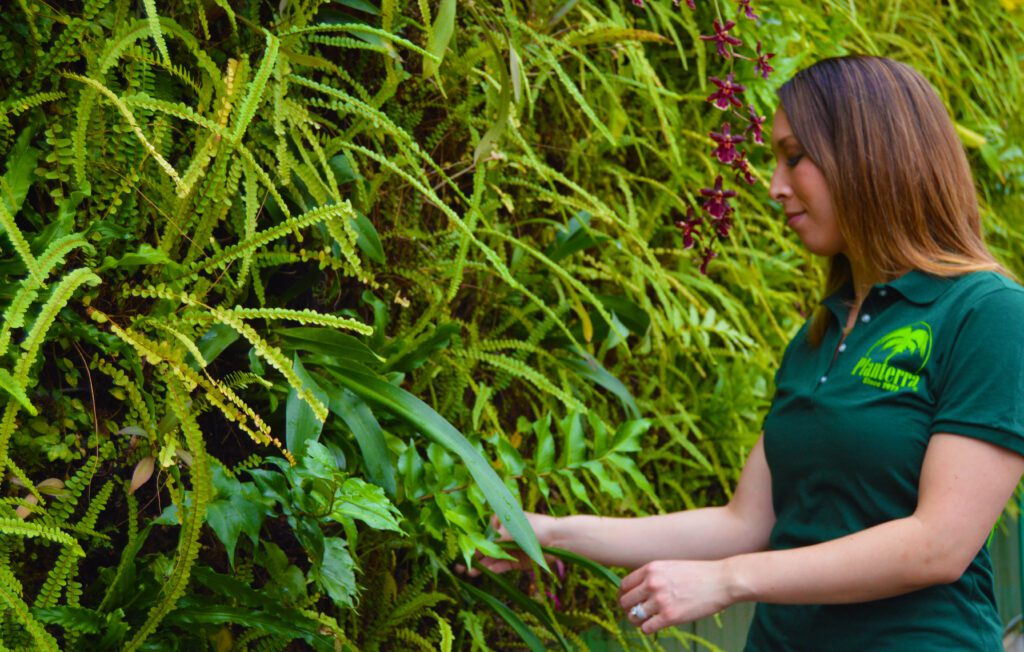
If you are planning a project where a green wall is being considered, Planterra provides expert guidance on selecting the appropriate system and designing for long-term performance. Our recommendations are driven by project outcomes rather than specific manufacturers or products.
Planterra supports multi-location clients across the United States and Canada, helping design teams integrate green walls that perform beautifully over time. Contact Planterra’s Green Wall Design Consultants for more information.