




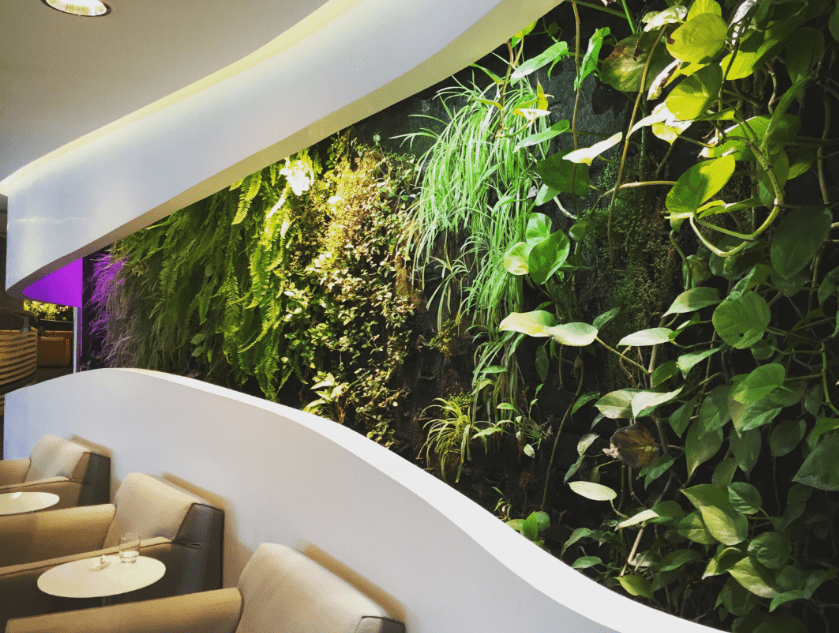
Climbing plants have been used for centuries to soften architecture, animate vertical space, and blur the boundary between the built and natural environment. From the legendary Hanging Gardens of Babylon to contemporary biophilic interiors, vines have long played a role in transforming static structures into living systems.
As Frank Lloyd Wright once observed, “A doctor can bury his mistakes, but an architect can only advise his clients to plant vines.” The quote endures because it captures a fundamental truth: nature has a way of correcting, softening, and elevating even the most rigid design decisions.
Today, climbing plants are experiencing a resurgence indoors, not as decorative accessories, but as intentional architectural elements. When used correctly, they introduce height, movement, and a sense of time into environments that are otherwise defined by permanence. In spaces dominated by concrete, steel, and glass, climbing plants offer something rare: change.
Unlike traditional potted plants, which occupy horizontal planes climbing plants operate vertically. They draw the eye upward, exaggerate ceiling heights, and create a layered spatial experience. In open-plan environments, they can define zones without building walls. In more enclosed interiors, they soften edges and create transitions between spaces.
This vertical behavior is what makes climbing plants so powerful in design. They don’t just occupy space, they reshape how space is perceived.
Climbing Plants vs. Green Walls: A Strategic Design Choice
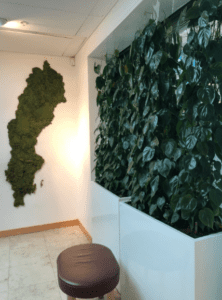
There is an important distinction between climbing plants and modular green wall systems, and understanding that difference is critical in design planning.
Green walls are engineered systems. They are typically pre-grown pots of plants or pre-grown panels that are irrigated and installed to deliver
immediate visual impact. They function almost like living artwork, composed, controlled, and complete on day one. For projects that require instant transformation like a hotel opening, corporate unveilings, retail flagships, green walls are the right solution.
Climbing plants operate on a different timeline. They are not installed; they are trained and cultivated. At their core, they are often simple systems: vines guided along trellises, wires, or surfaces. But what they lack in immediacy, they make up for in authenticity. Over time, they develop density, character, and irregularity, qualities that are difficult, if not impossible, to replicate with prefabricated systems.
The trade-off is patience. In interior environments, meaningful coverage typically takes between five years, depending on light levels, plant selection, and maintenance practices.
For spaces with a long-term horizon such as corporate headquarters, institutional buildings, or destination venues, this slow evolution can be a strength. The installation becomes part of the building’s identity, improving year after year.
Training Climbing Plants: Turning Growth into Design
Training is what transforms a climbing plant from a vine into an architectural feature.
This process begins early, when the plant is still flexible and responsive. Supports whether trellises, wires, or poles or simply a good surface for ariel roots to hold onto, the growth should be guided with design intention.
Regular maintenance is required. Plants must be pruned to maintain shape, density, and direction. Without this, they become chaotic and lose their intended design impact.
The mindset is important: think like a stylist, not a lumberjack. The goal is not just growth, it is controlled, intentional coverage to achieve the desired design.
Eco-Brutalism and Vines as Living Architecture
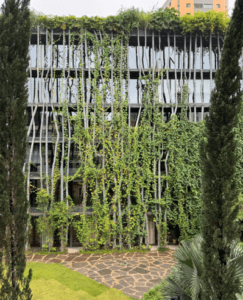
Climbing plants are also gaining relevance within a broader architectural movement often referred to as eco-brutalism, a reinterpretation of traditional brutalist architecture that integrates living systems into raw structural materials.
Classic brutalism is caricaturized by exposed concrete, heavy forms, and an unapologetic expression of structure. While powerful, it can feel cold and imposing. Eco-brutalism introduces a counterbalance: nature as a living overlay, a biophilic integration into architecture.
In this context, climbing plants are not decorative, they are integral.
Vines interact with architecture rather than concealing it. Concrete walls become substrates. Structural columns become vertical ecosystems. Over time, buildings appear to evolve as plant life spreads, thickens, and reshapes the visual experience.
You see this most clearly in projects like La Fábrica by Ricardo Bofill, where vegetation and raw concrete coexist to create a structure that feels continually evolving. While not always vine-driven, the integration of plant life into brutalist forms reflects the same underlying principle: architecture as a living system rather than a static object.
This creates a compelling tension: permanence versus growth, structure versus nature, static versus dynamic. It is not about hiding the building, it is about allowing the building to participate in a living system.
Choosing the Right Climbing Plants

Plant selection should always be driven by environment and use case, not just aesthetics.
The most reliable indoor climbing plants tend to be tropical or subtropical species adapted to filtered light conditions. Pothos (Epipremnum aureum) is widely regarded as the most forgiving and adaptable. Heartleaf philodendron offers a more refined look, with strong climbing tendencies. Monstera deliciosa, while often used as a statement plant, can also be trained vertically to dramatic effect.
More specialized species such as creeping fig, bougainvillea, jasmine, or chestnut vine can be used successfully, but require much higher light levels and are more suitable for conservatories, botanical gardens and zoos.
Operational considerations are just as important as visual ones. For example, bougainvillea produces vibrant color but drops bracts continuously, requiring frequent cleanup. In a botanical garden, this may be acceptable. In a corporate lobby, its a poor choice.
Why Most Indoor Climbing Plant Installations Fail
Despite their potential, climbing plant installations are often unsuccessful, and the reasons are remarkably consistent.
1. The wrong surface (drywall vs masonry)
Climbing plants require durable substrates such as concrete, masonry, or properly designed trellis systems. Drywall is not suitable for long-term growth and will degrade with plant attachments and exposure to moisture.
2. Lack of natural light
Without sufficient light, plants cannot generate the energy needed for growth. No amount of design intent can compensate for poor lighting. In poor light growth on climbing plants becomes sparse and elongated.
3. Choosing the wrong plant
Choosing plants based solely on appearance, without considering maintenance requirements or environmental fit, leads to long-term issues.
4. No maintenance plan
Climbing plants do not organize themselves. Indoors, there is no wind, no rain, and no natural guidance. Growth must be directed manually through pruning, tying, and grooming.
5. Expecting instant results
Finally, there is unrealistic expectation. Climbing plants are not instant. They require time to establish, structure, and mature. When clients expect immediate results, the installation is often perceived as underperforming, even when it is progressing normally.
A Living System That Improves Over Time
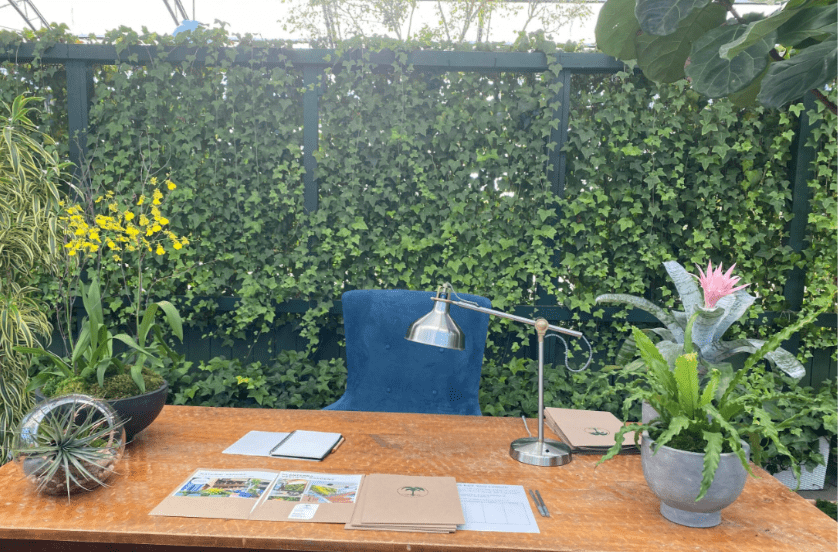
Climbing plants aren’t instant but that’s the point. They evolve, mature, and improve over time, creating a living architectural layer that becomes more compelling with age. When the right conditions are in place, a proper structure, strong light, thoughtful plant selection, and consistent maintenance, they deliver something few other design elements can: a dynamic system that can act as a focal point, a green wall, or a subtle biophilic backdrop.
They remind us that the most compelling environments aren’t just built, they’re cultivated.
Planterra is one of the largest providers of interior landscaping services in North America. If you’re considering green walls, climbing plants, or trellis systems for your next project, let’s talk. Our team can help you design, install, and maintain a solution that performs beautifully over time. You can contact us here.
Related Design Articles:
Green Walls in Architecture: Systems, Performance, and Specification Strategy
Biophilia in Architecture: A Guide for Modern Commercial Spaces