




Why Japanese Maples Belong Outdoors and What Designers Should Specify Instead
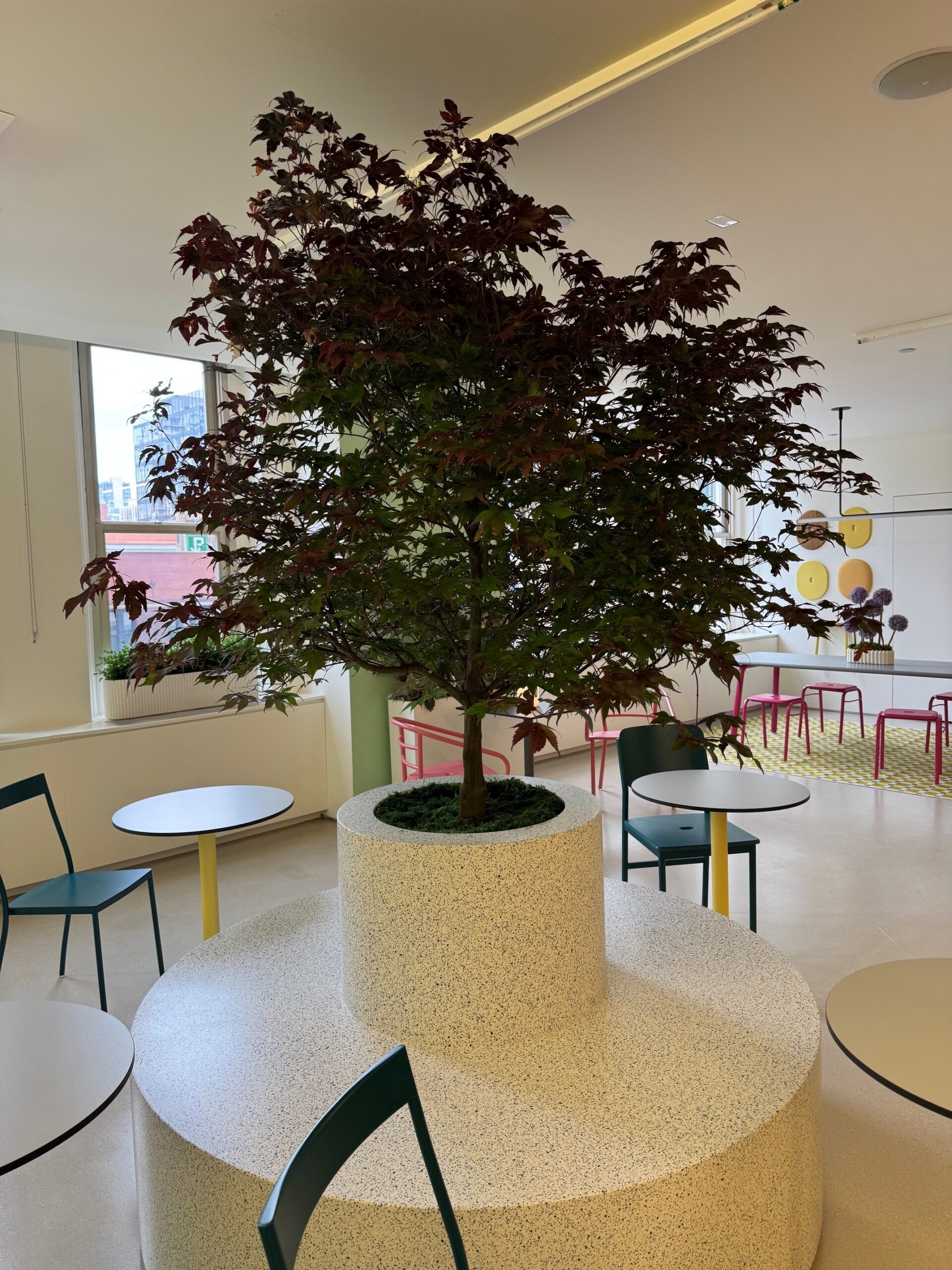
Walking the halls of NeoCon this year, I was struck by the sheer number of plants incorporated into the exhibits. Everywhere I looked, designers were using greenery to soften spaces, create visual interest, and bring a sense of nature into the built environment. One trend appeared repeatedly: Japanese Maple trees displayed indoors.
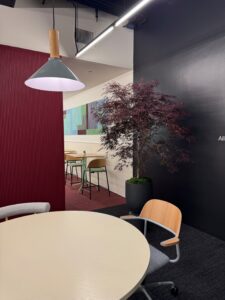
I understand the appeal. Japanese Maples are among the most beautiful trees in the world. Their sculptural branching, delicate foliage, and rich burgundy tones align perfectly with today’s design trends. In a temporary exhibit, they are stunning, they create an immediate focal point and photograph beautifully.
As an interior landscape professional, however, I already know the requests that will inevitably follow. For the record: a Japanese Maple is not a houseplant. The simple answer to the question is no, not as a permanent interior plant. While a maple tree may survive indoors for a short period of time, it will eventually decline because indoor environments cannot provide the conditions it needs to complete its natural life cycle.
Why Maple Trees Cannot Live Indoors
The challenge isn’t simply a matter of sunlight. Maple trees evolved outdoors and depend on seasonal conditions that simply do not exist in a typical home, office, hotel, or commercial building. Unlike tropical plants, maple trees are temperate-climate species whose annual growth cycle is synchronized with the changing seasons. Every autumn, shorter days and cooler temperatures trigger a series of physiological changes within the tree. Growth slows, leaves change color, and the tree enters winter dormancy.
Dormancy is not optional. It is a biological requirement. During this period, the tree rests, conserves energy, and prepares for the following growing season. Without adequate dormancy, a maple tree gradually weakens and becomes increasingly susceptible to stress, disease, and decline.
Most interior environments remain remarkably consistent throughout the year. Temperatures stay comfortable, artificial lighting extends the day, and the tree never receives the environmental cues it needs to shut down for winter and reset for spring. A maple tree forced to remain “awake” year-round is much like an athlete asked to train continuously without recovery. Sooner or later, the stress catches up with it.
Indoor Light Is Not Outdoor Light
Even if dormancy were not a factor, light would still be a major obstacle. Many people assume that placing a maple tree in front of a sunny window solves the problem, but even the brightest interior spaces provide only a fraction of the light available outdoors. On a sunny day, outdoor light levels can exceed 100,000 lux, while even a bright commercial interior adjacent to floor-to-ceiling glass typically receives only a small percentage of that intensity.
To a maple tree, most interior spaces feel like permanent shade. Over time, reduced light levels limit photosynthesis, weaken growth, and contribute to the gradual decline of the plant. This is one of the primary reasons interior landscape professionals rely on tropical species that evolved beneath forest canopies, as these plants are naturally adapted to lower light conditions and can thrive where maple trees cannot.
Humidity, Air Movement, and Root Health
Indoor environments create additional challenges. Japanese Maples are accustomed to natural airflow, seasonal rainfall, changing humidity levels, and living soil ecosystems, and modern buildings provide none of those conditions consistently. Heating and air conditioning systems often create dry air, containerized trees eventually become root restricted, and air circulation is limited compared to outdoor environments.
While bonsai enthusiasts successfully grow miniature Japanese Maples in containers, those trees are still grown
outdoors and still require winter dormancy. Bonsai culture is not evidence that maple trees make good houseplants, and in reality, bonsai maples further prove the point: even miniature maple trees require outdoor growing conditions.
What Should Designers Specify Instead?
The good news is that designers are not wrong to love the look of Japanese Maples. The rich burgundy coloration
, fine texture, and sculptural branching are all highly desirable design characteristics. The mistake is trying to achieve those aesthetics with a plant that is biologically incompatible with interior environments. Instead, designers should look for tropical plants that provide a similar visual effect while actually thriving indoors.
For Rich Burgundy and Red Tones
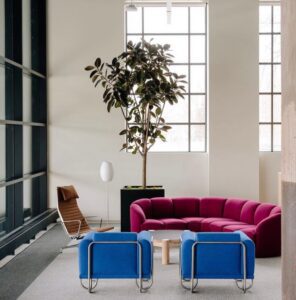
One of the closest alternatives is the Burgundy Rubber Tree, or Ficus elastica ‘Burgundy’. Its glossy foliage delivers the same deep wine-colored tones that make Japanese Maples so attractive in contemporary interiors.
Other excellent choices include:
- Red Congo Philodendron
- Red Aglaonema varieties
- Burgundy Rubber Tree (Ficus elastica ‘Burgundy’)
- Black Cardinal Philodendron
- Cordyline varieties with burgundy foliage
These plants provide the color designers want without compromising long-term plant health.
For Delicate Texture and Architectural Form
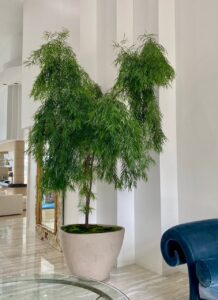
When the goal is to replicate the airy, layered texture of a Japanese Maple, the Ming Aralia is one of the best choices available.
Its finely divided foliage creates a similar visual softness and sculptural presence. When thoughtfully pruned and elevated in a decorative planter, a mature Ming Aralia can evoke many of the same qualities that designers admire in a green Japanese Maple.
Other options include:
- Weeping Podocarpus
- Ficus Alii
- Ficus Audrey
- Aralia Fabian
These species provide height, branching structure, and architectural character while remaining well-suited to interior conditions.
The Courtyard Solution
If your heart is truly set on a Japanese Maple, my recommendation is simple: build a courtyard and view it through a window. Some of the most memorable hospitality, residential, and commercial environments in the world use this strategy. Rather than forcing an outdoor tree to live indoors, they create an outdoor garden that becomes part of the interior experience. The result is better for the tree and better for the design.
You still enjoy the seasonal color, the beautiful branching structure, and the emotional connection to nature. Most importantly, the tree gets to live where it belongs. As interior landscape professionals, our responsibility is not simply to create beautiful spaces on opening day. Our job is to create living environments that remain beautiful for years to come.
Nature is remarkably adaptable, but it still plays by its own rules. When it comes to maple trees, those rules are clear: Japanese Maples belong outdoors. Tropical plants belong indoors.
The Right Plant for the Right Place

Designing with plants means understanding what those plants actually need. Japanese Maples are extraordinary trees, but extraordinary in the way that belongs to gardens, courtyards, and the changing seasons, not to lobbies and living rooms. When designers work with plants that are biologically suited to their environment, the results last. The greenery stays lush, the space stays beautiful, and clients stay happy.
If you are ready to bring the beauty of nature into your next interior project with plants that will truly thrive, Planterra’s team of interior landscape professionals can help you find the right fit for any space, style, or budget. Contact us today to start the conversation.