




 The service model helping facility managers achieve better quality, greater consistency, and lower total costs.
For decades, interior landscaping was primarily a local business.
If a company operated 50 offices, it often worked with 50 different plant vendors. Every location had its own contractor, service standards, invoices, communication processes, and quality expectations. While this approach may have worked in the past, today’s facility managers are under increasing pressure to simplify operations, improve workplace experience, and do more with fewer resources.
As a result, a growing number of organizations are consolidating vendors across their facility services portfolio, and interior landscaping is no exception.
In fact, many organizations are now searching for a national interior landscaping company capable of supporting multiple locations through a single relationship while maintaining consistent quality standards across every facility. This trend is reshaping the interiorscape industry and creating a new standard for how multi-location organizations manage their plants, living walls, seasonal décor, and biophilic workplace programs.
The Growing Demand for Vendor Consolidation
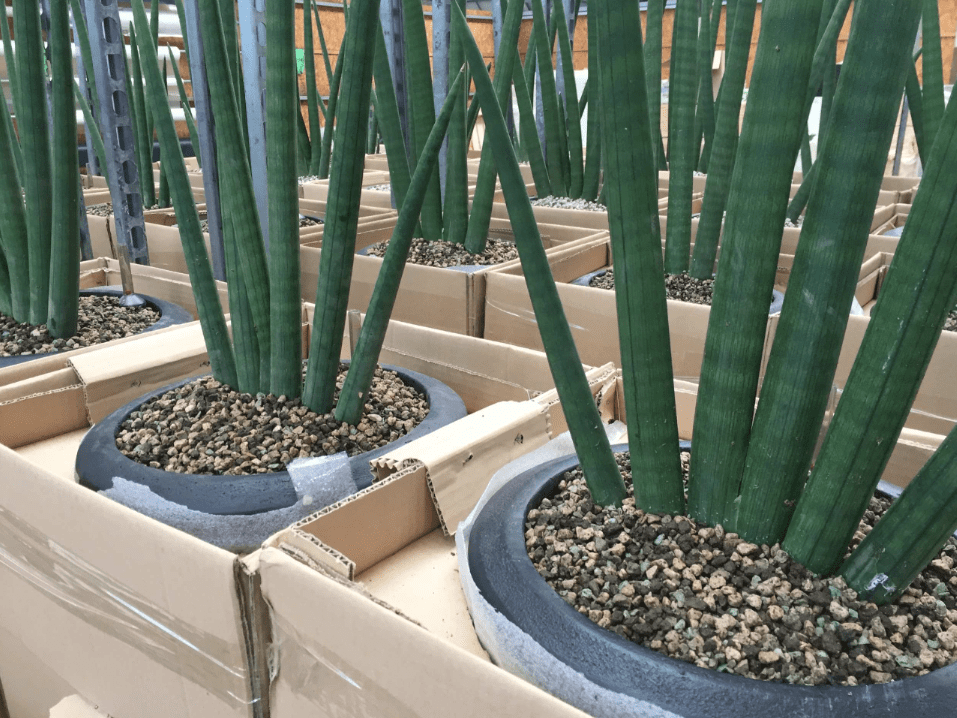
According to a recent article published by BUILDINGS Magazine, facility leaders are increasingly looking for strategic partners that can simplify operations while maintaining service quality across larger geographic footprints. The publication noted that facility managers are seeking ways to reduce vendor complexity without sacrificing accountability.
The reasons are easy to understand. Every vendor relationship introduces another contract, another invoice, another insurance certificate, another reporting process, and another point of contact. For facility managers responsible for regional, national, or international portfolios, managing dozens of separate vendors creates administrative burden that often delivers little value.
As organizations continue to streamline operations, vendor consolidation has become a common strategy across facility management. The goal is not simply to reduce vendor count. The goal is to improve consistency, increase accountability, simplify procurement, and create better visibility across an entire portfolio.
The fewer vendors a facility team must manage, the more time they can spend improving the workplace itself.
Interior Landscaping Has Become a Workplace Strategy

At the same time, the role of interior landscaping has evolved dramatically.
Plants are no longer viewed as a decorative afterthought.
According to Landscape Management magazine, interior landscaping has increasingly become part of broader conversations surrounding employee wellness, workplace experience, sustainability, and biophilic design. Industry leaders interviewed by the publication noted that plants have evolved from simple décor into workplace amenities that help create environments where people want to spend time.
This shift is particularly noticeable in corporate headquarters, financial institutions, healthcare facilities, universities, hospitality properties, mixed-use developments, and co-working environments.
Organizations increasingly recognize that thoughtfully designed interior landscaping helps humanize the built environment, create memorable first impressions, reinforce company culture, and support employee wellbeing. Whether through interior plant maintenance, living walls, seasonal color programs, or large-scale interior gardens, plants are becoming part of the overall workplace experience.
In other words, plants are no longer simply something a company buys.
They are part of the experience a company creates.
The Problem With Traditional Service Models
Historically, organizations have faced two primary choices when selecting an interior landscaping provider.
The first option is working with local plant companies. In many cases, these firms provide exceptional service because they are owner-operated, deeply connected to their communities, and passionate about horticulture. However, most local providers are limited geographically. Some highly qualified local firms are understandably reluctant to participate in RFPs that require extensive insurance requirements, complex procurement portals, or extended payment terms that are disproportionate to the size of the account.
For organizations with multiple locations, relying exclusively on local vendors often results in inconsistent service standards, varying plant quality, multiple contracts, fragmented reporting, and significant administrative complexity.
The second option is working with a traditional national provider. These organizations offer broad geographic coverage, but interior landscaping is often only one of many services they provide. In some cases, plants operate as a subsidiary of a much larger parent corporation focused on janitorial services, pest control, or other facility management disciplines. While these companies can provide scale, maintaining horticultural expertise and consistent service quality across every branch can be challenging.
As a result, many organizations find themselves forced to choose between local quality and national reach.
Increasingly, they are looking for a third option.
The Rise of the Network Model

A new service model is emerging throughout the facility services industry.
Rather than relying exclusively on company-owned branches or managing hundreds of independent vendors, organizations are turning to providers that combine centralized management with local execution.
Under this model, national account teams provide procurement support, reporting, quality assurance, design standards, budgeting assistance, and strategic oversight. Local horticultural professionals deliver the hands-on expertise, responsiveness, and plant care that clients expect.
The result is a system that combines the strengths of both approaches.
Organizations gain national consistency, centralized communication, portfolio-wide visibility, and streamlined administration while still benefiting from the responsiveness and accountability of local plant professionals. Competitive pricing is achieved without sacrificing service quality, and clients gain a single point of accountability across every location.
This hybrid approach is increasingly becoming the preferred model for organizations seeking the best quality at the best value across large real estate portfolios.
Why National Interior Landscaping Services Matter

Organizations today operate across broader geographic footprints than ever before.
A corporate headquarters may be located in Chicago while supporting offices in Dallas, Toronto, Phoenix, Boston, Vancouver, Detroit, Atlanta, and Los Angeles. The challenge is maintaining a consistent brand experience in every location.
Whether a customer walks into a branch office in Florida or a corporate headquarters in Michigan, the environment should reflect the same standards of quality, professionalism, and care.
A national interior landscaping company helps organizations achieve that consistency through centralized communication, unified service standards, portfolio-wide reporting, streamlined budgeting, scalable growth, and consistent implementation of design standards.
For facility managers, workplace leaders, and procurement professionals, these advantages create measurable operational efficiencies while supporting a stronger workplace experience.
How to Select a National Interior Landscaping Company
When evaluating a national interior landscaping company, organizations should look beyond geographic coverage alone.
The best providers combine broad service reach with strong horticultural expertise, local accountability, consistent reporting, financial stability, and proven experience supporting multi-location clients.
Questions worth asking include:
- Can the provider support every location in our portfolio?
- How is service quality measured and managed?
- Is there a single point of contact?
- How are local service teams selected and supported?
- Can the provider support future growth?
- Does the company specialize in interior landscaping, or is it simply one of many services offered?
The answers often reveal whether a provider can truly function as a strategic partner.
Why Organizations Choose Planterra

Founded in 1973, Planterra has grown into one of North America’s leading interior landscaping companies and one of the largest providers of national interior landscaping services in the United States and Canada.
For more than fifty years, Planterra has helped organizations bring nature into the built environment through interior landscaping design, interior plant maintenance, office plant service programs, living walls, moss walls, seasonal color programs, holiday décor, artificial plant installations, and national account management.
Today, Planterra offers one of the broadest service footprints in the interior landscaping industry. Through a unique combination of centralized account management and a carefully curated network of local horticultural professionals, Planterra delivers national interior landscaping services across hundreds of cities throughout the United States and Canada.
This approach gives clients something that has traditionally been difficult to achieve: the responsiveness of a local plant company combined with the consistency, reporting, and accountability of a national interior landscaping company.
For facility managers, real estate leaders, and procurement professionals, the benefits are significant. Instead of managing multiple plant vendors across multiple markets, clients gain a single point of contact, centralized reporting, consistent quality standards, and scalable service delivery across their entire portfolio.
Whether supporting a Fortune 500 headquarters, a healthcare system, a university campus, a hospitality portfolio, a retail network, or hundreds of branch locations, Planterra delivers commercial interior landscaping services at a national scale.
In an industry where many providers must choose between local expertise and national reach, Planterra was built to deliver both.
The Future of Interior Landscaping
The future of interior landscaping is not simply about plants.
It is about creating better workplaces.
It is about helping organizations support employee wellbeing, reinforce culture, improve visitor experiences, and bring nature into environments where people spend their lives.
At the same time, it is about helping facility managers reduce complexity, improve consistency, and operate more efficiently.
The organizations achieving the best results are no longer managing dozens of local plant vendors. They are partnering with national interior landscaping companies capable of delivering local service with national accountability.
That is why vendor consolidation is reshaping the interiorscape industry.
And it is why the future belongs to organizations that can combine the reach of a national provider with the responsiveness of a local partner.
At Planterra, we believe that the future is already here.
No matter where your spaces are, they deserve the same quality of care. For more than 50 years, Planterra has delivered national interior landscaping services across the United States and Canada — hundreds of cities, one trusted partner. Through the Planterra Network, multi-location organizations work with a single point of contact to design, install, and maintain interior landscapes that are consistent, living, and genuinely cared for. Because the tranquility plants bring shouldn’t stop at a city limit.