




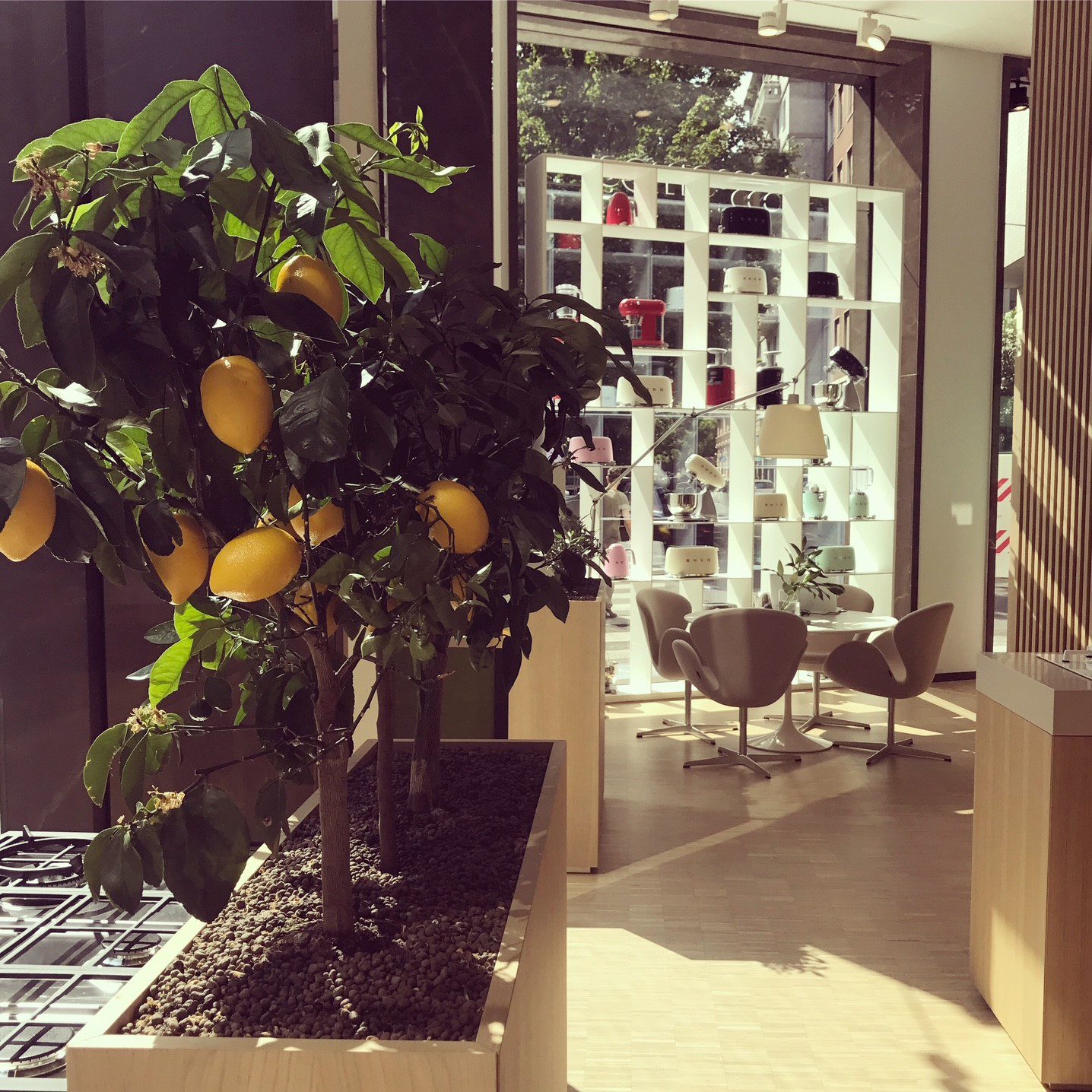
 Can citrus trees grow indoors in restaurants or hotels, and actually produce fruit?
This is one of the most common requests we receive from hospitality clients exploring experiential design. The idea is compelling: guests watching lemons being picked in real time, cocktails garnished with fruit grown just steps from the bar, or a hotel lobby that feels lush, fragrant, and abundant.
While the vision is understandable, the reality is more complicated. For most commercial hospitality spaces, growing citrus trees indoors with the expectation of reliable blossoms or usable fruit is not practical, and often counterproductive.
Below, we explain why, and outline smarter alternatives that achieve the experience without asking plants to do the impossible.
Why Indoor Citrus Trees Rarely Perform in Commercial Spaces
 Despite their visual appeal, citrus trees present significant biological and environmental challenges when grown indoors at a commercial scale.
Fruit Production Requires Extreme Light Levels
Citrus trees are among the most energy-demanding plants commonly requested for interior spaces. Producing flowers and fruit requires intense, consistent light, far more than even bright commercial interiors can provide.
In restaurants and hotels, this creates a trade-off:
- When energy goes into fruiting, leaf density and form suffer
- When trees are maintained for appearance, flowers and fruit are typically pruned away
This is why citrus trees grown ornamentally are often intentionally prevented from fruiting. From a design perspective, aesthetics and fruit production are competing priorities.
Geography Sets Hard Limits
Above roughly the 35th–40th parallel in the Northern Hemisphere, there simply isn’t enough natural light to support meaningful citrus production indoors, even with supplemental lighting.
This is why commercial citrus agriculture is concentrated in Southern California, Florida, Texas, Mediterranean climates, and parts of Mexico and South America.
Attempting to replicate these conditions indoors in cities like New York, Detroit, Chicago, or Minneapolis is biologically unrealistic and cost-prohibitive when greenhouse-level infrastructure is taken into account.
Regulatory & Supply Constraints
Citrus trees are subject to strict regulations in North America due to diseases such as citrus greening (HLB). These rules limit transportation and sourcing across regions, making replacement and long-term maintenance difficult for hospitality interiors.
For restaurants and hotels, this adds complexity, risk, and cost, without guaranteeing success.
The ROI Reality for Restaurants & Hotels
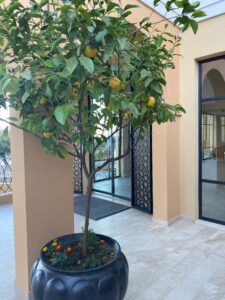 From a commercial standpoint, indoor citrus trees do not deliver a return on investment when evaluated against installation labor, rotation requirements, and frequency of replacement.
Growing citrus indoors for food or beverage use works best as a hobbyist pursuit or a controlled greenhouse project, not as a functional component of hospitality operations.
Historically, even European royalty understood this reality. Citrus trees were moved seasonally between outdoor gardens and orangeries, requiring dedicated staff and infrastructure. It was spectacle, not efficiency.
Smarter Alternatives for Hospitality Interior Landscaping
If the goal is experience, storytelling, and visual impact, there are more reliable ways to achieve the same emotional response.
1. Seasonal Citrus Displays
Ornamental citrus trees with novelty fruit are often available around Lunar New Year and other seasonal windows. In this context, the tree serves as a temporary decorative feature, not a permanent interior landscape element.
This approach works well for hotel lobbies, pop-up dining experiences, and special events or brand activations.
2. Rotated Live Trees with Greenhouse Support
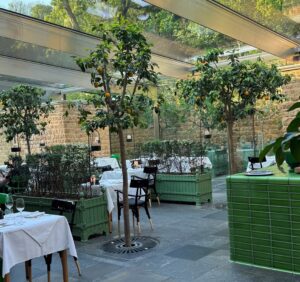 Some high-end properties partner with local greenhouses to rotate citrus trees on and off site, maintaining them outdoors seasonally.
This approach requires advance planning, transport logistics, and ongoing greenhouse storage and maintenance costs.
3. Designing the Illusion of Abundance
In some experiential restaurant designs, real citrus fruit is temporarily displayed on a healthy indoor tree that is otherwise well-suited to interior conditions.
This approach delivers the desired fantasy for guests while remaining horticulturally practical.
4. Artificial Citrus Trees for Hospitality Design
When the objective is visual storytelling rather than agriculture, high-quality artificial citrus trees are often the most effective solution.
Artificial options allow designers to achieve consistent appearance without accommodating the realities of biology. For restaurants and hotels focused on atmosphere, this approach supports the guest experience without operational risk.
The Planterra Perspective on Indoor Citrus Trees
 At Planterra, we specialize in hospitality interior landscaping that performs with operational considerations in mind. That means aligning plant selection with biology, architecture, maintenance realities, and guest expectations.
Indoor citrus trees for restaurants and hotels are best understood as theater, not agriculture. When expectations are grounded in reality, and design solutions are chosen accordingly, the result is a space that feels abundant, immersive, and intentional.
Explore More from Planterra
Interested in hospitality plant design or a custom consultation? Contact Planterra to explore solutions tailored to your brand, space, and operational goals.
Related articles for the hospitality industry: