




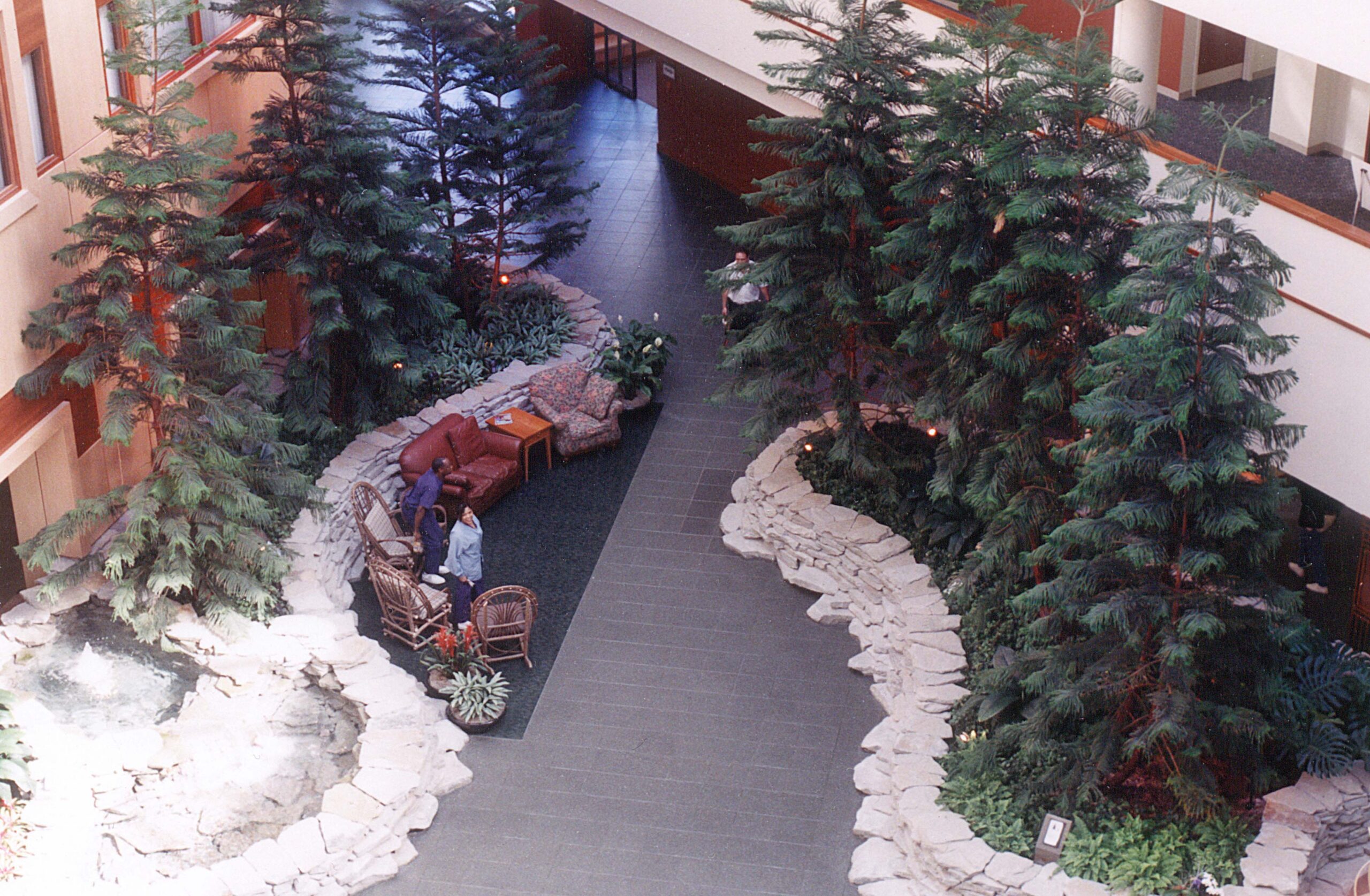
 Genesys Hospital, Michigan
Grove of Norfolk Island Pines provides an northern Michigan feeling at a medical facility in Grand Blanc, Michigan.
We frequently receive calls from clients asking for plants that don’t look tropical but instead reflect a northern aesthetic. The request is understandable—designers often want interior landscapes that connect to the local environment: “We want pine trees, not palm trees.”
The truth is, true coniferous pine trees (Pinus spp.) are not suited for indoor life. They require seasonal dormancy, abundant sunlight, and outdoor conditions that simply can’t be replicated inside a commercial or residential space.
As a result, most requests are initially directed toward artificial plants. Faux trees are one option, but they are not the only solution. For those who want the authenticity of live greenery, there are select tropical species that mimic the look and design qualities of a northern pine. These alternatives allow you to achieve the atmosphere of an indoor pine tree without the challenges of growing a true conifer indoors.
Podocarpus: The Refined Evergreen Alternative
Podocarpus, often called the “Buddhist Pine,” is one of the most effective substitutes for a pine tree indoors. Although not a true pine, its narrow, needle-like foliage creates a striking resemblance to evergreens.
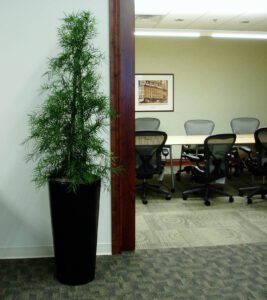
Podocarpus gracilior in an office.
- Podocarpus macrophyllus (Buddhist Pine): With long, elegant leaves, this variety brings a serene, architectural quality to minimalist or contemporary interiors.
- Podocarpus macrophyllus var. maki (Maki Podocarpus): Featuring denser growth and shorter leaves, this form lends itself to structured design applications such as hedges, partitions, or vertical accents.
- Podocarpus gracilior (Fern Pine): Known for its soft, feathery foliage, it adds a graceful touch that softens modern interiors.
Podocarpus species adapt best to bright, indirect light but can tolerate moderate conditions, making them highly versatile for interior landscapes.
Norfolk Island Pine: A Classic Indoor Evergreen

Norfolk Island Pine at Holiday Décor at Atheta retail stores.
The Norfolk Island Pine (Araucaria heterophylla) is perhaps the most recognized option for those seeking an indoor pine tree. With its
symmetrical branches and tiered whorls of soft needles, it closely resembles a conifer and provides a classic evergreen silhouette.
Beyond its well-known role as a holiday plant, the Norfolk Island Pine offers year-round design value. Mature specimens can grow into impressive indoor evergreens, especially in atrium settings. With proper care, these trees have been known to thrive indoors for decades, creating the effect of a miniature forest that adds height, rhythm, and structure to a space.
Norfolk Island Pines prefer bright, indirect light and benefit from occasional direct sun, making them ideal for window-filled interiors or sunlit atriums.
Monkey Puzzle Tree: An Exotic Evergreen Statement

Monkey Puzzle Trees USDA Zone 7 – 8. Pictured trees in New York are containerized to bring inside during the coldest months.
For designers looking to make a bold statement, the Monkey Puzzle tree (Araucaria araucana) is an unforgettable option. Its geometric, spiraling branches and stiff, scale-like needles give it a sculptural quality unlike any other.
Although less common in interiors than Podocarpus or Norfolk Island Pine, the Monkey Puzzle tree serves as a dramatic centerpiece. Its whimsical, almost prehistoric form makes it a conversation piece—but caution is advised. The foliage is sharp and prickly, so placement should ensure it remains out of reach of the public.
The Monkey Puzzle tree is also highly light-demanding. It requires very bright, direct light to sustain healthy growth—making it best suited for skylit interiors, large atriums, or spaces with significant exposure to natural sunlight supplemented by strong artificial lighting. Without these conditions, it will quickly decline, so careful placement is essential when considering this rare species indoors.
Designing with Indoor “Pine-Like” Plants
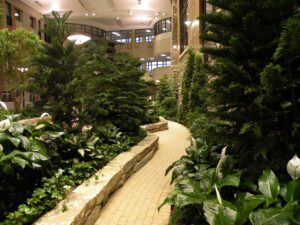
Norfolk Island Pines at Henry Ford Hospital in West Bloomfield, Michigan.
The appeal of these evergreen alternatives lies in their ability to deliver the look of a pine tree indoors while remaining adaptable to interior conditions. They create an atmosphere of permanence, elegance, and natural structure—qualities that suit both corporate and residential interiors seeking a northern, grounded feel.
Sourcing large, specimen-sized Podocarpus, Norfolk Island Pines, or Monkey Puzzle trees requires expertise. To ensure success, these plants should be procured and acclimatized in a shade house for at least 10 months prior to installation. All three demand higher light levels than traditional interior foliage plants, so expert assistance is strongly recommended when it comes to sourcing and planning their placement. When handled correctly, they become extraordinary design elements that capture the essence of an indoor pine tree without compromise.
Shane Pliska is the President and CEO of Planterra. Planterra specializes in sourcing and integrating unique plant varieties for large-scale interior landscapes across North America. If your design vision calls for the look of evergreens indoors, our team can help you select and incorporate the right plant solutions to achieve your aesthetic goals.