



Top dressing for potted plants plays an important role in both plant health and visual presentation, particularly in commercial interiors. While it is rarely the first detail people notice when entering an office or public space, top dressing is a deliberately specified element that influences moisture management, cleanliness, safety, and overall design quality.
The best topdressing for indoor potted plants depends on several factors, including fire safety requirements, maintenance expectations, moisture behavior, and aesthetic goals. In professional interior plantscaping, materials such as river rock, poly pebbles, preserved moss, and crushed stone are most commonly specified because they perform reliably indoors and meet commercial standards.
Indoor Plantscaping Is Different From Outdoor Gardening
Topdressing that works well outdoors is often unsuitable for interior environments. Many exterior materials introduce odors, allergens, pests, or moisture issues when used indoors. Others may violate fire codes or create maintenance challenges in climate-controlled buildings.
For this reason, top dressing for indoor potted plants must be evaluated not only for appearance, but also for safety, durability, cleanliness, and long-term performance under artificial lighting and HVAC conditions.
How Topdressing Influences Design and Brand Perception
Top dressing plays a subtle but powerful role in how plants are perceived within a space, much like flooring, finishes, or furnishings. The right material can reinforce brand identity, complement architectural details, and help establish a cohesive visual language throughout a workplace.
From clean stone surfaces to organic moss textures or intentional color accents, top-dressing selections are often customized to reflect the surrounding environment. That said, it’s important to balance aesthetics with practicality, as not all visually appealing materials comply with building or fire codes.
The most design-driven brands go a step further by standardizing top-dressing materials across all locations. For example, a brand may specify black river stone to convey a refined, modern feel, or a green moss finish to emphasize warmth and natural connection. While this approach is common in fashion and hospitality, it has become increasingly relevant for corporate environments as well. Through our national account program, these details are frequently documented in brand look books to ensure visual consistency across corporate branch offices nationwide.
Types of Topdressing for Indoor Potted Plants
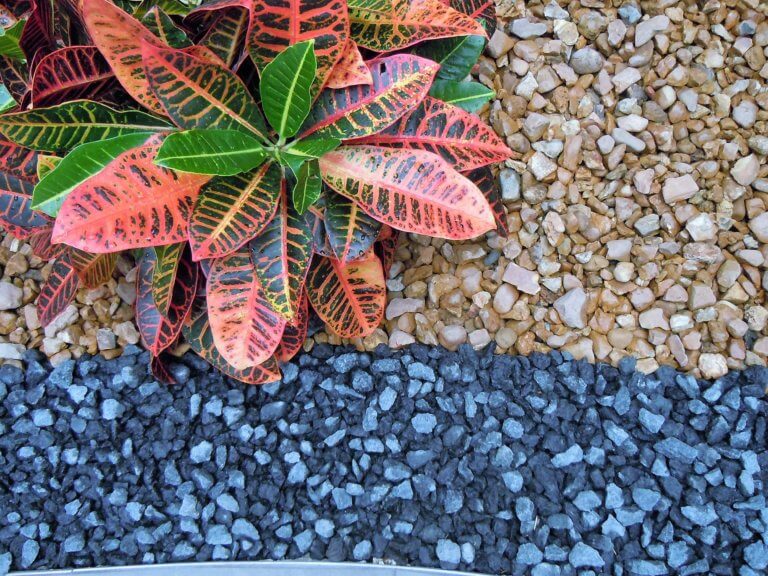
Topdressing options can include: river rock, crush slate, replica coverings, moss, crushed glass, hardwood mulch and more. Given the plethora of options, it’s best to work with an expert to choose your office plant topdressing wisely. That’s where Planterra horticulture experts can help you plan.
Below are a few of our suggestions when it comes to choosing a proper topdressing for indoor office plants:
River Rock
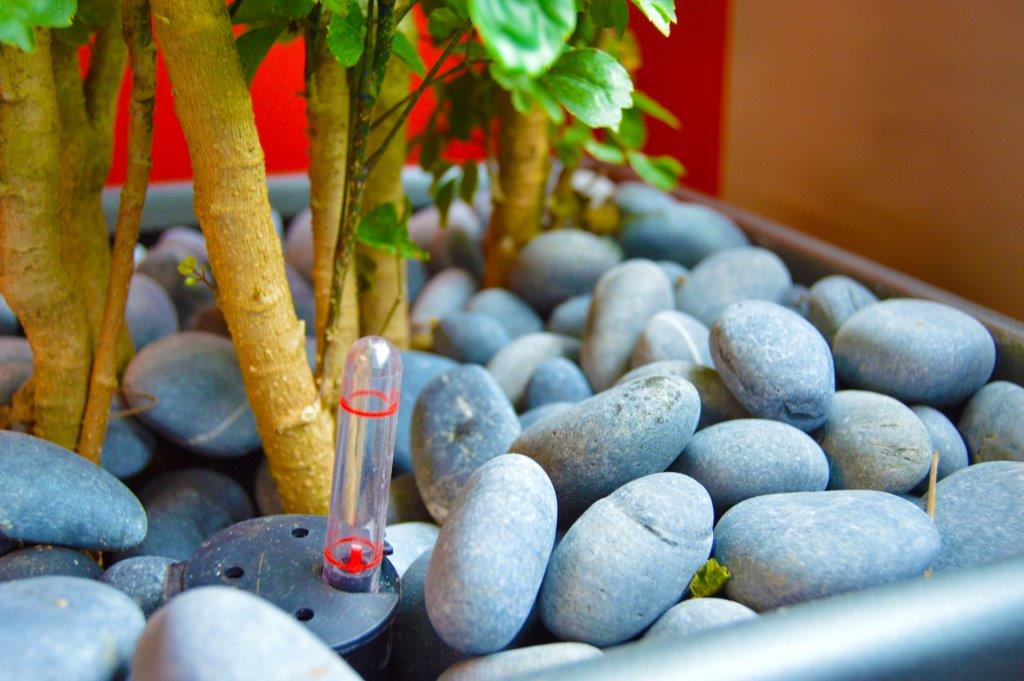 Natural river rock is one of the most widely used top dressing materials for indoor potted plants. Its clean appearance highlights both plant form and container design while helping regulate surface moisture. River rock is most commonly available in a natural matte grey or a black polished but color variations and availability differ by geographic region.
Best for: corporate lobbies, hospitality, hospitals.
Poly Pebbles
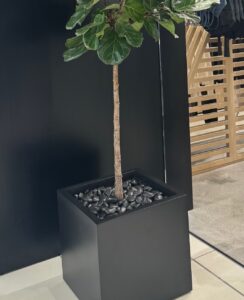 Poly pebbles are recycled plastic materials designed to replicate the look of natural stone. They are lightweight, uniform, and available in neutral tones such as black and white pearl. The lightweight and manufactured consistency makes poly pebbles a practical design choice for facilities that require a standardized branded experience from coast to coast, whereas the color of natural stone can have variations by region.
Best for: Retail stores, branch offices, airports.
Moss Topdressing
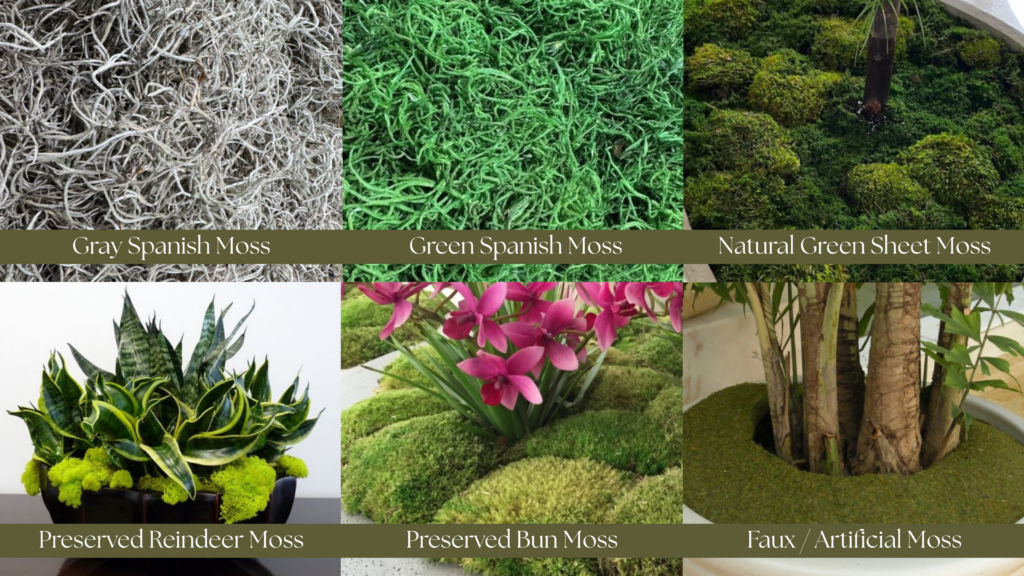
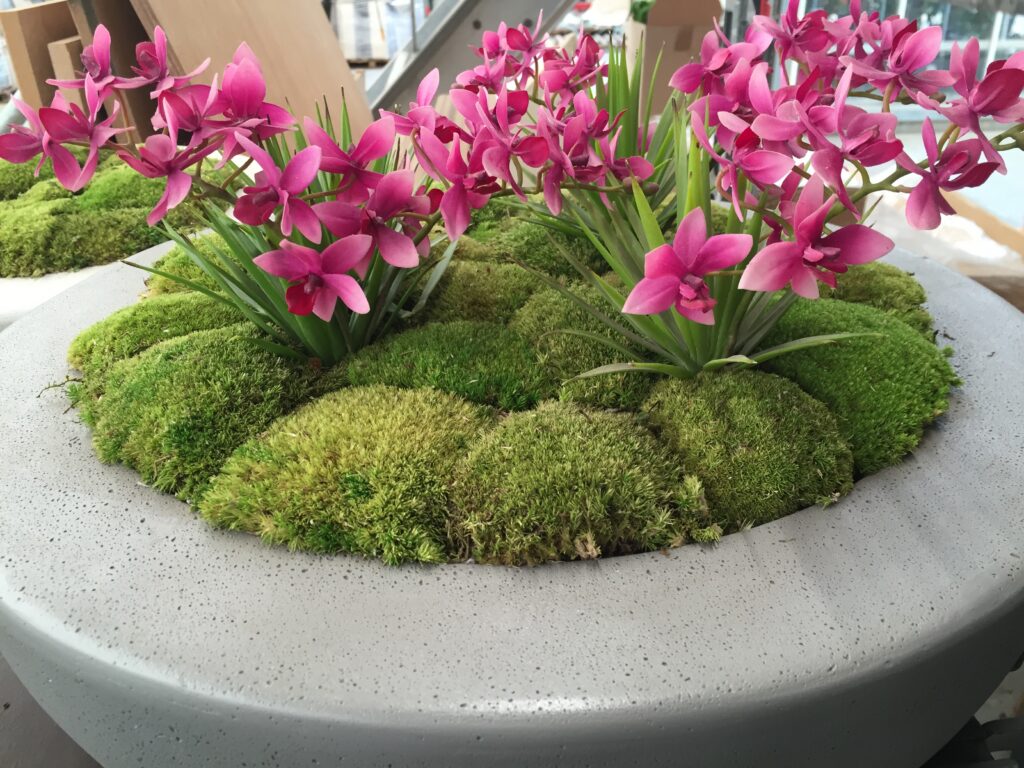
Moss is the most common specification for a topdressing due to its playability, light weight and versatility in colors and textures. Moss can be used to simply hide the staging or can be used as a design feature to add a pop of color.
- Gray Spanish Moss is the most common topdressing and is typically the standard default option for office plants. In commercial interiors, faux Spanish moss is typical to reduce allergen concerns.
- Green Spanish Moss is the same material as the Gray offering. Some interior plantscape companies will use green or gray interchangeably, therefore color specifications must be noted for clients requiring consistency.
- Natural Green Sheet Moss is an upgraded topdressing offering. It is a natural product that should be refreshed annually, as the color can fade and the material eventually becomes brittle and crumbles.
- Preserved Reindeer Moss is more of a floral design product that is more commonly used as topdressing for table top plant arrangements. Reindeer moss is available in multiple colors.
- Preserved Bun Moss is offered in round clumps and is best used in tabletop planters such as for color bowls or orchid rotations.
- Faux / Artificial Moss is a practical material that is more durable than the dried moss options but still can discolor overtime. Like all topdressing options, faux topdressing requires maintenance, monitoring and refreshes.
Best for: All interior landscape and office plant applications.
Crushed Glass
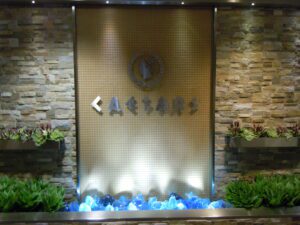 Crushed glass top dressing introduces color and visual interest while maintaining a refined, contemporary finish. These tumbled, soft-edged pieces are available in a wide range of colors and are often used to complement interior branding or architectural features.
Best for: contemporary offices, hospitality environments, medical spas
Replica Plants as Topdressing
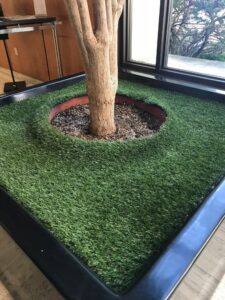 In some interior installations, smaller replica plants are used as top dressing beneath larger live plants. Faux succulents, grasses, or trailing foliage can add depth and visual layering without increasing maintenance demands. Replica is not permanent however, as the use of replica plants as a topdressing still requires regular refreshes.
Best for: mixed-media designs, low-access areas
Bark Topdressing
A limited number of bark topdressing products are permitted for commercial interiors due to fire code. Specifiers should always note the source or the brand of the product to ensure that a suitable bark option is provided that can meet local building codes and is not substituted with a product made for exterior gardens.
Best for: matching original designs, atrium beds.
Topdressing Materials to Avoid Indoors
Certain materials commonly used outdoors should generally be avoided for indoor potted plants due to safety, hygiene, and maintenance concerns. Untreated bark mulch, standard wood chips, and organic compost materials are among the most problematic, as they can introduce pests, produce lingering odors, retain excessive moisture, or promote mold growth in climate-controlled interiors.
Some decorative mulches may also pose fire risks if they have not been tested or processed to meet current building and fire codes. In addition, loose or lightweight organic materials can shift over time, exposing soil surfaces and creating an unkempt appearance in high-traffic commercial spaces.
Selecting inappropriate top dressing materials is one of the most common causes of maintenance issues in indoor plantscapes. Professional specification helps prevent premature plant decline, reduces long-term maintenance demands, and ensures compliance with safety standards across office, hospitality, and public environments.
Maintenance and Longevity Considerations
All top dressing materials degrade over time and require periodic replacement. Dust accumulation, color fading, compaction, and material breakdown are normal in interior environments and should be addressed through routine inspections and scheduled refresh cycles. Proactive maintenance helps preserve visual consistency, supports proper moisture behavior, and protects overall plant health.
Topdressing as Pest Deterrence
For some facilities that struggle with pest issues, hard topdressing materials like river rock, poly pebbles, and crushed glass create a physical barrier that discourages insects from accessing soil and laying eggs. These materials also reduce excess surface moisture, which further limits conditions that attract pests.
Work With Planterra
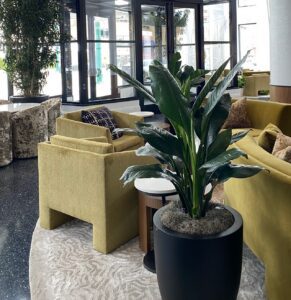 Planterra’s horticulture and design teams help clients select the best topdressing for indoor potted plants based on safety requirements, design intent, and long-term performance. Planterra is one of the largest interior landscaping firms in North America, delivering design, installation, and ongoing plant care services for enterprise clients across the U.S. and Canada.
To discuss topdressing options for a specific space or upcoming project, contact Planterra to start a design and specification conversation.